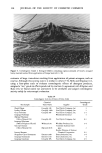
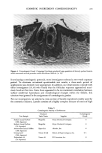
224 JOURNAL OF THE SOCIETY OF COSMETIC CHEMISTS propose that a compatible scoring system be established by researchers in this field. Photographic standards, illustrating each comedogenic grade or variation, should be required. To provide consistency of method, the exposure period as well as the quantity of test material and surface area applied should be identical between laboratories. Whenever possible, investigators should report source and purity of chemical test agents. While the influence of test vehicle and concentration has been shown to be decisive in eliciting a response (7,12,14), much of the data available on the comedogenic potential of cosmetics is associated with the activity of ingredients which were tested undiluted or as concentrated solutions in simple chemical vehicles. In reporting findings on raw materials, there is the possibility of misinterpretation of test results and an erroneous application of data to products containing these components. To provide additional information that would be of value to those in product development, the relationship between the comedogenic activity of these chemicals at use concentrations and as combinations in various product bases should be investigated. Recent work by Mills and Kligman (25) has shown that substances which are strongly comedogenic in the rabbit ear were capable of inducing comedones in a human model. The subjects selected for the study were young, adult black men with prominent follicular orifices at the test site. To further evaluate the relevance of the animal model to the human, the susceptibility of skin types in the general population would be useful. In summary, the rabbit may prove to be an interesting model for the study of the comedogenic effects of topically applied materials, provided test results of a standardized method are reproducible among laboratories. If the rabbit ear model is shown to be predictive of human experience, evaluation of ingredients via this model may be useful in the formulation of non-comedogenic consumer products. Ultimately, the final product composition must be evaluated. ACKNOWLEDGMENTS The authors wish to thank Messrs. J. DiNardo and A. Schmidt for their technical assistance, and Mrs. V. Schutz for her contribution in preparation of the manuscript. REFERENCES (1) E. M. Adams, D. D. Irish, H. C. Spencer, and V. K. Rowe, The response of rabbit skin to compounds reported to have caused acheform dermatitis, Industrial Medicine, Industrial Hygiene Section, 2, 1, 1-4 (1941). (2) G. W. Hambrick, The effect of substituted naphthalenes on the pilosebaceous apparatus of rabbit and man,J. Invest. Dermatol., 28, 89-102 (1957). (3) W. B. Shelley and A.M. Kligman, The experimental production of ache by penta- and hexachloro- naphthalenes, AMA Arch. Dermatol., 75,689-695 (1957). (4) J. Bleiberg, M. Wallen, R. Brodkin, and I. L. Applebaum, Industrially acquired porphyria, Arch. Dermatol., 89, 793-797 (1%4). (5) C. Berlin, Ache comedo in children due to paraffin oil applied on the head, AMA Arch. Dermatol. & $yphilol., 69, 683-687 (1954). (6) G. Plewig, J. E. Fulton, and A.M. Kligman, Pomade ache, Arch. Dermatol., 101,580-584 (1970). (7) A.M. Kligman and O. H. Mills, Ache Cosmetica, Arch. Dermatol., 106, 843 (1972).

COSMETIC INGREDIENT COMEDOGENICITY 225 (8) j.E. Fulton, S. Bradley, A. Aquendex, and T. Black, Noncomedogenic cosmetics, Cutis, 17, 344-351 (1976). (9) G. W. Hambrick and H. Blank, A microanatomical study of the response of the pilosebaceous apparatus of the rabbit's ear canal,J. Invest. Dermatol., 26, 185-198 (1956). (10) A.M. Kligman, Pathogenesis of acne vulgaris. II. Histopathology of comedones induced in the rabbit ear by human sebum, Arch. Dermatol., 98, 58-66 (1968). (11) P. Kanaar, Follicular-keratogenic properties of fatty acids in the external ear canal of the rabbit, Dermatologica, 142, 14-22 (1971). (12) O. H. Mills and A.M. Kligman, Acne detergicans, Arch. Dermato/., 111, 65-68 (1975). (13) P. C. Woo-Sam, The effect of vitamin A acid on experimentally induced comedones: An electron microscope study, Brit. J. DermatoL, 1OO, 267-276 (1979) (14) A.M. Kligman, V. R. Wheatley, and O. H. Mills, Comedogenicity of human sebum, Arch. Dermatol., 102 (1970). (15) A.M. Kligman and A. G. Katz, Pathogenesis of acne vulgaris. I. Comedogenic properties of human sebum in external ear canal of the rabbit, Arch. Dermatol., 98, 53-66 (1968). (16) O. H. Mills and A.M. Kligman, Assay of comedolytic agents in the rabbit ear, in Animal Models in Dermato/ogy, H. Maibach, Ed. (Churchill Livingstone, N.Y., 1975), pp 176-183. (17) O. H. Mills, M. Porte, and A.M. Kligman, Enhancement of comedogenic substances by ultraviolet radiation, Brit. J. Dermato/., 98, 145-150 (1978). (18) A.M. Kligman and T. Kwong, An improved rabbit ear model for assessing comedogenic substances, Brit. J. Dermatol., 1OO, 699-702 (1979). (19) P. C. Woo-Sam, Cohesion of horny cells during comedo formation--an electron microscope study, Brit. J. Dermatol., 97,609-615 (1977). (20) P. C. Woo-Sam, A quantitative study of membrane coating granules in follicles undergoing experimental comedo formation, Brit. J. Dermatol., 99, 387-394 (1978). (21) E. L. Jones and H. Krizek, A technic for testing acnegenic potency in rabbits, aiJplied to the potent acnegen, 2,3,7,8-tetrachloro-dibenzo-P-Dioxin,J. Invest. Dermatol., 39, 511-517 (1962). (22) O. H. Mills and A.M. Kligman, Is sulphur helpful or harmful in ache vulgaris?, Brit. J. DermatoL, 86, 420 (1972). (23) J. S. Strauss, P. H. Goldman, S. Nacht, and E. H. Gans, A re-examination of the potential comedogenicity of sulfur, Arch. Dermatol., 114, 1340-1342 (1978). (24) S. B. Frank, Is the rabbit ear model, in its present state, prophetic of acnegenicity?,J. Amer. Acad. Dermatol., 6, 3 (1982). (25) O. H. Mills and A. Kligman, A human model for assessing comedogenic substances, Arch. Dermatol., 1 18, 903-905 (1982).
Purchased for the exclusive use of nofirst nolast (unknown)
From: SCC Media Library & Resource Center (library.scconline.org)