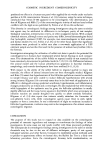
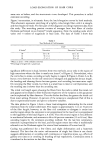
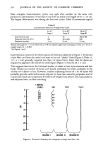
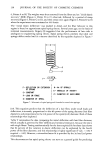
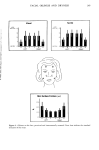
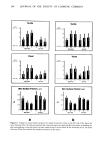
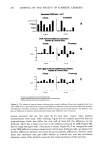
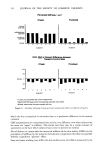
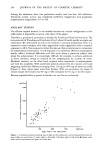
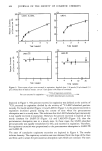
250 JOURNAL OF THE SOCIETY OF COSMETIC CHEMISTS Perceived Stiffness, t vs c* Cheek Forehead Much ST,FFE, • 1 2 3 4 5 6 1 2 3 4 5 6 SUBJECT SUBJECT A DSR, Percent Difference between Treated & Control Sites Cheek Forehead 1 ? 3 4 5 6 1 • 3 4 5 6 SUBJECT SUBJECT B DSR, Shift in Percent Difference between Treated & Control Sites Cheek Forehead 1 2 3 4 5 6 1 2 3 4 5 6 SUBJECT SUBJECT c *T and C are treatment and control respectively. *MUCH STIFFER means that the treatment side was much stiffer. *EQUAL means that they were equally stiff, etc. Figure 9. The impact of soap and water washing on skin surface stiffness. Note that in graphs B and C the same GBE data are presented, first as the percent difference between treated and control sites (B), and then normalized to minimize the baseline differences between treatment and control sites (C). The shift (C) is the percent difference at baseline subtracted from the percent difference after treatment. person perceived that the two sides of his face were "equal" when baseline measurements were made. After washing, Figure 9A, all subjects perceived that the soap-and-water cheek was stiffer, but only half of them felt this difference on the forehead. There was a distinct increase in the stiffness measured by DSR (Figure 9B), but the range was quite wide. The picture is clearer, Figure 9C, if we compare the shift in the DSR difference between treated and control sites. Arithmetically, we subtract the baseline differences between sites from the post-treatment differences. Positive values mean that treatment sites got stiffer relative to control site, and the calculation eliminates some of the artifacts caused by the initial asymmetry of the test sites.

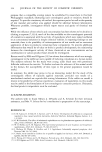
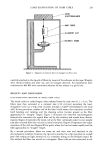
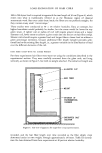
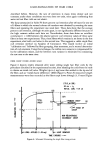
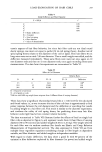
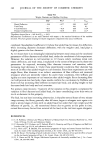
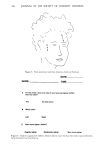
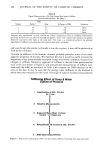
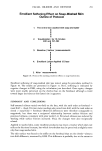
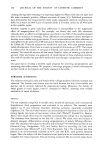
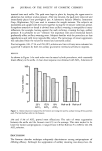
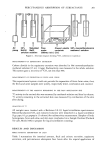
FACIAL OILINESS AND DRYNESS 251 Emollient Softening Effect on Soap-Washed Skin Outline of Protocol 1. The entire face washed with soap and water ! ! I ! 2. "Equilibration" for 15 minutes 22C and 15% RH ! ! I 3. Baseline ("before"} measurements ! ! ! ! 4. Emollient Lotion Applied 1/2 face I I ! I 5. "After" measurements Figure 10. Protocol for assessing emollient effects on soap-washed skin. Emollient softening of soap-washed skin was tested, using the procedure outlined in Figure 10. The results are presented in Figure 11. Here, softening is indicated by negative changes in DSR, using the calculation just described. Once again, changes were more readily perceived on the cheeks than on the forehead, although a trend toward larger decreases at this (latter) site is apparent. SUMMARY AND CONLUSIONS Self-assessed oiliness varied two-fold on the face, with the rank order as forehead = nasal fold cheek. Friction meter readings also varied two-fold, with the rank order as cheek nasal fold -- forehead. Observed differences were therefore comparable in magnitude, but there was a reciprocal relationship between surface friction and perceived oiliness, consistent with prior work (1,3). Perceived oiliness was reduced by washing while surface friction increased. Thus, the changes were also reciprocally related. Applied to washed skin, some emollient products may leave a residue which does not reduce the frictional increase, but which nevertheless may be perceived as slightly more oily than soap-washed skin. The skin surface was found to be stiffer on the forehead than on the cheeks--about a two-fold difference, measured by GBE. This difference is probably due to the extent to
Purchased for the exclusive use of nofirst nolast (unknown)
From: SCC Media Library & Resource Center (library.scconline.org)