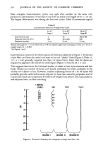
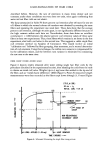
j. Soc. Cosmet. Chem., 34, 263-271 (August 1983) In vivo percutaneous absorption of polyoxyethylene lauryl ether surfactants in hairless mice TOSHIO NISHIYAMA, YUHEI IWATA, KEISUKE NAKAJIMA, and TAKEO MITSUI, Shiseido Laboratories, 1050 Nippa- cho, Kouhoku- ku, Yokohama 223, Japan. Received October 28, 1982. Synopsis A quantitative method was used to determine the in vivo percutaneous absorption of •4C-lab•led polyoxyethylene lauryl ether (LAEO) surfactants in hairless mice. The amount of percutaneous absorption was determined by adding the amount retained in the body with the amount excreted in feces, urine, and expired air. The complete recovery of the applied dose was assured by employing a closed system for measuring the expiratory excretion. It was shown that the amount absorbed increased linearly with time. In the case of LAEO containing ethylene oxide units larger than 2 moles, the LAEO absorbed percutaneously was rapidly metabolized to CO• and excreted in expired air. Therefore, the rate of percutaneous absorption could be calculated from the rate of expiratory excretion. This result coincided with the amount obtained from the slope of the percutaneous absorption curve as a function of time. INTRODUCTION Since cosmetic products are applied directly on human skin, it is valuable to know the extent of percutaneous absorption of such materials. There are, surprisingly, only a few reports (1-5) on the percutaneous absorption of' oily ingredients, surfactants, and humectants used in cosmetics. Percutaneous absorption can be studied by in vitro methods using excised skin or by in vivo methods using live animals or subjects. In vitro percutaneous absorption has been investigated in detail in a series of studies by Scheuplein et al. (6-7) and by other researchers (8-10). Many reports have been made of in vivo experiments (11-14) of percutaneous absorption related to the content of materials in blood, urine, feces, and tissue. Various species of animals have been employed as a model of human skin in conventional experiments on percutaneous absorption. The present study attempts to quantify the percutaneous absorption in vivo of a series of non-ionic surfactants in hairless mice. The choice of this animal was based on two factors: (a) the hairless mouse does not require pretreatments such as shaving and depilation (b) Stoughton (16) has reported good agreement between hairless mouse skin and human skin in his percutaneous study of germicides, steroids, etc. 263

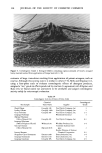
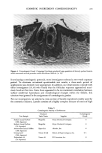
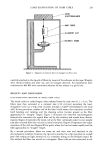
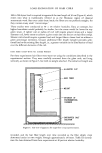
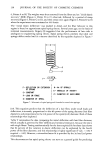
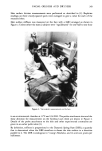
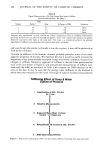
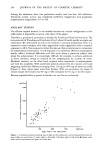
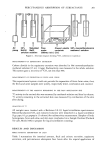
264 JOURNAL OF THE SOCIETY OF COSMETIC CHEMISTS EXPERIMENTAL MATERIALS [1-•4C] lauryl alcohol was obtained from New England Nuclear Corp. (Boston, Mass.) and purified by silica gel chromatography. The specific activity was 12.1 mCi/mmole. Polyoxyethylene [1-•4C] lauryl ether (•C-LAEO) was prepared as follows: [1-•C] lauric acid (New England Nuclear Corp.) was reduced to [1-•C] lauryl alcohol with purity not less than 99%, to which ethylene oxide (EO) was added to synthesize an addition product of 7 mole EO on average. The product was subjected to silica gel chromatography and preparative thin layer chromatography to obtain the following LAEO: •C-LAEO-1, 1 mole EO addition •4C-LAEO-2-76, average 2.6 mole addition (a mixture of LAEO-2 and -3) and •4C-LAEO-•--.•, average 6.4 mole addition consisting of various LAEOs from -2 to -14. The specific activity was 4.35 mCi/mmole. •C-LAEO-10 (average 10 mole EO addition), synthesized by Daiichi Pure Chemicals Co. (Tokyo, Japan), was purified by silica gel column chromatography. It consisted of EO additions of not less than LAEO-4. The specific activity was 3.72 mCi/mmole. Unlabelled LAEOs used were as follows: lauryl alcohol was a reagent grade material of Tokyo Kasei Co. LAEO-1, -2, and -3 were commercial products and were purified by silica gel chromatography. LAEO-6.4 and LAEO-I• were synthesized at our laboratory and purified by silica gel chromatography under the same conditions as •C-LAEO. ANIMALS Hairless mice were obtained from the National Institute of Genetics (Japan) in 1968 and have been kept and bred at our animal laboratory. Of these, 10 weeks old female mice (18-20 gr.) were used. PERCUTANEOUS ABSORPTION A hairless mouse was immobilized by its paws and tail on a stainless steel restrainer. A silicone resin enclosure (1.0 cmx 2.9 cm) was glued to the dorsal skin with o•-cyanoacrylate. Twenty five #1 of •4C-LAEO ethanol solution (55.2 mmole/1) was applied to the skin (1.0 #Ci, 1.38 #mole), and the mouse was immediately put into a container to measure expiratory excretion, as shown in Figure 1. The air was supplied to the container at the rate of 300 ml/min. through 20% NaOH aqueous solution and saturated saline solution. The expired air was filtered through a 50% monoethanol- amine-methanol solution. At the end of the experiment the animal was sacrificed, and the skin of the applied area was excised. MEASUREMENT OF THE AMOUNT IN THE BODY The body of a hairless mouse less the excised skin from the product application area was put in a blender, and 40 ml of iN NaOH aqueous solution were added. The body was homogenized in the blender for 10 minutes. An aliquot (1-1.5 gr.) of the homogenate was dried and cornbusted for radioactivity determination. This method provided recovery of greater than 98% of the •4C activity in the body of the hairless mouse.
Purchased for the exclusive use of nofirst nolast (unknown)
From: SCC Media Library & Resource Center (library.scconline.org)