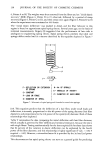
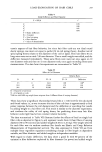
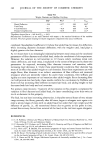
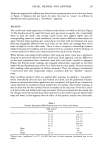
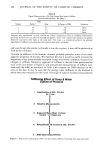
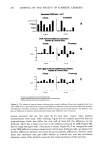
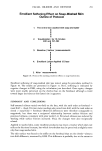
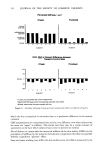
ANTIPERSPIRANT EVALUATION 261 rank orderings were the same. Thus, the forearm would seem to be a useful model for screening new chemicals and new formulation for comparative efficacy. Zahejsky and Rovensky (17) also were able to rank antiperspirants using the volar aspect of forearms as a testing area. The forearm test has numerous advantages. Sixteen materials can be tested at one time, in contrast to the axilla which is limited to one. The procedure is simple and convenient no restrictions are imposed on personal habits of underarm hygiene. The variance is less because the exposure conditions can be more rigorously controlled. Emotional influences are less potent. Small panels are sufficient, five subjects for pilot study, ten for more accurate data. Males or females may be used without preselection since in contrast to the axilla, the antiperspirant effects are fairly consistent in both sites. We view the chamber technique as a screening model for identifying effective agents and especially for optimizing the formulation by vehicle manipulation. It is a certainty that agents which give only marginal suppression, e.g., 25% in the forearm, will be completely useless in the axilla. The more potent the material, the less the proportion- ate difference in efficacy between the axilla and the forearm. Axillary testing is finally required to validate the results. We find that our axilla test does not suffer from the uncertainties noted by Bretschneider and his colleagues (18) in their effort to obtain dose-response curves. They could not distinguish 10% from 20% concentrations of aluminum chlorohydrate both gave about 40% sweat suppression. An intermediate concentration, 15% curiously yielded 60% inhibition. The main advantages of the axillary test are greatly reduced variability and comparative simplicity. ACKNOWLEDGEMENTS The technical assistance of Mrs. J. Stebbins and Mrs. H. HiSlzle is greatly appreciated. REFERENCES (1) A. B. G. Landsdown, The rat foot pad as a model for examining antiperspirants, J. Soc. Cosmet. Chem, 24, 677-684 (1973). (2) R. Marcy and M. A. Quermonne, Inhibition of palmar skin conductance in mice by antiperspirants' relative anhidrotic activities, J. Soc. Cosmet. Chem., 27, 333-344, (1976). (3) H. H. Reller, Factors affecting axillary sweating, J. Soc. Cosmet. Chem, 15, 99-110 (1964). (4) T. A. Bakiewicz, A critical evaluation of the methods available for measurement of antiperspirancy, J. Soc. Cosmet. Chem., 24, 245-258 (1973). (5) P. Majors and J. Wild, The evaluation of antiperspirant efficacy, J. Soc. Cosmet. Chem., 25, 139-152 (1974). (6) E.W. Daley, Antiperspirant testing: A comparison of two methods, Proc. Scie. Sect. Toilet. Goods Assoc., 30, 1-6 (1958). (7) M. W. Steed, Evaluation of antiperspirant preparations under normal conditions of use, J. Soc. Cosmet. Chem., 26, 17-28 (1975). (8) W. M. Wooding and P. Finkelstein, A critical comparison of two procedures for antiperspirant evaluation, J. Soc. Cosmet. Chem., 26, 255-275 (1975). (9) D.C. Cullum, A rapid hot-room procedure for testing the performance of antiperspirants, J. Soc. Cosmet. Chem., 29, 399-412 (1978).

262 JOURNAL OF THE SOCIETY OF COSMETIC CHEMISTS (10) P.J. Frosch and A.M. Kligman, The chamber scarification test for irritancy, Contact Dermatitis, 2, 314-324. (11) E. Hi31zle and A.M. Kligman, Factors influencing the anti-perspirant action of aluminum salts, J. Soc. Cosmet. Chem., 30, 357-367 (1979). (12) H. H. Reller and W, L. Leudders, Pharmacologic and toxicologic effects of topically applied agents on the eccrine sweat glands. II. Mechanism of action of metal salt antiperspirants, Adv. Mod. Tox., 4, 18-24, (1977). (13) E. Hi31zle and A.M. Kligman, Mechanism of anti-perspirant action of aluminum salts Factors influencing the anti-perspirant action of aluminum salts, J. Soc. Cosmet. Chem, 30, 279-295 357-367 (1979). (14) W. G. Fredell and R. R. Read, Antiperspirant: Axillary method of determining effectiveness, Proc. Scie. Sect. Toilet. Goods Assoc., 15, 23-27 (1951). (15) T. Skoog and N. Thyresson, Hyperhidrosis of the axillae, Acta Chir. Scand., 124, 531-535 (1962). (16) W. C. Randall, C. N. Peiss, and R. O. Rawson, Simultaneous recruitment of sweating and perception of warmth in man, J. Applied Physiol., 12, 385-389 (1958). (17) J. Zahejsky and J. Rovensky, A comparison of the effectiveness of several external antiperspirants, J. Soc. Cosmet. Chem., 23,775-789 (1972). (18) E. S. Bretschneider, A.M. Rubino, andJ. J. Margres, Antiperspirant efficacy, J. Soc. Cosmet. Chem., 28, 441-446 (1977).
Purchased for the exclusive use of nofirst nolast (unknown)
From: SCC Media Library & Resource Center (library.scconline.org)