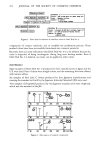
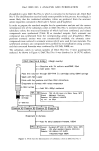
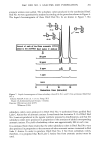
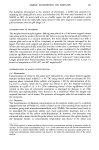
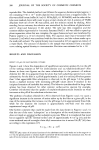
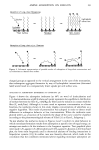
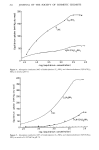
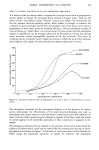
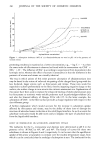
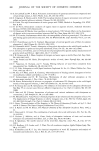
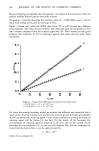
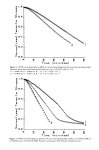
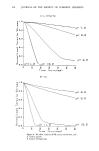
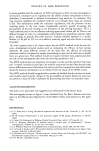
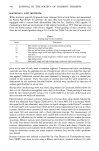
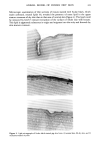
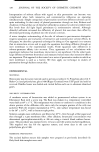
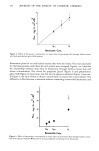
274 JOURNAL OF THE SOCIETY OF COSMETIC CHEMISTS Chloroform Extract ] I [HPLC Separation (Condition l)[ I l Fraction 11 • I IHPLC Separation (Condition 1I) I I I Subsidiary Colors I Condition I Column : TSK LS-410', 8ram i.d.x 25cm, Temp.: R.T. Eluent : Methanol, 4ml/min. Detector: UV (254nm) * TOYO SODA (JAPAN) Condition 1I Column : Lichro$orb S1-100', 8mm i.d. x25cm, Temp.: R.T. Eluent : 2.5•25% chloroform/n-hexane, 4ml/min. Detector: UV (254nm) * MERCK (GER) Figure 1. Flow chart for isolation of subsidiary colors in D&C Red No. 9. compounds of contact sensitivity and to establish the purification process. These purified colors have been successfully formulated into cosmetic products. Recently, there are some indications that D&C Red No. 9 is to be delisted because the color is suspected of being carcinogenic during long term feeding studies. Even if D&C Red No. 9 is delisted, our study can be applied to other colors. MATERIALS Eight samples of D&C Red No. 9 produced by three manufacturers in Japan and the U.S. were used. Four of them were straight colors, and the remaining four were diluted with barium sulfate. Six samples of Red Lake C Amine produced by four Japanese manufacturers and meeting the standard set forth by the Japanese Industrial Standard (jIS) were used. Two samples of •-naphthol produced by two Japanese manufacturers were employed, which met the standard of the JIS. I 9 115 143 ..• I ,I ':i ß , , 0 50 1(•0 150 200 OH 250 300 (M/Z) 350 I 115 171 I 0 ,q 0 1(•0 1 ,•:)0 20O 2.62 CH3 OH 250 3iJ0 (M/Z) 350 143 •). 115 11•3 1•)0 2i•0 2,•0 300 (M/Z) 350 Figure 2. Mass spectra of isolated components.

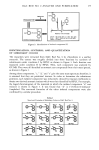
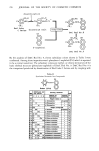
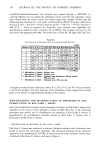
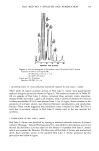
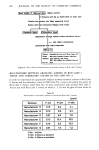
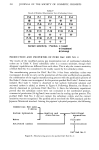
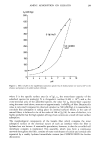
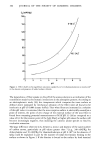
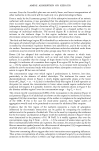
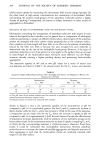
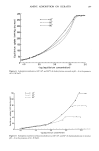
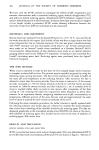
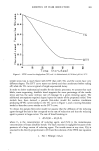
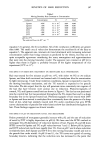
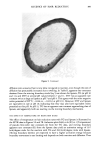
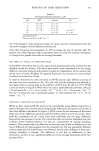
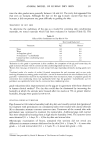
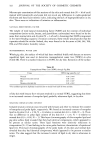
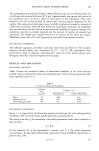
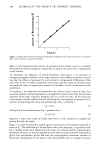
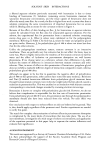
D&C RED NO. 9 ANALYSIS AND PURIFICATION 275 Reduction I Comp ønent II H3C C-•N•=-N O-• 1-(3-chloro-4-tolylazo)-2-naphthol OH NH• , 0 10 2'0 Retention time (minutes) Column TSK LS-410, 4ram •.d x 25½m, Temp.: 30øC Eluent 1MKCl, 7.5%IPA/H•), pH ----1.5 wfl:h H•PO• Detector UV (210nm) Figure 3. Identification of isolated component (d). IDENTIFICATION, SYNTHESIS, AND QUANTITATION OF SUBSIDIARY COLORS The impurities were extracted from D&C Red No. 9 by chloroform in a soxhlet extractor. The extract was roughly divided into three fractions by numbers of substituents under condition I by HPLC as shown in Figure 1. Each fraction was separated under condition II by HPLC. Then, each component was analyzed by GC-MS. They were all identified as aromatic azo compounds from their mass spectra, as shown in Figure 2. Among these components, "c," "d," and "e" give the same mass spectrum therefore, it is assumed that they are positional isomers. In order to determine the substituent positions, each isolated component was reductively cleaved by titanium trichloride to obtain two derived aromatic amines which were then identified by HPLC. For example, the liquid chromatogram of the materials to which the isolated component "d" was reduced is shown in Figure 3. It was found that "d" is 1-(3-chloro-4-tolylazo)- 2-naphthol. The structural formulae of the other isolated components were also confirmed by a similar procedure. Table I Structural Formulae of Subsidiary Colors in D&C Red No. 9 (1) P-O (2) P-6 (3) P-7 (4) P-9 (5) P-12 (6) P-13 (7) P-14 (8) P-15 ,. ,., c• Iel P4. I•0l P.17 {.)
Purchased for the exclusive use of nofirst nolast (unknown)
From: SCC Media Library & Resource Center (library.scconline.org)