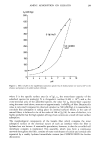
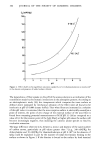
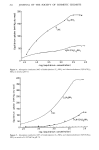
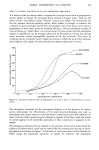
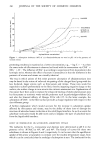
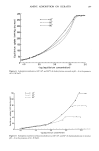
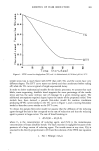
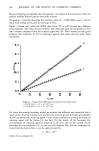
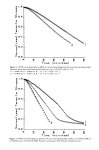
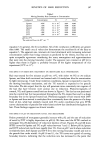
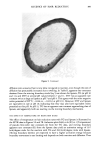
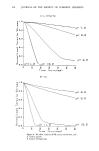
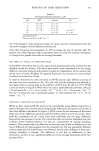
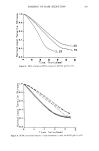
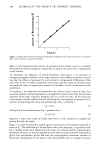
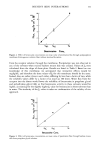
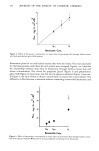
SOLVENT SKIN INTERACTIONS 333 a filtered aqueous solution previously saturated with benzocaine is due to tissue binding of benzocaine (5). Solutions containing excess benzocaine maintain the saturation benzocaine concentration, and the tissue uptake of benzocaine does not affect the steady state flux. As a result, the flux is higher from such a system than from a solution containing the same concentration of dissolved benzocaine but no excess solid (5). Binding also accounts for the curvature evident in Figure 5. Because of the effect of skin binding on flux, Js for benzocaine in aqueous solution cannot be calculated from the flux data for unsaturated aqueous solutions. For this solvent, the experimental flux for penetration from a saturated solution containing excess drug gave us Js- Other Js values were calculated as for the polypropylene membrane. Referring to Table I, we find that Js values for water and propylene glycol are quite similar. However, Js for polyethylene glycol 400 is about ten times less than that for the other solvents. Unlike the polypropylene membrane system, stratum corneum is an interactive membrane. There are probably very few solvents that do not affect the horny layer in some way. Water is highly interactive the tendency of the stratum corneum to swell in water and the effect of hydration on percutaneous absorption are well known phenomena. If we choose water as a reference solvent, then differences in Js really indicate the extent of difference in interaction between stratum corneum and other solvents. Thus, in terms of effect on skin penetration of benzocaine, propylene glycol does not exhibit a markedly different degree of interaction compared to water, whereas polyethylene glycol 400 does. Although we appear to be the first to quantitate the negative effect of polyethylene glycol 400 on skin penetration, other authors have noted the same tendency. Belmonte and Tsai (9) studied benzocaine diffusion from polyethylene glycol ointment bases through human stratum corneum. Low molecular weight polyethylene glycols caused a reduction in penetration flux. This was ascribed to an interaction with stratum corneum corresponding to structural changes revealed by scanning electron microscopy. Benzocaine is known to complex with polyethylene glycols (10). However, we do not believe that complexation is responsible for the low rate of benzocaine penetration from polyethylene glycol 400. If it were, the penetration rate through the polypropylene membrane should also have been reduced from this vehicle. No such effect was observed. Our conclusions with respect to solvent effects on skin are believed to be general. That is, they should apply regardless of the permeant used. Further experiments are needed to verify this point. The search for complete characterization of solvent effects in percutaneous absorption is complicated by the many kinds of interactions that may take place. The use of an inert membrane, investigation of a wide range of solute concentrations, and application of the equations presented in this paper help to separate the various influences and evaluate their significance. ACKNOWLEDGEMENT This work was supported by a Society of Cosmetic Chemists Scholarship to U.G. Dalvi. J.L. Zatz acknowledges the support of the Faculty Academic Study Program and Research Council of Rutgers Un!versity.

334 JOURNAL OF THE SOCIETY OF COSMETIC CHEMISTS REFERENCES (1) R.J. Scheuplein, Permeability of the skin: A review of major concepts, Curr. Probl. Dermatol., 7, 172-186 (1978). (2) L. E. Matheson, Jr., D. E. Wurster, and J. A. Ostrenga, Satin transport across excised human skin. II. Effect of solvent pretreatment on permeability,J. Pharm. Sci., 68, 1410-1413 (1979). (3) M. S. Roberts and R. A. Anderson, The percutaneous absorption of phenolic compounds: The effect of vehicles on the penetration of phenol,J. Pharm. Pharmacol., 27, 599-695 (1975). (4) U. G. Dalvi and J. L. Zatz, Effect of nonionic surfactants on penetration of dissolved benzocaine through hairless mouse skin, J. Soc. Cosmet. Chem., 32, 87-94 (1981). (5) U. G. Dalvi and J. L. Zatz, Effect of skin binding on percutaneous transport of benzocaine from aqueous suspensions and solutions,J. Pharm. Sci., 71,824-826 (1982). (6) F. Bottari, G. Di Colo, E. Nannipieri, M. F. Saettone, and M. F. Serafini, In vitro release of benzocaine from suspension-type aqueous gels,J. Pharm. Sci., 66, 926-931 (1977). (7) S. H. Yalkowsky, G. L. Amidon, G. Zografi, and G. L. Flynn, Solubility of nonelectrolytes in polar solvents. III.•L Pharm. $ci., 64, 48-52 (1975). (8) T. Higuchi, Physical chemical analysis of percutaneous absorption process from creams and ointments,.J. Soc. Cosmet. Chem., 11, 85-97 (1960). (9) A. A. Belmonte and W. Tsai, Benzocaine diffusion from polyethylene glycol through human stratum corneum,J. Pharm. Sci., 67, 517-520 (1978). (10) P. York and A. A.M. Saleh, Modification of diffusion rates of benzocaine from topical vehicles using sodium salicylate as complexing agent,J. Pharm. Sci., 65,493-498 (1976).
Purchased for the exclusive use of nofirst nolast (unknown)
From: SCC Media Library & Resource Center (library.scconline.org)