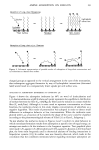
j. Soc. Cosmet. Chem., 34, 301-316 (September/October 1983) Kinetic studies of hair reduction using a single fiber technique R. RANDALL WICKETT, The Procter & Gamble Company, Miami Valley Laboratories, P.O. Box 39175, Cincinnati, OH 45247. Received April 19, 1983. Presented at the Society of Cosmetic Chemists Annual Scientific Seminar, CindnnatL Ohio, May 1983. Synopsis A technique for investigating reduction kinetics of hair using single hair fibers is described. The method is based on stress relaxation caused by disulfide bond breakage, and can be used for fundamental studies of parameters affecting hair reduction rates. Analysis of our data in light of mathematical models indicates that under conditions where reduction is fast compared to diffusion into the hair, the reaction proceeds as a sharp front or moving boundary, and when reaction is slow compared to diffusion, the reaction front is diffuse and pseudo first-order kinetics are followed. We have used the method to investigate the effects of pH, temperature, and reactant concentration with a monothiol reducing agent, sodium thioglycolate (TG), and with two dithiol reducing agents, dithiothreitol (DTT) and sodium dihydrolipoate (6-8 dithiooctanoate). The two dithiol reducing agents displayed moving boundary kinetics under all conditions investigated, while SFTK data obtained with TG was characteristic of pseudo first-order kinetics except at pH values of 10 or greater. We have also observed that while different hairs from the same individual generally have a fairly narrow distribution of reaction rates, hair from different individuals may vary significantly in susceptibility to reductive treatment. INTRODUCTION Hair protein is highly crosslinked by cystine disulfide bonds, and hair that has been extended in water and stress relaxed to constant stress will further stress relax if its disulfide bonds are broken. Reese and Eyring (1) used this fact to study the kinetics of disulfide bond breakage by sodium bisulfite, sodium sulfide, and sodium hydroxide. In this report we present a modification of their method that is well suited to fundamental studies of disulfide bond reduction in hair or other keratin fibers. We call it the single fiber tensile kinetics (SFTK) method. SFTK data can be analyzed to obtain information about the rates and mechanisms of reactions of reducing agents with hair. By making some straightforward assumptions about the nature of the reaction and its relationship to stress decay, it is possible to derive mathematical methods of the reduction kinetics. One of these is the pseudo-first order model obtained by Reese and Eyring (1), where reaction occurs throughout the hair. We also present a new model which requires the presence of a moving boundary or sharp front of reducing agent within the hair. 301

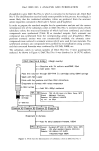
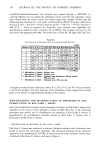
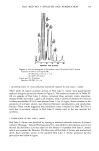
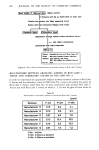
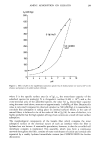
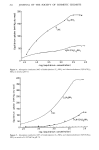
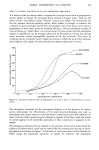
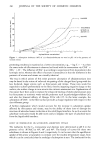
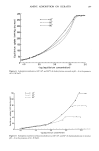
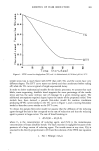
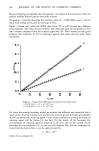
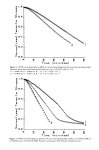
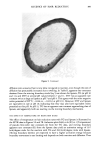
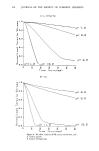
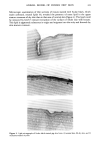
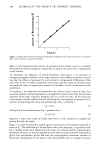
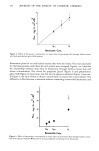
302 JOURNAL OF THE SOCIETY OF COSMETIC CHEMISTS We have used the SFTK method to investigate the effects of pH, temperature, and reactant concentration with a monothiol reducing agent, sodium thioglycolate (TG), and with two dithiol reducing agents, dithiothreitol (DTT) (Cleland's reagent) (2) and sodium dihydrolipoate (6-8 dithioctanoate). Evidence from light microscopy in support of our kinetic models is presented. SFTK results showing differences between the reactivity of hair from different individuals are also discussed. MATERIALS AND EQUIPMENT Human head hair obtained from the Joseph Fleischer Co., N.Y., N.Y., was used for all the work described in this report. Each bundle of hair was from a single donor who had never subjected her hair to chemical treatment. The hair was given a double lathering with Prell © shampoo and was thoroughly rinsed prior to use. Tensile measurements were made on an Instron © tensile tester interfaced to a Hewlett Packard © 9825A microcomputer. Measurements of hair diameters were made on an optical diameter gauging system made by the Diffracto © Corporation. Temperature was controlled by a Lauda © circulating water bath. Reducing agents were purchased from the Sigma © Chemical Company. THE SFTK METHOD When a hair is extended in water by less than 2% of its original length, stress relaxation is complete in about half an hour. The process may be speeded up greatly by using the following strain cycling procedure. The hair is first extended to 2% strain in buffer of the same pH and temperature as the reducing solution. After extension the hair is allowed to stress relax for twenty seconds. Next the strain is reduced to 1% for twenty seconds, increased to 1.75% for twenty seconds, reduced to 1.25% for twenty seconds, increased to 1.68% for twenty seconds, and then reduced to 1.5%. A constant level of stress is reached within thirty seconds to one minute after completion of the final cycling to 1.5%, reducing the total time required for stress relaxation to about three minutes. In an experiment directly comparing variables such as pH, concentration, or temperature, different sections of the same hair are used and approximately the same level of stress is reached for each section at each part of the cycle. Following the stress relaxation procedure, the buffer solution is rapidly replaced with the reducing solution, and tensile data are collected to monitor the stress relaxation that occurs due to breaking of the disulfide bonds by the reducing agent. The data are displayed graphically as the normalized tensile stress (F(t)/F(0)), the stress at the time t, after addition of reducing agent, F(t), divided by the stress at the time of addition of reducing agent, F(0), versus time. RESULTS AND DISCUSSION KINETIC MODELS FOR HAIR REDUCTION SFTK curves f. or hair treated with sodium thioglycolate (TG) and dithiothreitol (DTT) at 0.30 M molar thiol concentration, pH 9.0 and 25øC are shown in Figure 1. The rate of
Purchased for the exclusive use of nofirst nolast (unknown)
From: SCC Media Library & Resource Center (library.scconline.org)