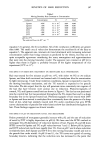
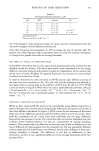
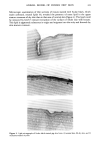
ANIMAL MODEL OF HUMAN DRY SKIN 321 time the skin grades were generally between 3.0 and 4.0. The scaly skin appeared like that seen on humans. Although the hair on the pig is much coarser than that on humans, it did not present any great difficulty in grading the skin. TREATMENT OF DRY SKIN To determine the usefulness of the pig as a model for screening skin conditioning materials, we tested materials which had been evaluated in humans (Table II). The Table II Effect of Skin Conditioners on Dry Skin In Vivo Skin Grade Reduction • Treatment Pig b Human c None 0.0 0.0 Water 0.0 0.0 5% Propylene glycol 0.0 0.0 5% Guanidine ß hydrochloride 0.3 0.3 Commercial skin conditioning lotion 1.0 1.0 Petrolatum 1.7 2.0 •Reduction in skin grade is improvement in skin condition for comparison of the pig and human data, the grade reduction obtained with the commercial skin conditioning lotion has been set at 1.0. bResults from two pigs, all treatments on each animal, both pigs responding identically starting grades were 3.0. CCombined results of a number of studies (20 paired comparisons for each treatment pair), no one study involving all treatments starting grades varied from 1.5 to 4.0. In those studies (at the 95% confidence level), the guanidine ß hydrochloride treatment was significantly better than no treatment, water, or propylene glycol the commercial skin conditioning lotion was significantly better than the guanidine ß hydrochloride and the petrolatum was significantly better than the commercial skin conditioning lotion. grade reductions (skin improvements) on the pig are in agreement with those observed in human clinical studies.* The dry skin could also be eliminated by increasing the humidity at which the animals were housed after two weeks at 75% or greater relative humidity, the pigs were graded at 0.0 to 0.5. STRATUM CORNEUM TURNOVER Pigs (housed at 10% relative humidity) with dry skin and visually normal skin (produced by treatment with petrolatum) on contralateral sides were treated with dansyl chloride (8) to determine stratum corneum turnover time. Treatment of the normal skin with petrolatum was continued to maintain the normal skin. Additional pigs with normal skin were obtained by housing them at high relative humidity (75%). The turnover times were identical (21 + 2 days, N = 4) for dry skin and normal skin. Microscopic examination of frozen, unstained thin sections did not reveal any differences in stratum corneum thickness for dry skin (20.4 + 3.9/am, N = 8, mean skin grade = 3.2) and normal skin (20.1 + 4.5 •m, N = 8, mean skin grade = 0.6). *Human data provided by Daniel P. Hannon of The Procter & Gamble Company.

322 JOURNAL OF THE SOCIETY OF COSMETIC CHEMISTS Microscopic examination of thin sections of dry skin and normal skin (N = 10 of each) stained with hematoxylin and eosin did not reveal any differences in viable epidermal thickness and basal layer mitotic index, indicating the lack of hyperproliferation in dry skin. There were no indications of irritation or inflammation. NATURAL MOISTURIZING FACTOR The weight of total natural moisturizing factor (NMF) and the content of individual components (amino acids, lactate, and pyrrolidone carboxylate) were found to be the same from normal skin and dry skin (N = 3 of each). Assuming that NMF is important in the water-binding capacity of stratum corneum, these results would predict that the capacities should be similar. Indeed, they were found to be the same at 30%, 50%, 70%, 85%, and 95% relative humidity values. TRANSEPIDERMAL WATER LOSS Whole pig skin, the surface of which had been swabbed briefly with hexane to remove superficial lipid, was used to determine transepidermal water loss (TEWL) in vitro (Table III). There is a marked reduction in TEWL for dry skin. Extraction of the surface Table III Transepidermal Water Loss (TEWL) through Pig Skin Tissue TEWL (mg water/hr cm 2) Normal 0.39 + 0.04 Hexane-extracted normal 0.38 + 0.03 Dry 0.15 _+ 0.07 Hexane-extracted dry 0.42 + 0.02 aThe numbers represent duplicate measurements on tissue from each of three animals. of dry skin with hexane for 5 minutes resulted in a normal TEWL, suggesting that there is an increased content of nonpolar lipid, probably sebaceous lipid, in dry skin. STRATUM CORNEUM LIPID CONTENT Isolated stratum corneum was extracted with hexane and ether to estimate the content of nonpolar and polar lipids, respectively. We found an increased content of nonpolar lipid in dry skin (16.0 _+ 3.5%, N = 3) relative to normal skin (6.0 _+ 0.9%, N = 3). There was no difference in polar lipid content of dry skin (6.4 _+ 1.1%, N = 3) relative to normal skin (6.9 _+ 0.2%, N = 3). Thin-layer chromatography of this nonpolar lipid and pig skin surface lipid revealed that they had identical components, which appeared to be present at similar ratios. These lipid fractions were distinctly sebaceous in composition (21-22) and lacking in the more polar fractions characteristic of epidermal lipid (22). Thin-layer chromatography of the polar lipids of dry skin and normal skin revealed that they had identical components, which appeared to be present at similar ratios. The data suggest that the increased content of lipid in dry skin is sebaceous in origin.
Purchased for the exclusive use of nofirst nolast (unknown)
From: SCC Media Library & Resource Center (library.scconline.org)