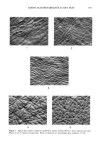
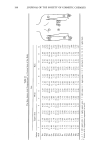
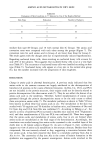
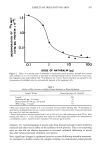
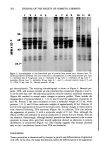
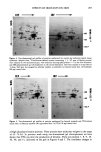
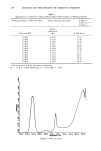
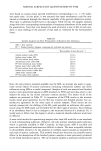
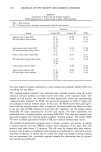
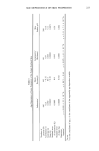
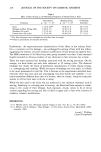
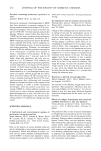
230 JOURNAL OF THE SOCIETY OF COSMETIC CHEMISTS Table I Effect of Heat Setting on the Mechanical Properties of Human Hair in H20 Yield Stress* Breaking Stress % Breaking Treatment g ß cm -2 x 10 5 g ß cm -2 x 10 5 Extension None 5.10 (0.43)** 19.80 (2.1) 58.5 (3.6) Shampoo & Blow Drying Only 4.99 (0.37) 19.84 (1.4) 58.0 (3.7) Kindness (50 cycles) 5.27 (0.34) 20.10 (2.4) 58.2 (4.0) Custom Care (50 cycles) 5.27 (0.38) 19.98 (2.6) 57.7 (3.5) * The fiber diameters were calculated for each fiber from its weight. ** Values in parentheses are standard deviations. Furthermore, the supercontraction characteristics of hair fibers in hot sodium bisul- fite--a sensitive test for damage--are unchanged by setting of hair with hot rollers, suggesting the absence of latent chemical modification of hair keratin by applied heat. The SEM evaluation of 10 fibers from each group (scanned over their 5-mm mounted length) revealed no obvious evidence of any alteration in hair structure due to heat. There was some minimal hair breakage associated with the setting procedure. On the average, six hairs broke per each tress subjected to 50 setting cycles. The observed breakage was clearly the result of mechanical manipulation of tresses during setting, i.e. unwrapping and combing. While the extent of breakage was very small, it is likely to be more pronounced in real life. This is because in the experiments described here, relatively short hair was used and unwrapping was done slowly and carefully--a sit- uation somewhat different from that of a woman, often in a hurry, using her scalp pain sensors to tell her how neat a job she is doing. While the hair used in the study was not subjected to any chemical treatment such as waving, bleaching, or coloring prior to heating, the fibers had been exposed to weath- ering in the course of their lifespan. Such exposure, clearly, seems to be of trivial concern regarding hot setting and this is likely to apply also to hair with a history of oxidative cosmetic modification. REFERENCES (1) E. Menefee and G. Yee, Thermally induced changes in wool. Text. Res. J., 35, 801 (1965). (2) J. McLaren and B. Milligan, "Heat Damage," in Wool Science, (Science Press, Marrickville, NSW, Australia, 1980). Leszek J. Wolfram Clairol Incorporated

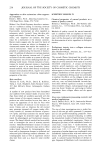
jo Soc. Cosmet. Chem., 35, 231-235 (July 1984) Abstracts The Annual Scientific Meetings and Seminars of the Society of Cosmetic Chemists are important venues for informing the participants about the state of the art and recent technical advances in the field of Cosmetic Science. To provide broader dissemination of that information, the Publication Committee has decided to publish abstracts of the technical presentations made at these Meetings and Seminars in the Journal.--The Editor. Society of Cosmetic Chemists Annual Scientific Seminar Anaheim, CA, May 9-10, 1984 Monroe Lanzet (Max Factor & Co.), Program Chairman SCIENTIFIC SESSION I Sunscreen predictive assays Nicholas J. Lowe, M.D., James Breeding, UCLA School of Medicine, Los Angeles, CA 90024 The ideal sunscreen should protect against all bio- logical effects of ultraviolet radiation (UVR) in ad- dition to simply inhibiting UVR induced skin er- ythema. UVB induced DNA damage is thought to be an important component for UVB skin carcin- ogeneses. We have, therefore, used an assay mea- suring UVB effects on epidermal DNA synthesis to assess sunscreens. Induction of the polyamine bio- synthesis enzyme, epidermal ornithine decarboxylase (ODC), is thought to be an important biochemical event for tumor promotion. This enzyme is also induced by UVB radiation. We have, therefore, used inhibition of UVB-induced epidermal ODC as an assay for sunscreen protectiveness. Following UVB radiation, hairless mice develop skin edema, possibly caused by release of vasoactive substances. This results in increased skin thickness which can be measured. We have utilized measurements of dorsal skin edema also to assess the protectiveness of different sunscreening chemicals as an in vitro predictor of UVR absorption, and, if known human sun protection factor sunscreens are compared with new sun protectants in the spectrophotometric ab- sorption assay, a predictive protectant index can be established. Sunscreen substantivity using animal assays Larry A. Wheeler, Ph.D. and Donald S. Clark, Ph.D., Allergan/Herbert Labs., 2525 DuPont Drive, Irvine, CA 92713 The in vitro modulation of DNA synthesis and in- duction ofornithine decarboxylase (ODC) in hairless mice following UV radiation have been used as sen- sitive indicators to assess sunscreen efficacy. Good correlations have been found between the hairless mouse biochemical assays and the human sunscreen protection factor (SPF). The objective of the current work was to determine the value of the hairless mouse model in determining the substantivity of formulations before extensive field testing in human subjects. The reduction of ODC and the suppression of DNA synthesis and edema after a 20 min. swim test in mice, with and without sunscreen after UV light, were used as measures of sunscreen substan- tivity. The values obtained in the mouse assay were compared to a human skin wash off procedure and to a human SPF for a octyl dimethyl para-amino- benzoic acid (octyl-paba) sunscreen. The octyl-paba formulation tested was 90% substantive in the mouse assay, and no changes were seen in the SPF using standard wash off procedures. Use of 8-meth- oxypsoralen plus UVA light-induced ODC was also used to examine substantivity of UVA-containing sunscreen formulations. The results in the mouse suggest useful data on substantivity can be gained about formulations before extensive field testing. 231
Purchased for the exclusive use of nofirst nolast (unknown)
From: SCC Media Library & Resource Center (library.scconline.org)