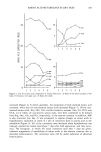
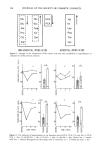
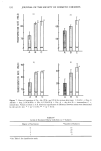
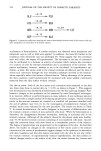
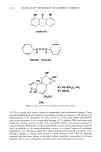
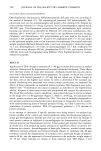
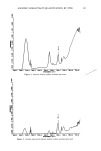
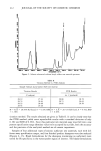
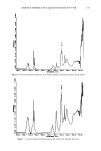
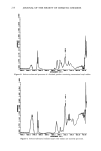
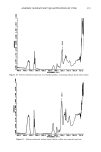
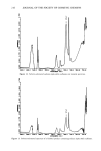
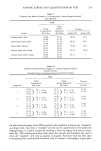
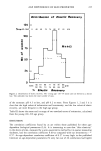
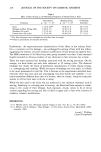
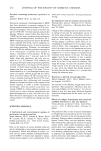
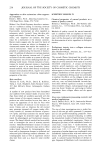
190 JOURNAL OF THE SOCIETY OF COSMETIC CHEMISTS F---I • F--- Serl I His I I Gly• • Glu • I Ala • • Asp I I • I Tyr Pro I • I Cit• • Orn I • Arg • PCA I Leu Phe Thr Lys NON-ESSENTIAL AMINO ACIDS ESSENTIAL AMINO ACIDS Figure 5. Changes in the composition of free amino acids and their metabolites in hyperkeratotic as compared to normal stratum corneum. 80 o c• o 1w 2) 60 lW 9oe 8O 70 3) TIME mol% 1W 90 70 uJ o uJ z • cD •• 1w 90 90 a:• ..O, ......,• 70 70 ' 1 2 3 "-' •- TIME t.._.:, Figure 6. The influence of hyperkeratosis on the formation rates of PCA, UCA, Cit, and Ala. (1) PCA/ PCA + Glu (2) UCA/UCA + His (3) Cit/Cit + Orn (4) Ala/Ala + Asp. Dotted line = control solid line = treated. Histograms are the average rates of conversion. (n = 3) Values are mean _+ S.E.

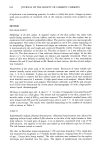
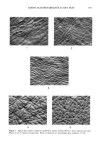
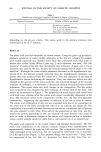
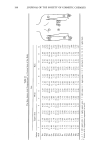
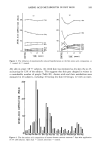
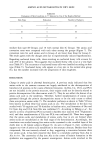
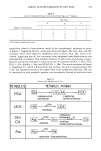
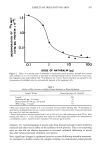
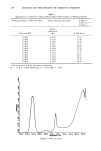
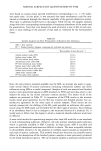
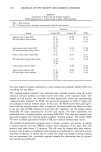
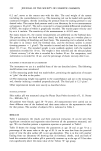
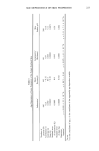
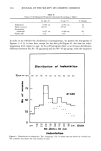
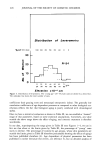
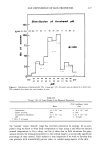
AMINO ACID METABOLITES IN DRY SKIN 191 Table III Evaluation of Skin Condition in 77 Subjects by Use of the Replica Method Skin Type Evaluation Number of Subjects 1 A 25 2 B 3 39 4 C 13 mediate skin type (B Group), and 10 with normal skin (C Group). The amine acid conversion rates were compared with each other among the groups (Figure 7). The conversion rates for each amine acid in Group A are lower than those for Group C. The result agrees with the changes seen due to experimentally induced hyperkeratesis. Regarding nucleated horny cells, those revealing no nucleated horny cells account for only 20% of the subjects. This suggests that nucleated horny cells occur at a very high rate (Table IV). The occurrence of nucleated horny cells was classified according to skin type (Table V). Nucleated horny cells appear at a low rate in the normal skin group (C), but the number increased with the progression of skin roughness. DISCUSSION Changes in amine acids in abnormal keratinization. A previous study indicated that free amine acids in the stratum cerneum are largely attributed to the decomposition of histidine-rich proteins in the course of keratin formation. As Orn, Cit, UCA, and PCA are not included in the protein structure, their origins could not be directly related to protein decomposition like other amine acids (7). They do not reflect the feature of an amine acid pool in the epidermis. Therefore, further transformation of amine acids generated through the protein decomposition seems to be the only course to afford these non-protein amine acids (7). The metabolic pathways as shown in Table VI have been known to afford these four amine acids in vive. The metabolism in the skin was studied with 3H-arginine and 3H-histidine in hairless mice, and formation of Orn and Cit from Arg and UCA from His was confirmed (7). According to Delapp et al., the specific activity of epidermal PCA increased in hairless mice injected with 3H-glutamic acid, and thus transformation of Glu into PCA was confirmed (8). These facts suggest that the amine acids and metabolites of amine acids, four in all, are formed when amine acids are metabolized at the final stage of the keratinizatien. Accordingly, the correlation was studied among free amine acids contained in the cernified layer of the cheek skin in 46 female subjects (Figure 8). As seen in Figure 8, their correlations support our view of amine acid metabolism in the stratum cerneum. Besides these four compounds, Ala was inversely related to Asp, suggesting a conversion between these two amine acids. It has been reported that there is a metabolic pathway from Asp to Ala in vive. The conversion of Asp into Ala in the course of keratin formation in the epidermis was suggested by the present investigation. Amine acids involved in the
Purchased for the exclusive use of nofirst nolast (unknown)
From: SCC Media Library & Resource Center (library.scconline.org)