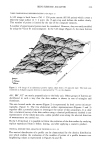
j. Soc. Cosmet. Chem., 35, 311-325 (September/October 1984) Statistical analysis and three-dimensional representation of the human skin surface S. MAKKI and P. AGACHE, Laboratoire de Biologie Cutande et Clinique Dermatologique Universitaire, Place St. Jacques, 25030 Besanoeon, France,' J. MIGNOT and H. ZAHOUANI, Groupe de Recherche en Ggnie Thermique, Institut Universitaire de Technologie, rue Engel Gros, 90016 Belfort, France. Received April 27, 1983. Presented in part at the 12th Symposium of the International Federation of Societies of Cosmetic Chemists, Paris, September 13-17, 1982. Synopsis A profilometric apparatus (Talysurf 5©) was used to quantitatively analyze the human skin surface and to perform three-dimensional (3-D) topographic representations of the same surface. Positive replicas of abdominal and volar forearm skin surfaces were analyzed in this study. The skin microtopography was scanned with the stylus of the Talysurf 5 ©, recording the x, y, and z coordinates of each point on the surface. The 3-D images revealed the skin surface microstructure accurately (furrows, pores, etc...) and allowed a better understanding of the quantitative evaluation of the human skin surface profiles, as traced by the Talysurf 5©. Use of additional statistical parameters (Skewhess, Kurtosis, etc...) provided new perspectives for ana- lyzing the skin surface and the possibility of detecting the effects of drugs and cosmetics on the human skin surface. INTRODUCTION The quantitative analysis of the human cutaneous relief has been performed using a profilometric technique (1,2). Positive replicas of skin surfaces* were scanned by a profilometer (Talysurf 5©), and from the resulting profiles, quantitative parameters were measured to determine the depths of skin furrows and the spacings between them. By this technique, differences between the structures of the skin surfaces were dem- onstrated (1) and skin surface relief alterations were detected in relation to age and sex (3). It was clearly pointed out that the profilometric method was a good technique for * The replicas were prepared using a two-stage technique: (a) an impression of the skin surface was taken by employing a silicone rubber impression material (Silflo, Flexico Development Ltd) (b) a cast (positive replica) made by using a epoxy resin (Araldite My 778, Hardener Hy 956, C•ba-Geigy), curing at room temperature (1). 311

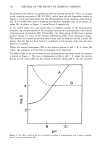
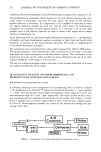
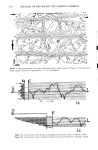
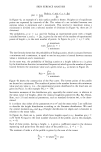
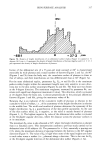
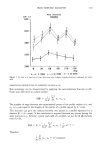
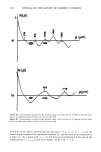
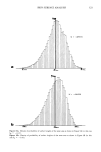
312 JOURNAL OF THE SOCIETY OF COSMETIC CHEMISTS evaluating skin microtopography (2) and for measuring its changes due to aging (3,5,6). The profilometrical parametric values depend on the scan direction because the cuta- neous surface is anisotropic (1,2,4,8). For this reason, the choice of the optimum angular direction is necessary. It is imperative to do a number of scans and to select the angular direction suitable for each site. On the other hand, the profilometric parameters are calculated for each separate profile. It is necessary to do at least three parallel scans in the selected direction in order to obtain valid results which permit statistical comparisons (1). In the following work we used some height distribution parameters (i.e., the frequency of heights and their distributions analyzed according to their third and fourth order moments, in addition to the autocorrelation function). This study is complementary to the above-mentioned technique. The parameters were calculated from a skin profile ranging from 1000 to 4000 points. The method permits a three-dimensional (3-D) reconstruction to be made at the same time from the stylus movements on the skin surface replicas. The coordinates of any interesting structure on the surface studied are easily observed by the use of an inde- pendent amplified (3-D) image of this structure. The use of a computer program replaces the need to scan in many directions, as it gives an overall quantification of the surface. QUANTITATIVE ANALYSIS AND THREE-DIMENSIONAL (3-D) REPRESENTATION OF HUMAN SKIN SURFACE DESCRIPTION OF THE MEASUREMENT SYSTEM A schematic drawing of the arrangement of the measuring device is shown in Figure 1: the profilometer is a Talysurf 5 © (radius of curvature of the stylus = 2 }xm pressure = 1 mN). Two step-by-step motors allow the samples to move along the x and y axes with minimum steps of 0.1 and 1 ptm, respectively. The stylus is fixed on the x and y axes and measures the z dimension of each point on the surface. The height, z, of each point is changed into an electric signal which is then converted into a digital signal. A Victor S1 microcomputer operates the control of the motors plus storage and pro- cessing of the data. Z • unit I unit] A/D [Printer J I /ideo ] Figure 1. Arrangement of the three-dimensional and measuring devices.
Purchased for the exclusive use of nofirst nolast (unknown)
From: SCC Media Library & Resource Center (library.scconline.org)