SUSPENSION STABILITY 403 decrease in sedimentation rate. Relationships of this type make it possible to determine the gum concentration needed to obtain any desired sedimentation rate. They also facil- itate comparisons between different polymers in terms of their efficiency in retarding sedimentation. Combination of xanthan gum with magnesium aluminum silicate increased the yield value (18) relative to that of the same materials used separately. Augmented network formation, due to charge-charge interactions between the gum and clay, was postu- lated. CAKING During manufacture of a suspension, particles are separated from each other as a result of wetting and dispersion. By placing a charge on particle surfaces, or through other means, particle dispersion can be maintained as long as the particles remain suspended. However, sedimentation brings particles together at the bottom of the container. If there is mutual repulsion, the particles within the sediment align themselves so as to stay as far apart as possible. This situation leads to efficient packing of the particles as the liquid medium is gradually expressed from the sediment. Under these conditions, the sediment eventually becomes highly compacted with (iron- ically) maximal contact between particles and it is very difficult (or impossible) to redisperse such a suspension by mild agitation, such as hand shaking. Formation of a non-redispersible sediment is referred to as "caking" or "cementing." Caking cannot be remedied once it occurs, but it can be anticipated and prevented. Three approaches can be taken for this purpose: 1) Formation of a non-sedimenting colloidal dispersion. 2) Formation of a non-sedimenting coarse dispersion based on stabilizer rheology (structured vehicle). 3) Controlled flocculation of particles. COLLOIDAL DISPERSIONS There are few cosmetic systems that would be candidates for formulation as a particulate colloidal system. Aside from the difficulty of producing particles that are small enough, the main drawback is that kinetic stability in colloidal dispersions requires that they be highly dilute, containing less than 1% dispersed phase. Colloidal dispersions in water are highly sensitive to small amounts of added electrolyte. Hydrophilic polymers may serve to protect hydrophobic colloids against salt fiocculation. NON-SEDIMENTING COARSE DISPERSIONS We have discussed some aspects of rheology related to sedimentation. If sedimentation can be stopped altogether, then caking can be prevented. Whether this is a feasible alternative depends on several factors. The agent(s) chosen must be functional at the desired pH and in the presence of other formulation components. The resulting vis- cosity must be compatible with the desired sensory and use characteristics of the product.

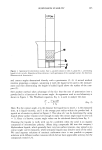
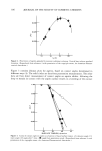
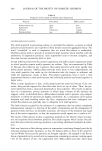
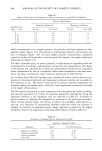
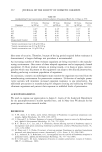
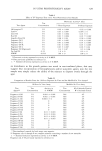
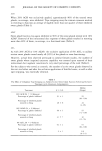
404 JOURNAL OF THE SOCIETY OF COSMETIC CHEMISTS Table II Properties of Flocculated and Deflocculated Suspensions Property Flocculated Deflocculated Sedimentation rate rapid slow Supernatant clear cloudy Sediment voluminous compact Redispersibility easy difficult CONTROLLED FLOCCULATION The third approach to preventing caking is controlled fiocculation, a process in which particles are permitted to join together to form loosely connected aggregates (flocs). The word "controlled" is used to emphasize that too much fiocculation is undesirable. Overfiocculation leads to growth of excessively large particles which interfere with the uniformity of suspension products. Such suspensions tend to become unsightly, and they may become excessively thick as well. Several differences between fiocculated suspensions and deflocculated suspensions (those in which particles remain totally separate) are evident. They are summarized in Table II. Because their effective size is greater, fiocculated particles settle more rapidly than defiocculated particles. Defiocculated particles settle more or less independently the very small particles that make up the distribution take the longest to sediment and make the supernatant cloudy or hazy. Flocculated suspensions tend to leave a clear supernatant behind as they settle because the individual particles are bound together in larger units. What is most significant is that, as fiocculated particles reach the bottom of the con- tainer, they provide support for other riocs that settle on top of them. Thus, the par- ticles themselves form a structural framework as they sediment. This results in deposi- tion of a voluminous, porous sediment in which large volumes of the medium are trapped, while, as described above, defiocculated systems tend to produce very compact sediments in which the particles are highly coordinated. As a consequence of the porous sediment and weak bonding within the riocs, suspensions that have undergone con- trolled fiocculation are generally easy to redisperse with mild agitation. The final volume occupied by the sediment in a suspension that has settled completely (sedimentation volume) is a function of the solids' concentration and the arrangement of particles within the riocs. In favorable situations, the volume of the sediment may equal that of the entire suspension, so that the suspension would appear not to settle at all. The extent of fiocculation within a suspension depends on the relative values of attrac- tive and repulsive forces between particles. Flocculants (agents which induce fioccula- tion) function either by reducing repulsion or providing additional interparticle attrac- tion. Salts may function as flocculating agents in suspensions containing charged particles by reducing interparticulate repulsion, so that the balance shifts in favor of the attractive van der Waals' forces and the particles are brought together. An example is the floccu- lation of griseofulvin by several salts in suspensions containing an anionic wetting agent (19). In the absence of salt, the suspensions were deflocculated and they caked upon
Purchased for the exclusive use of nofirst nolast (unknown)
From: SCC Media Library & Resource Center (library.scconline.org)