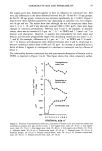
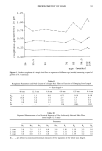
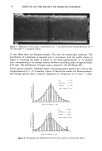
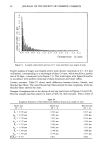
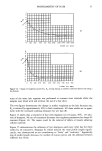
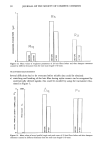
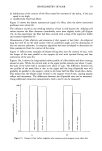
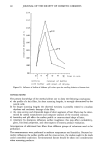
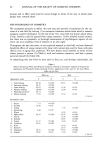
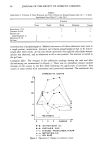
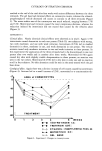
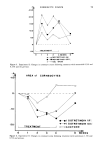
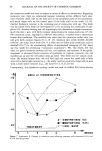
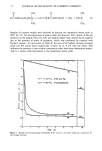
22 JOURNAL OF THE SOCIETY OF COSMETIC CHEMISTS than transcellular penetration. Thus, if we consider anatomic sites to contain equal volumes of stratum corneum but corneocytes of unequal volume, then the intercorneal space will be greater in stratum corneum with smaller corneocytes. This could explain the high permeability of sites such as the wrist, the postauricular region, or the fore- head. Thus, it seems likely that corneocyte size may constitute an important factor in the differences in permeability observed, but it can only account for part of the explana- tion. If any of the functions of skin permeability depend more on the physicochemical properties of the intercellular cement than on the volume of the intercellular spaces, this will be evident when sites of equal thickness of stratum corneum and equal volume of corneocytes are compared. Thus, although corneocyte size in areas such as the forearm (ventral-elbow and ventral-mid), arm (upper-outer), and abdomen does not change, there are great differences in permeability to water (TEWL) and benzoic acid. This indirectly confirms the importance of the chemical composition of the intercellular cement in the barrier properties of the horny layer (30,31). As shown in Figure 3 (a,b), when the surface of the corneocytes reaches a critically high area, the volume of the intercorneal spaces is no longer rate-limiting for both TEWL and penetration. These results might appear to contradict those of Marks et al. (11), linking TEWL and corneocyte size. Indeed these authors described a hyperbolic rela- tionship between these parameters. However, they studied anatomic areas of different corneal thickness, thus introducing an important additional source of variation. More- over, the palm must be considered as completely distinct from other skin sites in terms of TEWL (32). If we take into account only the results obtained by Marks et al. on the forearm, the wrist, and the forehead (Figure 3c), there is no major discrepancy between their results and ours. Influence of aging. Our results show no difference in benzoic acid absorption between 20-30 and 45-55 age groups. In subjects aged 65-80, on the other hand, absorption of this molecule is greatly reduced (factor 4). These findings agree with those of Mal- kinson and Fergusson who failed to show any difference in percutaneous absorption of hydrocortisone in adults of ages 41 to 58 (33). The reduced absorption of benzoic acid in the elderly is similar to that obtained with testosterone (34,35). It is a reasonable assumption that this age-related change in the barrier properties could be a consequence of alterations in keratinization and epidermal cell production and manifests itself in altered structure and function of the stratum corneum. Thus, in the 65-80 age group, the surface area of corneocytes was 20 to 25% greater than that measured in volunteers of ages 45-55 and 20-30. Concomitant to this age-associated increase in corneocyte surface area (8- 10), there is a decrease of roughly 30-50% in the epidermal turnover rate between the third and eighth decades of life (36-38). Total thickness of the stratum corneum (39) and individual thickness of corneocytes (11,40) do not change with advancing age. Then the volume of the intercellular spaces must decrease as the surface area of the corneocytes increases. These intercellular spaces probably act as a "reservoir" for topically applied molecules (16). Moreover, it has been clearly demonstrated that, for a given compound, the smaller the capacity of this reser- voir, the less that molecule is absorbed (6, 15,16,41,42). Since the general morpholog- ical organization of the stratum corneum does not appear to be affected by aging (39,43), it would be tempting to conclude that the large differences observed in percu- taneous absorption of benzoic acid with age are solely related to a decrease in the volume

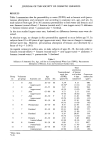
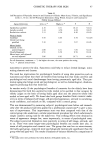
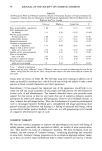
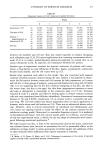
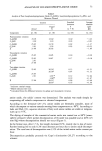
CORNEOCYTE SIZE AND PERMEABILITY 23 of the intercellular spaces due to an increase in the size of the corneal cells. This would be too simplistic an approach, and we should take into account other factors which affect the physical and physicochemical properties of the barrier, such as modifications in the lipid content and/or the lipid composition of the intercellular cement, cohesion between corneocytes (44,45), and the hydration level of the horny layer (46,47). More- over, morphological and functional changes in adjacent structures, in particular the dermis, should also be taken into consideration. Thus, in advancing age, alterations in the vascular bed and extracellular matrix may lead to a decreased clearance of transder- mally absorbed materials from the dermis (48,49). Influence of sex. As our results show (Table I, Figure 2), in the areas studied (upper-outer arm, forehead), no differences were found between male and female subjects, either in percutaneous absorption of benzoic acid or in TEWL. There has been no systematic study showing the effects of sex on cutaneous permeability in man. We, therefore, cannot compare our results with the literature. Some authors (7) report that corneocytes are smaller in men than in women. Others state the contrary (50). We agree with Marks et al. (11) that there do not appear to be any obvious differences in the surface areas of the corneocytes between men and women. TRANSEPIDERMAL WATER LOSS-PERCUTANEOUS ABSORPTION RELATIONSHIP Although most authors recognize the importance of anatomic site either in the degree of absorption or in TEWL, the literature does not include any quantitative data on the relationship which may exist between these two parameters in man. Our results show (Figure 4) that for the anatomic sites studied and within the range of TEWL and penetration values determined, there exists a highly significant linear relationship (r = 0.92, p 0.001) between the permeability of the skin to water and the percutaneous absorption of a non-water-soluble compound such as benzoic acid. Only values obtained on aged subjects (65-80 years, upper-outer arm, no. 3) do not fit this correlation. Thus, although the barrier function of the stratum corneum to the penetration of envi- ronmental agents appears to decline with age, we agree with others that TEWL does not vary (38,44,45). This is a strange situation because a particular feature of aged skin is the roughness and apparent dryness of its surface. As shown in this paper, generally less penetration occurs in those regions with large corneocytes. The larger the corneo- cytes, the smaller the intercellular space. In the case of the elderly, less lipid in the stratum corneum due to a decrease in the volume of the intercellular space could ac- count for the decreased permeation of lipid-soluble compounds like benzoic acid. This explanation is at the same time consistent with the unchanged permeation of water. CONCLUSION In the present work we have demonstrated that in young subjects the two principal indicators of the functional state and integrity of the cutaneous barrier, i.e., percuta- neous absorption and TEWL, are directly linked. Although corneocyte surface area appears to be an important factor in the efficiency of the epidermal barrier in both these phenomena, our results show that it only partly explains the differences in permeability observed according to anatomic site or age. It seems that other factors are relevant when corneocyte surface area is less than 600 p,m 2 or more than 1000 p,m 2. Thus, worthy of
Purchased for the exclusive use of nofirst nolast (unknown)
From: SCC Media Library & Resource Center (library.scconline.org)