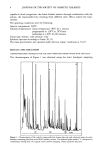
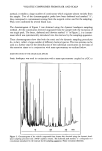
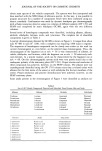
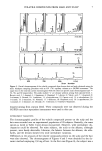
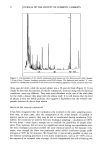
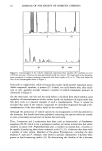
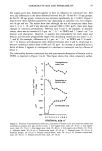
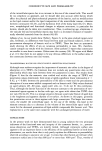
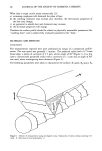
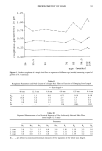
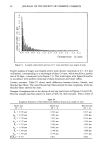
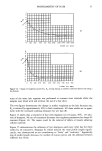
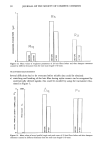
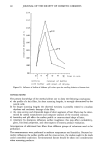
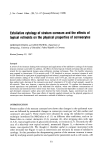
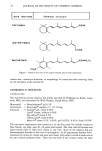
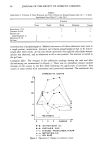
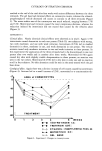
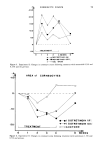
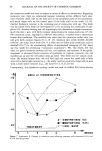
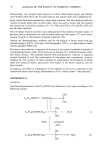
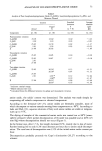
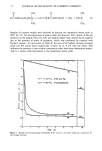
•c +250 +20 0 +150- +100 +50- CORNEOCYTE COUNTS 59 -50- [ TREATMENT ] , '_-- 6 • • • •i WEEKS ß --ß MOTRETINID • MOTRETINID 0.257ø /•--/• GEL BASE Figure 5. Experiment II: Changes in corneocyte counts following treatment with motretinid 0.5% and 0.25% and the gel base. -lO AREA of CORNEOCYTES C)- •C) t--t I SOTRETINOIN 1.5Y. L TREATMENT V--V I SOTRETINOIN O.5•. I OmOA CETON E Figure 6. Experiment II: Changes in corneocyte areas following treatment with isotretinoin 1.5% and O. 5 % and acetone.

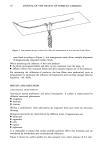
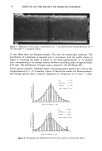
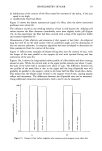
60 JOURNAL OF THE SOCIETY OF COSMETIC CHEMISTS the corneocyte model was used to analyze a variety of effects on normal skin. Regarding corneocyte size, there are substantial regional variations within different body sites, with relatively small cells on the head and on the peripheral parts of the extremities, and much larger cells on the central parts of the body such as the trunk (13,14). Another biological constant is the increasing size of corneocytes with age. This holds true for almost every body site investigated (13, 15), including the corneocytes of nail- plates (16). Another finding was the surprisingly thin dimension of single corneocytes, much less than 1 •m, with fairly constant characteristics for various body sites (17,18). The corneocyte count, expressed in cells/cm 2 skin surface, is another way to characterize human skin conditions. The numbers vary more than the corneocyte surface area, but still give fairly constant figures (9,11, 19-25). Glabrous skin yields 40,000-80,000 cells/cm2 the scalp, much more (26). It is often used to define scaly conditions, such as dandruff (26,27) or the ameliorating effects of antidandruff shampoos (27,28). Some use this model for advertising ("corneocyte countdown"). We, like others, feel that there is a good correlation between cell size, cell numbers, and turnover. If the epider- mopoiesis is increased (faster turnover of epidermis or stratum corneum), the cell numbers go up and the cell surface areas go down. This holds true for various condi- tions. On normal human skin, one will find high cell counts but small cells in body sites with a fairly high turnover (e.g., the scalp), and low counts but large cells in areas with a much slower turnover (e.g., the back) (9, 13, 14,21,29,30). Consequently, this exfoliative cytology model was used to confirm the inverse relation +10' -1 AREA of CORNEOCYTES -20- ß ßMOTRETINID O.5Y• ß ßMOTRETINID 0.25ø4 I TREAT MENT J /• /•GEL BASE •) '• • • •. • WEEKS Figure 7. Experiment II: Changes in corneocyte areas following treatment with motretinid 0.5% and 0.25 % and the gel base.
Purchased for the exclusive use of nofirst nolast (unknown)
From: SCC Media Library & Resource Center (library.scconline.org)