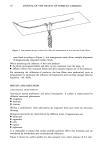
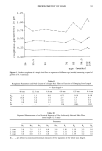
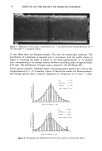
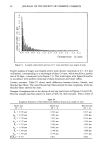
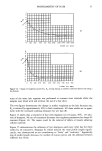
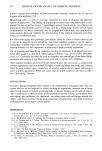
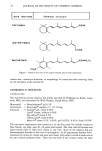
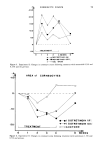
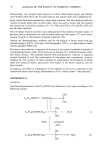
j. Soc. Cosmet. Chem., 39, 53-67 (January/February 1988) Exfoliative cytology of stratum corneum and the effects of topical retinoids on the physical properties of corneocytes GERHARD HAIDL and GERD PLEWIG, Department of Dermatology, University of Di•)seldorf, Federal Republic of Germany. Received January 29, 1987. Synopsis A review of the literature dealing with techniques and applications of the exfoliative cytology of the human stratum corneum is provided. In addition, the effects of several topical retinoids on human skin are demon- strated by two experimental designs using exfoliative cytology techniques. First, five healthy volunteers were exposed to isotretinoin (13-cis-retinoic acid) 1.5% dissolved in acetone, tretinoin (vitamin-A acid) 0.05% dissolved in equal parts of propyleneglycol and ethanol, propyleneglycol and ethanol alone, motre- tinid (aromatic analog of the n-ethyl amide of retinoic acid) 0.5% gel, and the gel base. Comparison showed similar exfoliative effects, expressed by an increase of cell counts (number of corneocytes per cm 2 skin surface) and a decrease of the corneocyte area (•m 2, planimetry of 50 cells of each sample), caused by all retinoids. There was, however, a superior skin tolerance by motretinid. To confirm this observation a second experiment was perfo/-med in an additional five subjects, where two different concentrations of isotretinoin and motretinid were tested versus their bases. Concentration-dependent increased cell counts and decreased corneocyte surface areas were observed for both retinoids. Again, motretinid was better tolerated than isotretinoin. Thus some effects of topically applied retinoids on the physical properties of corneocytes were demonstrated with noninvasive methods of exfoliative cytology. INTRODUCTION Former studies of the stratum corneum have shown that changes in the epidermal turn- over are followed by measurable changes in corneocyte counts per cm 2 skin surface and corneocyte area (•m2). These results were obtained by using the exfoliative cytology technique introduced by McGinley et al. (1) on different skin conditions, such as in- flamed skin in contact dermatitis (2,3), psoriasis (4), after stripping skin with tape (2,5,6), topical application of glucocorticosteroids, or tretinoin (2,7). Recently the effi- cacy of a relatively new topical retinoid, motretinid (Figure 1), a derivative of etre- tinate, was reported (8). We thought it therefore useful to compare motretinid with other retinoids (see Figure 1) such as isotretinoin and tretinoin by means of exfoliative cytology. In this procedure the desquamating portion of the stratum corneum is exam- ined by studying several qualitative and quantitative parameters such as cell counts, cell 53

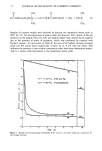
54 JOURNAL OF THE SOCIETY OF COSMETIC CHEMISTS Used Retinoids Chemical structure TRETINOIN I ._•C OOH ISOT RETINOIN OOH MOTRETINID ONHC2H 5 Figure 1. Chemical structure of the topical retinoids used in both experiments. surface area, corneocyte thickness, or morphology of corneocytes after removing them by the detergent scrub method (9). EXPERIMENTAL PROCEDURE MATERIALS USED The isotretinoin-acetone solution was kindly provided by Hoffmann-La Roche, Gren- zach, FRG, and motretinid by Wick Pharma, Grogg-Gerau, FRG. Motretinid = Monclerderma © gel 0.5% Isotretinoin = Roaccutan © capsules 2.5, 10, 20 mg Tretinoin = Eudyna © gel, cream 0.05% Airol © Cream, solution 0.05% Epi-Aberel © cream 0.5% VAS-Cordes © cream 0.05 % Retin-A © cream 0.1%, 0.05% gel 0.025%, 0.01% liquid 0.05% Two successive experiments were carried out. In the first study five healthy volunteers (four female, one male, ages 30-50 years) participated. The volar sides of forearms and upper lateral sides of arms were chosen as test sites. None of the subjects had any dermatological disorder at the time of investigation. In all experiments baseline deter- minations of corneocyte counts and areas were made. Each subject served at week zero as his own control (untreated skin). There was very little if any variance within the same
Purchased for the exclusive use of nofirst nolast (unknown)
From: SCC Media Library & Resource Center (library.scconline.org)