102 JOURNAL OF THE SOCIETY OF COSMETIC CHEMISTS (9) M. Jones and R. A. Moss, Reactive Intermediates (Wiley Interscience, New York, 1978), p. 1. (10) W. Kirmse, Carbene Chemistry, Organic Chemistry (Academic Press, New York, 1971). (11) E. Miiller, Houben-Weyl, Methoden der Organischen Chemie, Photochemie II, 4/5b (Georg Thieme Verlag, Stuttgart, 1975), pp. 1158-1254. (12) D. S. Wulfman, N. v. Thinh, R. S. McDaniel, and B. W. Peace, Metal salt-catalyzed carbenoids, Part IX, J. Chem. $oc. Dalton Trans., 522-529 (1975). (13) D. S. Wulfman, Metal salt-catalyzed carbenoids--XII, Tetrahedron, 32, 1231-1240 (1976). (14a) D. S. Wulfman, R. S. McDaniel, and B. W. Peace, Metal salt-catalyzed carbenoids-XIII, Tetrahe- dron, 32, 1241-1255 (1976). (14b) D. S. Wulfman, R. S. McDaniel, and B. W. Peace, Metal salt-catalyzed carbenoids--XIV, Tetra- hedron, 32, 1251-1256 (1976). (15) D. $. Wulfman, B. G. McGibboney, E. K. $teffen, N.v. Thinh, R. $. McDaniel, and B. W. Peace, Metal salt-catalyzed carbenoids--XV, Tetrahedron, 32, 1257-1265 (1976). (16) O. Ana½ and C. Aydo•an, The catalyzed decompositions of some olefins with dimethyldiazomalonate, Chim. Acta Turcica, 10(22), 113-120 (1982). (17) O. Ana½, Some observations on the catalytic and photolytic reactions of cis cyclodecene and cis-bicyclo (3.3.0) oct-2-ene with dimethyldiazomalonate, Rev. Roum.de Chimie, 31(8), 787- 793 (1986). (18) E. Gildemeister, Fr. Hofman, Die Atherischen Ole IIIa (Akademie-Verlag, Berlin, 1960), pp. 70, 90, 164. (19) O. Ana½, Essential oil contents and chemical composition of Turkish laurel leaves, Perfum. Flavorist, 11, 73-75 (1986). (20) Analytical Methods Committee, Application of gas-liquid chromatography to the analysis of essential oils. Part XI: Monographs for seven essential oils, Analyst., 109, 1343-1360 (1984). (21) O. Ana½, and N. Talinli, The volatile leaf and berry oils from juniperus communis L. and juniperus oxycedrus L. having Turkish origin, Rev. Medicala, XXXIV(2), 167-171 (1988). (22) A. Hendrich and Piatkowski, Acetals and ketals of 3[3,413-carandiol--New odoriferous compounds from ( + )-3-carene, Perfum. Flavorist, 11, 85-88 (1986). (23) A. R. Pinder, The Chemistry of Terpenes (Chapman-Hall Ltd., London, 1960), p. 93.

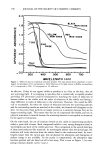
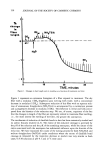
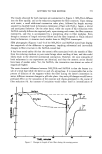
j. Soc. Cosmet. Chem., 41, 103-109 (March/April 1990) Physical sunscreens ROBERT M. SAYRE, Schering-Plough Corporation, Memphis, TN 3815 I, and Department of Physics, Memphis State University, Memphis, TN 38152 NIKIFOROS KOLLIAS, Department of Physics, Kuwait University, and Department of Dermatology, A1-Sabah Hospital, Kuwait,' RICHARD L. ROBERTS, Schering-Plough Corporation, Memphis, TN 38151 A. BAQER, A1-Sabah Hospital, Kuwait,' and I. SADIQ, Al-Sabah Hospital, Kuwait. Received March 20, 1990. Synopsis Physical sunscreens have been described as compounds that attenuate radiation through scattering. This work indicates that physical sunscreens can be also strong absorbers of ultraviolet radiation as well as good scatterers of visible light. Compounds like barium sulfate and talc attenuate radiation at all visible and ultraviolet wavelengths only by scattering. Compounds like titanium dioxide and zinc oxide exhibit a semiconductor optical absorption gap, absorbing most radiation at shorter wavelengths than the gap, while at wavelengths longer than the gap these compounds scatter. Colored iron oxides scatter radiation and simultaneously absorb various visible and ultraviolet wavebands. This knowledge is important in the use of these compounds in sunscreen products because it suggests that while the scattering of a particle can be modified by its environment, the absorption characteristics of a particle cannot be changed. INTRODUCTION Sunscreens are classified as chemical or physical depending on whether they absorb specific wavelength bands of radiation or reflect and scatter. When chemical sunscreens are applied to the skin, they usually do not modify the appearance of the skin. When physical sunscreens are applied to the skin, they can be seen on the skin's surface be- cause they reflect and scatter light (1,3). Because physical sunscreens are not wave- length selective, they are recognized as effective ingredients in sunscreen products con- tributing broad spectral protection. Greater emphasis is being put on use of physical sunscreens because of regulatory and safety concerns. In Japan, the amount of chemical sunscreen agents that can be used in a product is limited by law. If sunscreen products are to be highly effective, an adequate amount of physical sunscreen must also be employed. At the present time there is no limitation on the amount of physical sunscreen that can be used in a product. Presum- ably there is no risk to the user from physical sunscreens. In the United States the OTC drug review examined the safety and efficacy of each 103
Purchased for the exclusive use of nofirst nolast (unknown)
From: SCC Media Library & Resource Center (library.scconline.org)