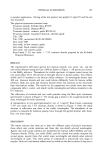
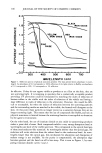
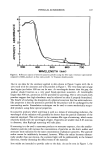
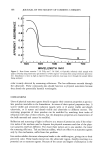
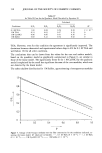
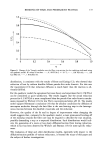
PHYSICAL SUNSCREENS 109 ultraviolet regions, these materials are not widely recognized for their sunscreen poten- tial, despite the fact that they should not suffer from the efficacy problems noted above for agents that only scatter and reflect such light. Titanium dioxide and zinc oxide each exhibit a strong semiconductor absorption in the ultraviolet. They also scatter and reflect only visible and ultraviolet light. Through careful formulation, aesthetically acceptable products can be made that minimize the scattering and reflection while simultaneously absorbing a significant amount of ultra- violet light because of the clear optical gap. The in vivo data presented herein confirm this point. The optical band gap exhibited in the formulated product resulting from the presence of titanium dioxide and zinc oxide can also be observed when product has been applied to the skin. In conclusion, users of physical sunscreen agents should recognize that there are impor- tant differences among these agents based upon their mechanism of solar light attenua- tion. The specific mechanism by which each agent attenuates radiation plays a crucial role in its applicability to particular formulation types. An understanding of the dif- ferent mechanisms of solar attenuation can potentially yield improved sunscreen efficacy through the combined use of physical and chemical sunscreen agents. ACKNOWLEDGMENTS We appreciate the use of the Varian Cary 2300 and Harrick Praying Mantis provided by Dr. M. Shah Jahan, Physics Department, Memphis State University, Memphis, TN 38152. REFERENCES (1) US FDA Monograph. Sunscreen products for over-the-counter human use: Proposed safety, effective and labeling conditions. Fed. Reg. 43: No. 166, Aug. 25, 1978, 38206-38269. (2) N. Kollias, A. Baqer, and K. Razi Naqvi, Fiber optic spectrophotometer for noninvasive transmission and diffuse reflection studies, Spectroscopy Letters, 19, 149-150 (1986). (3) M. A. Pathak, Sunscreens: Topical and systematic approaches for the preventior• of acute and chronic sun-induced skin reactions, Dermatol. Clin., 4, 321-33334, (1986).

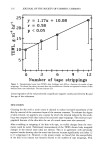
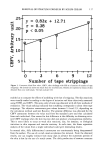
j. Soc. Cosmet. Chem., 41, 111-121 (March/April 1990) Mechanical removal of the superficial portion of the stratum corneum by a scrub cream: Methods for the objective assessment of the effects MARIE LOD•N and ANDERS BENGTSSON, Medical Department, ACO AB, S-171 26 Solna, Sweden (M.L.), and Department of Production Engineering, Chalmers University of Technology, S-412 96 Gothenburg, Sweden (A.B. ). Ra•ived November 16, 1989. Synopsis Abrasive cleansers (peeling or scrub creams) are claimed to make the skin surface smoother by mechanical removal of the outermost layers of the stratum corneum. The aims of the present study were: (1) to objectively assess the degree of skin removal by comparing the effect of scrubbing with that of successive tape strippings and (2) to quantify the changes in the surface texture using a replica technique and profilom- etry. The. tested scrub cream contained inert polyethylene granules dispersed in an oil-in-water emulsion. After stripping or scrubbing the skin, an irritant was applied to the test sites. TEWL and blood flow graphs show that scrubbing corresponds to the effect of 2.4 and 2.9 tape strippings, respectively. Visual assessment indicates that scrubbing corresponds to about three tape strippings. Profilometry shows that the values of the amplitude parameters (R s, Rq, Ry) are decreased by the scrubbing, whereas the number of peaks (Rn) are increased. In conclusion, this scrub cream removes the outermost layers of the stratum corneum, and the topograph- ical analysis provides a rationale for the perception of smoothness after the use of a scrub cream. INTRODUCTION Smoothness of the skin is an experienced feeling of its surface properties. Cosmetic products, which are aimed at conferring smoothness to the skin, may perform their function in different ways. Application of creams and lotions results in a deposition of ingredients onto the skin surface. These ingredients may directly or indirectly cause perceptible changes to the surface, i.e., either as lubricants or by inducing changes in the structure of stratum corneum (e.g., by swelling due to hydration) whereby the friction can be altered (1-3). Cleansing products, such as soaps and scrub creams, remove substances from the skin. The granules in scrub creams are supposed to enhance the cleansing effect by mechanical removal of the loosely bound outermost layer of the stratum corneum (4). The perceived smoothness of the skin is likely due to this gentle polishing of the skin. To our knowledge no data is available concerning either the 111
Purchased for the exclusive use of nofirst nolast (unknown)
From: SCC Media Library & Resource Center (library.scconline.org)