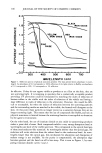
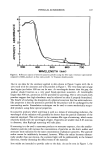
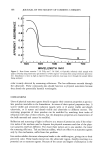
j. Soc. Cosmet. Chem., 41, 103-109 (March/April 1990) Physical sunscreens ROBERT M. SAYRE, Schering-Plough Corporation, Memphis, TN 3815 I, and Department of Physics, Memphis State University, Memphis, TN 38152 NIKIFOROS KOLLIAS, Department of Physics, Kuwait University, and Department of Dermatology, A1-Sabah Hospital, Kuwait,' RICHARD L. ROBERTS, Schering-Plough Corporation, Memphis, TN 38151 A. BAQER, A1-Sabah Hospital, Kuwait,' and I. SADIQ, Al-Sabah Hospital, Kuwait. Received March 20, 1990. Synopsis Physical sunscreens have been described as compounds that attenuate radiation through scattering. This work indicates that physical sunscreens can be also strong absorbers of ultraviolet radiation as well as good scatterers of visible light. Compounds like barium sulfate and talc attenuate radiation at all visible and ultraviolet wavelengths only by scattering. Compounds like titanium dioxide and zinc oxide exhibit a semiconductor optical absorption gap, absorbing most radiation at shorter wavelengths than the gap, while at wavelengths longer than the gap these compounds scatter. Colored iron oxides scatter radiation and simultaneously absorb various visible and ultraviolet wavebands. This knowledge is important in the use of these compounds in sunscreen products because it suggests that while the scattering of a particle can be modified by its environment, the absorption characteristics of a particle cannot be changed. INTRODUCTION Sunscreens are classified as chemical or physical depending on whether they absorb specific wavelength bands of radiation or reflect and scatter. When chemical sunscreens are applied to the skin, they usually do not modify the appearance of the skin. When physical sunscreens are applied to the skin, they can be seen on the skin's surface be- cause they reflect and scatter light (1,3). Because physical sunscreens are not wave- length selective, they are recognized as effective ingredients in sunscreen products con- tributing broad spectral protection. Greater emphasis is being put on use of physical sunscreens because of regulatory and safety concerns. In Japan, the amount of chemical sunscreen agents that can be used in a product is limited by law. If sunscreen products are to be highly effective, an adequate amount of physical sunscreen must also be employed. At the present time there is no limitation on the amount of physical sunscreen that can be used in a product. Presum- ably there is no risk to the user from physical sunscreens. In the United States the OTC drug review examined the safety and efficacy of each 103

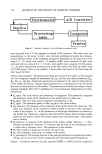
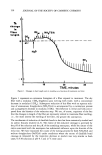
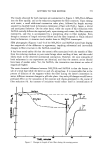
104 JOURNAL OF THE SOCIETY OF COSMETIC CHEMISTS sunscreen agent separately, setting maximum allowable concentrations in products (1). The maximum allowable concentration was determined on the basis of the concentra- tions that had been used in marketed formulations and that were supported by safety testing for those concentrations. The current policy allows use of combinations of ap- proved agents up to the maximum concentration limits for each agent. At the time of the OTC review only titanium dioxide was submitted as a physical sunscreen agent for use in sunscreen products. Titanium dioxide, therefore, appears to be the only acceptable physical sunscreen for use in sunscreen products in the United States (1). In the past several years, the availability of physical sunscreens and their quality has increased. The range of particle sizes, especially smaller sizes, has been extended dramatically. Today there are many additional choices of possible physical sunscreen agents. Moreover, we now know better how to design acceptable products incorporating physical sunscreens. According to Pathak (3), "Physical sunscreens are usually opaque formulations and contain ingredients that are particulate in nature and do not selectively absorb UVR, but when applied as a film, they primarily reflect and scatter UVR and visible radiation because of the size of the particles and thickness of the film." Also in 1986, Kollias et al. (2), while establishing the optical specifications for a new spectrophotometer, exam- ined the reflectance characteristics of titanium dioxide, showing that titanium dioxide exhibited a strong absorption edge characteristic of semiconductors at wavelengths just shorter than 400 nm. This observation provided the inspiration for this examination of the definition of physical sunscreens. METHODS A Varian Cary 2300 UV/vis spectrophotometer with a Harrick Praying Mantis attach- ment was used for obtaining diffuse reflectance spectra of physical sunscreen powders. Barium sulfate was used throughout as the reflectance reference (Aldrich Chemical Company #24,335-3). All spectra were measured relative to the BaSO 4 spectrum. Spectra were measured from 250 to 720 nm and stored on magnetic media using a Varian DS-15 data station. A diffuse reflectance spectrophotometer was also used to obtain similar data from opti- cally thick powder samples (2). This instrument was modified for UV spectrophoto- metric measurements as follows. A 1000-watt xenon arc (Oriel #6140) was coupled to a Jobin Yvon UV-HL monochromator with the slits set at 1.0 mm (band width of 2 nm), which provided input to a slit-shaped bifurcated silica/silica-clad fiber optic bundle. The common end of the bifurcated bundle had randomly mixed fibers. The other end of the bundle terminated in a slit-shaped fiber array that provided input to a Jobin Yvon H10 monochromator whose output was measured with an Oriel #7070 photomultiplier power supply amplifier. Shutters, stepper motors, and order sorting filter were controlled by and data acquired with a Hewlett Packard Model 150 II mi- crocomputer and a data acquisition controller (HP 3497). In vivo tests were performed to determine if titanium dioxide and zinc oxide in a clinical product (Rose Cream) provided the protection predicted by the in vitro study of sun- screen products. A 10-cm X 10-cm square was drawn on five volunteers' backs. A site within this area was selected and scanned with the fiber optic spectrophotometer prior
Purchased for the exclusive use of nofirst nolast (unknown)
From: SCC Media Library & Resource Center (library.scconline.org)