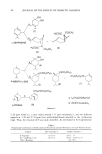
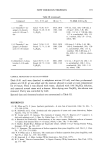
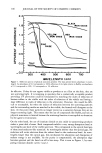
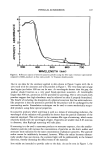
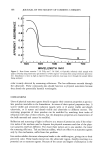
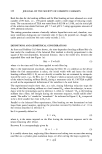
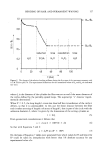
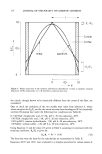
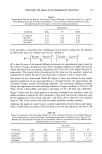
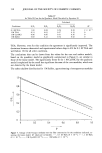
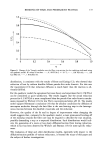
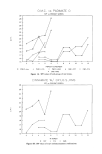
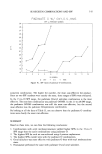
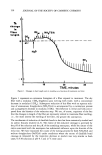
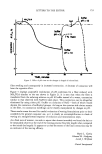
LETTERS TO THE EDITOR 153 Figure 5. Effect of pH rinse on the changes in length of reduced hair. fiber swelling and consequently in increased contraction. A decrease of ionization will have the opposite effect. Figure 5 displays purposeful modulation of pH conditions for a fiber reduced with NH4TGA (similar to the one shown in Figure 2). It is seen that when the fiber is transferred from the reducing solution to pH 10 buffer instead of to water, contraction similar to that observed with NaTGA takes place. This contraction can be altogether eliminated by using either pH 3 buffer or a solution of NaCl--both of which would depress the ionization of sulfhydryl groups. As long as the cysteine side chains remain in the fiber, its contraction (swelling) can be readily manipulated by changes in pH. These results stress the need for careful evaluation of waving formulations prior to their availability for general consumer use, as it is clearly an oversimplification to think of waving as a straightforward sequence of reduction and neutralization steps. As a final note of interest, we wish to report that almost invariably we found the hair to be measurably shorter at the end of the waving process (final dry length when compared to the initial dry length). It appears to us that the extent of the final contraction may be an indicator of the waving efficacy. Mario L. Garcia Edward M. Nadgorny Leszek J. Wolfram Clairol Incorporated

154 JOURNAL OF THE SOCIETY OF COSMETIC CHEMISTS REFERENCES (1) C. R. Robbins, Chemical and Physical Behavior afHuman Hair (Springer Verlag, New York, 1988). (2) C. Zviak, The Science of Hair Care (Marcel Dekker Inc., New York, 1986). (3) The DE instrument was constructed by Norman Den Beste, of Den Beste Associates, Arlington Heights, IL. (4) L. J. Wolfram and D. L. Underwood, The equilibrium between the disulfide linkage in hair keratin and sulfite or mercaptan, Textile Res. J., 36, 947 (1966). (5) R. R. Wickett, Kinetics of hair reduction using a single fiber technique, J. Sac. Cosmet. Chem., 34, 301 (1983). 6. A. Shansky, The osmotic behavior of hair during the permanent waving process as explained by swelling measurements, J. Sac. Cosmet. Chem., 14, 427 (1963).
Purchased for the exclusive use of nofirst nolast (unknown)
From: SCC Media Library & Resource Center (library.scconline.org)