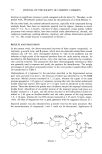
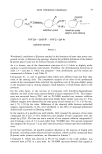
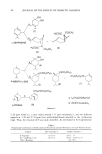
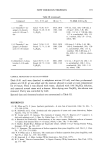
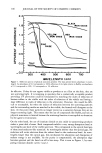
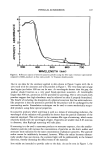
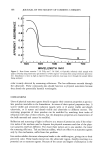
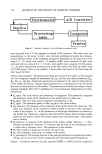
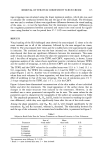
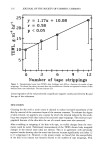
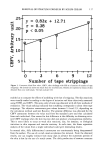
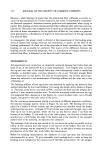
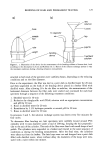
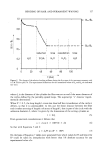
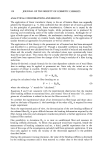
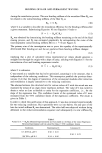
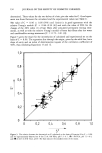
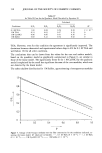
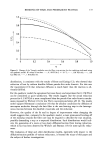
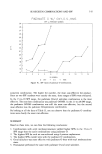
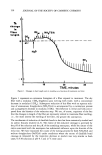
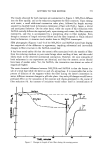
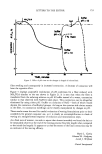
PHYSICAL SUNSCREENS 105 to product application. 100 mg of the test product was applied (1 mg/cm 2) and the site was rescanned. The physical sunscreens examined were: Titanium dioxide, Teikoku Kato #3296 Titanium dioxide, Degussa #P25 Titanium dioxide, cosmetic grade #8740-40 Titanium dioxide, Guardian Chemical, ultrafine grade Talc, USP Talc, USP, micronized (8190-40/19888) Zinc oxide USP Iron oxide, yellow cosmetic grade Iron oxide, black cosmetic grade Iron oxide, red cosmetic grade Rosa Cream (7.5% zinc oxide q- 7.5% titanium dioxide prepared by the AI-Sabah Hospital Pharmacy) RESULTS The representative reflectance spectra for titanium dioxide, zinc oxide, talc, and the iron oxides obtained using the Cary 2300 are shown in Figure 1. All spectra are relative to the BaSO4 reference. Throughout the visible spectrum, all agents tested except the iron oxide reflect 90 to 100 percent of the light relative to barium sulfate. Talc reflects visible and UV similarly to the barium sulfate reference. At wavelengths shorter than d00 nm, titanium dioxide and zinc oxide behave differently from the barium sulfate reference. Both zinc oxide and titanium dioxide reflect less radiation in the ultraviolet than does barium sulfate. The results for the pigmented iron oxides show that these compounds reflect, scatter, and absorb visible wavelengths and behave similarly in the UV radiation. The reflectance of titanium and zinc oxide powders using the fiber optic remittance spectrometer is shown in Figure 2. The energy gap is shown to be at approximately the same wavelength for both sunscreens. A representative in vivo spectrophotometric test of 1 mg/cm 2 Rosa Cream containing 7.5% zinc oxide and 7.5% titanium dioxide is shown in Figure 3. Note the sharp decrease in reflectance just short of the visible wavelengths. The absorbance of the product is measured by radiation passing twice through the applied product and, there- fore, two times larger. DISCUSSION The results indicate that there are at least two different types of physical sunscreens: those which only scatter radiation and those that also absorb selected wavelengths. Agents that only scatter radiation are represented by barium sulfate (BaSO4) and talc. Titanium dioxide (TiO2), zinc oxide (ZnO), and the colored iron oxides comprise the second group, namely those that scatter some wavelengths and absorb other selected wavelengths of light. This latter group of compounds is potentially very large in number. Both talc and barium sulfate must be visible on the skin's surface if they are to

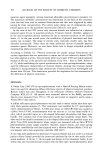
106 JOURNAL OF THE SOCIETY OF COSMETIC CHEMISTS 2.2 t.8 • 14 m ß o m 1 0 • ß Z - I. kl 0.6 0.2 TI02 TALC ZINC BLACK IRON OXIDE YELLOW R E D IRON OXIDE IRON OXIDE OXIDE __0.2 I I I I i I • I , I • ! I i I I. , I • I 300 400 500 600 700 WAVELENGTH (nm) Figure 1. Reflection spectra of physical sunscreen powders. The data plotted shows absorbance vs wave- length. An absorbance of 0.0 corresponds to 100% reflection of the light relative to BaSO4 an absorbance of 1.0 corresponds to 10% 2.0 corresponds to 1% reflection. be effective. If they do not appear visible as powders or as a film on the skin, they are not scattering light. It is tempting to speculate that a cosmetically acceptable product providing UV protection could be formulated by matching the index of refraction of barium sulfate in the visible with the index of refraction of the vehicle and having a large difference in index of refraction in the ultraviolet. However, this would be diffi- cult to accomplish, for when the indices of refraction between the scattering particles and the surrounding media are matched in the visible, the formula will disappear on the skin. At this point these particles no longer protect as a sunscreen because they are no longer scattering light. This means that the use of compounds like BaSO 4 and talc as physical sunscreens is limited because the scattering function is susceptible to alteration by the agent's environment. On the other hand, the use of titanium dioxide or zinc oxide in sunscreening products makes a great deal of sense. Both compounds exhibit a very strong absorption band at wavelengths just short of the visible spectrum. This corresponds to the optical band gap of these semiconductor-like materials. At wavelengths shorter than the optical gap, the radiation will excite electrons from the valence band to the conduction band. At wave- lengths longer than the optical gap, this mechanism for absorption and dissipation of radiant energy is not available. As the purity is compromised, the absorption edge becomes gradual and the band cut-off is less steep. This is seen in Figure 1, by com- paring titanium dioxide curves 1 and 2.
Purchased for the exclusive use of nofirst nolast (unknown)
From: SCC Media Library & Resource Center (library.scconline.org)