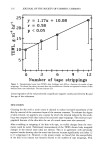
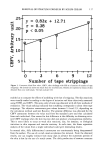
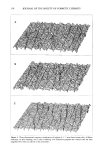
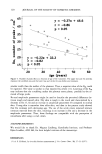
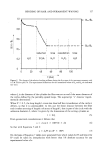
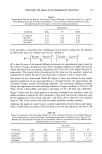
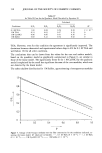
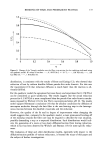
112 JOURNAL OF THE SOCIETY OF COSMETIC CHEMISTS degree of the skin removal or the resultant topographical features after using a scrub cream. To evaluate the degree of skin removal from scrubbing, a new concept was applied. Thus, the amount of skin removed by scrubbing was compared to that removed by successive stripping of the skin with tape. Following the treatments, the areas were exposed to an irritant (sodium lauryl sulfate, SLS). The resultant skin reaction was then evaluated visually as well as measured objectively (TEWL and cutaneous blood flow). A "standard" curve was established by plotting the provoked skin reaction against the number of strippings, and from this curve the result of the scrubbing could be read. Profilometry was finally used to study the influence of stratum corneum removal on surface structure. In the profilometry study a computer-controlled three-dimensional stylus-instrument system was used (5-7). The stylus is moved horizontally along the surface of a hard replica of the skin. The topographical features of the surface induce vertical movements in the stylus, which are converted into electrical signals and digi- tized. The collected data are used for a three-dimensional reconstruction of the skin surface and for calculation of applicable mathematical parameters used to quantify its roughness. MATERIALS AND METHODS The study was divided into two parts. The degree of skin removal from scrubbing was studied, and secondly the changes in the surface structure were quantitated. Different volunteers participated in the two parts. MATERIALS The scrub cream (ACO Scrub Cream, ACO AB, Sweden) is an oil-in-water emulsion, containing nonionic surfactants and inert polyethylene granules. The shape and the surface of the granules are irregular, with a main size of 100-200 I.tm. DEGREE OF REMOVAL OF THE SKIN LAYERS Subjects and treatments. Nine healthy women without skin diseases (mean age 36, range 19-52 years) participated in the study. Five areas on the volar forearm were used. One area was gently scrubbed for 30 seconds, one area was left untreated, and the three remaining areas were stripped using Scotch • invisible tape 3, 6, or 12 times. The treatments were randomly allocated to the five areas. Following the treatments, all five areas were exposed to sodium lauryl sulfate (SLS) and the resultant skin reaction was evaluated. Using a micropipette 50 •1 of SLS [8% (w/w) in distilled water] was measured onto one layer of filter paper placed inside a large aluminium Finn Chamber (internal diameter 12 mm) (Epitest Oy, Finland). To prevent drying of the filter paper, this was done immediately before application to the skin. The Finn Chambers were fixed to the skin by non-occlusive tape (Scanpor Norgeplaster AB, Norway). The patches were removed after seven hours, and the arm was gently rinsed with water and patted dry. The reac- tions on the test sites were evaluated 14 hours later.

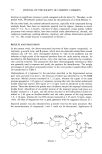
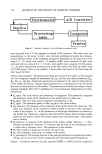
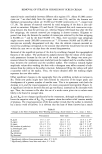
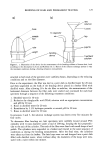
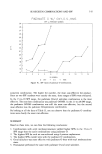
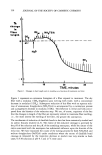
REMOVAL OF STRATUM CORNEUM BY SCRUB CREAM 113 Evaluation. For each subject the five areas were examined and ranked visually according to degree of irritation (erythema and possible infiltration). On each subject the most irritated area was given score 1 and the least score 5. Assessments were performed in a blind manner without access to the application charts. Each site was also measured for transepidermal water loss, TEWL, with an evaporimeter (Evaporimeter Ep 1, Ser- vomed, Sweden) (8) and by estimation of dermal capillary blood flow (i.e., erythema) by laser Doppler velocimetry (9, 10). The evaluations were made in the above men- tioned order. The probe of the evaporimeter, used for TEWL measurements, contains two hygro- sensors for measurement of relative humidity at two levels, about 3 and 6 mm above the surface. The sensors are protected by a Teflon tube, allowing free diffusion of water vapor between the skin and the surrounding air. From the data obtained from these sensors, the instrument calculates the water pressure gradient and expresses the water vapor flux. The probe was held in contact with the test areas for a minimum of one minute, during which time the data was recorded on a chart strip recorder (Servogor 120 BBC). The mean value after equilibration was taken as the TEWL. Cutaneous blood flow values (CBFV) were determined by laser Doppler flowmetry (Per- iflux PF1, Perimed, Sweden). The instrument measures the microvascular blood cell flux in the skin (9, 10). The expressed signal is proportional to flow velocity and appears on the panel as units of volts. The instrument was adjusted to a band width of 4 kHz and a gain of 10. The laser probe was attached to the central part of each exposed area with commercially available probe holders. These were fixed to the skin, using double- sided adhesive tape. Values were then recorded on the chart strip recorder, and the mean recorded during a two-minute reading taken as the CBFV. SURFACE TEXTURE Subjects and treatments. Eleven female subjects (mean age 42 years, range 22-59 years) without skin diseases participated in the study. Three replicas were taken of the volar forearm skin surface. The first replica was taken prior to the treatments, the second after washing the surface with a commercial liquid soap and water for 15 seconds, blotting with soft paper, and allowing the skin to dry for about five minutes. The third replica was generated after gently rubbing the skin with a scrub cream for 20-30 seconds, rinsing with water, blotting with soft paper, and allowing the skin to dry for about five minutes. Replication procedure. The skin surface structure was transferred onto a harder material in a two-step process (skin cast). A negative replica of the skin surface was generated using a silicon-based dental impression material (Povil L-Base q- L-Catalyst, Bayer Dental). This negative replica was then used as a cast for a hard positive replica (KerrTab 2000, Sybron/Kerr, Kerr Europe 1-84018 Scafati). The topographical analysis was obtained from the hard replica. Topographical analysis. A standard stylus profilometer (Perthometer C5D), together with a precision traversing table (developed at the Department of Production Engineering, Chalmers, G/3teborg) (Figure 1), was used to measure the surface (6,7) of the hard replica. An IBM-compatible XT microcomputer was used to control the table and to collect and store the data. The analogue signals (_ 5 V) of the vertical displacements
Purchased for the exclusive use of nofirst nolast (unknown)
From: SCC Media Library & Resource Center (library.scconline.org)