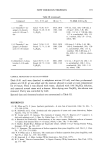
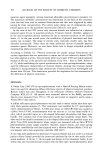
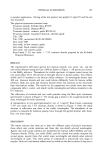
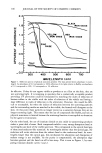
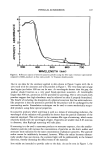
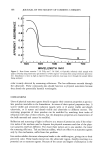
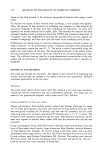
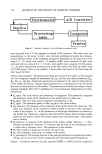
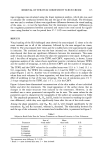
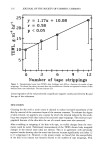
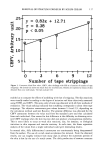
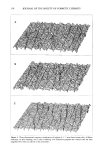
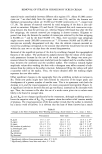
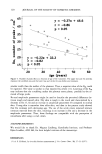
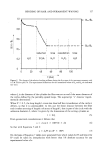
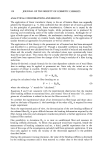
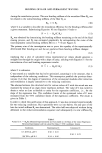
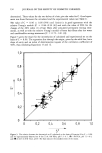
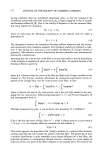
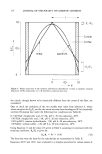
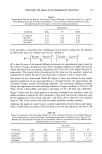
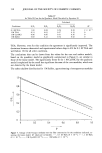
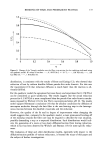
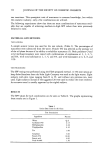
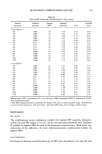
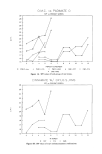
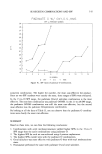
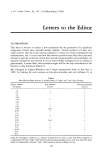
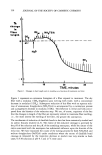
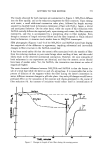
REMOVAL OF STRATUM CORNEUM BY SCRUB CREAM 115 tape strippings was calculated using the linear regression analysis, which also was used to calculate the correlation between Rn and the age of the individuals. The Friedman test was used to evaluate if there were significant differences between the visual ranking of the areas, i.e., to test the hypothesis that the treatments were equal. Differences in the roughness parameters between untreated and treated sites were tested for signifi- cance using Student's t-test for paired data. P 0.05 was considered significant. RESULTS Visual ranking of the SLS-challenged areas showed the area stripped 12 times to be the most irritated one in all of the volunteers, followed by the area stripped six times, (Table I). The area stripped three times and the scrubbed area were approximately equal in irritation. The untreated area was the least irritated one. Statistical analysis of the data showed that there are significant differences between the treatments. This same order of rank was obtained also when the objective assessments were made. In Figures 2 and 3 the effect of stripping on the TEWL and CBFV, respectively, is shown. Linear regression analysis of the values shows significant positive correlation between TEWL and the number of strippings, as well as between CBFV and the number of strippings. The TEWL and the CBFV values for the scrubbed areas were 12.9 --- 5.1 and 15.1 --- 9.0, respectively. For TEWL this corresponds to 2.4 and for CBFV to 2.9 tape strip- pings (Figures 2 and 3). Another way of estimating the scrub effect is to analyze the values from each volunteer by linear regression, and then from each graph to relate the effect of scrubbing to that of the tape strippings. This way of calculation gave 2.9 --- 2.4 tape strippings for the TEWL and 1.4 _+ 2.2 for the CBFV. Figure 4 shows three-dimensional reconstructions of the skin surface of one individual before and after the treatments. The visual appearance of the surface shows that no changes in the major structure were induced by the treatments. However, in the scrubbed area a more pronounced microprofile can be seen. The mean values for the parameters used to characterize the topography of the surface are summarized in Table II. The amplitude parameters Ra, Rq, and Ry tended to increase by washing (no signifi- cant difference), while they were significantly lower after the use of the scrub cream. Among the shape parameters, only RK, Rn, and Ka were changed significantly by the treatments. R K and Rn increased, whereas Ka decreased. The relationship between Rn and the age of the volunteers, for untreated and scrubbed skin, is presented in Figure 5. Table I Subjective Rank Order Data for Various Treatments on Obtained Irritation in Nine Volunteers Sum of Mean Treatment visual ranks • visual rank S.D. Untreated 36.5 4.1 1.0 Scrubbed 33.0 3.7 0.8 3 strippings 32.5 3.6 1.0 6 strippings 22.5 2.5 1.3 12 strippings 10.5 1.2 0.2 The treatments were different, P 0.05. • Rank 1 = most irritated skin area 5 = least irritated.

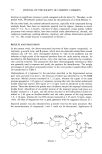
116 JOURNAL OF THE SOCIETY OF COSMETIC CHEMISTS 25- 1 mm •mmm y = 1.17x + 10.08 /• . / I- ra m ww I I I I I ' I , I | | : i ß I ß I I I I I I I ß I ß 0 3 6 9 12 Number of tape strippings Figure 2. Transepidermal water loss (TEWL) after challenge with SLS as a function of number of tape strippings. The dotted line shows the result from the scrubbed area. Results are expressed as means of data obtained from nine individuals. The bars indicate S.D. Linear regression of the values showed a significant negative correlation between Rn and the age of the volunteers. DISCUSSION Cleaning the skin with a scrub cream is claimed to induce increased smoothness of the skin by removal of the outermost layers of the stratum corneum. To evaluate the degree of skin removal, we applied a new concept by which the removal induced by the scrub- bing was compared with that induced by successive tape strippings. The resultant topo- graphical features of the skin after the use of a scrub cream were also measured. After scrubbing or stripping of the skin with tape, no visible changes from the treat- ments could be noted. Preliminary measurements of the TEWL showed only marginal changes in the treated areas (data not shown). This is in agreement with previously reported results showing that the water loss does not increase significantly until after 12 to 15 strippings (14). However, in the present study, we found that the susceptibility of the skin to an irritant was linearily related to the number of tape strippings. This
Purchased for the exclusive use of nofirst nolast (unknown)
From: SCC Media Library & Resource Center (library.scconline.org)