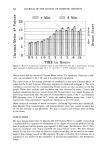
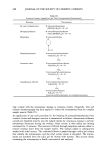
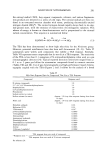
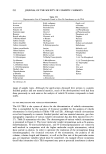
278 JOURNAL OF THE SOCIETY OF COSMETIC CHEMISTS restrained in a specially designed wash-off tank. The tank was filled and the animals were exposed to mildly turbulent tap water, held at an approximate temperature of 38øC. The total duration of wash-off was forty minutes, consisting of two 20-minute periods. Each 20-minute wash period was followed by a 20-minute rest period. The tank was refilled with fresh water just prior to each period. One should not expect to fully discriminate between water-resistant and waterproof claims in the guinea pig, even though it is intended that the wash-off procedure will estimate substantivity. The main concern is to establish a degree of substantivity under mild water activity. The finer analysis should be left for the clinical trial. SKIN SITE EVALUATION The skin sire evaluation system used for each animal is based on the system established for evaluating human skin responses as described in the OTC monograph (14). In this instance, relative increases or decreases in responsiveness are recorded for the treated sires, as compared to nontreated, in order to describe the test material as effective or ineffective at the expected target value. It is the trend observed in each animal which is combined and subjectively evaluated to give the final results for a given test material. The day following UVB irradiation or three days following UVA irradiation, the entire dorsal surface of each animal was depilated using a commercial depilatory. The depila- tory was applied for no more than fifteen minutes and was thoroughly washed off with warm running water. The animals were rowel dried and returned to their cages. A minimum of two hours following depilation the irradiated sires of each animal were evaluated and scored. The six irradiated skin sires of each animal were progressively read from left to right, head to rail, using the following symbols: -, no appreciable response +, response =, equal to •, less than •, greater than The symbols •, (less than or equal to), and •, (greater than or equal to), although not used for formal scoring, are used for the presentation of data. Each treated/nontreated pair was evaluated separately. There was no marching of com- parable degrees of erythema on the opposite sides of the animal in order to determine a specific protection factor. We feel this approach provides a superior evaluation of the sunscreen's actual potential. In addition to this evaluation, the quality of response at the treated and untreated skin sires of test animals was evaluated, as necessary, to fully define test material activity. The primary irritation control sire was also evaluated and taken into consideration during skin sire evaluation, in order to determine the primary irritative effects of the rest material. Since some test materials may be inherently irritating and produce an erythematous background, this effect must be subjectively evaluated. We have found that this may complicate the evaluation of sunscreen effectiveness, but it does not neces- sarily obviate the interpretation. The raw data, thus obtained, indicates when a response was noted on an untreated sire, whether or not the treated sire was comparable, and the differential quality of the reactions. The values determined for the guinea pig are presented as sun protection estimates (SPE) to differentiate them from human values (10).

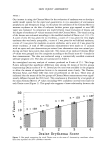
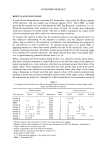
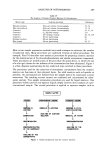
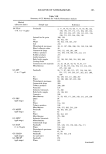
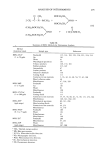
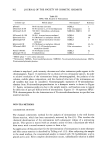
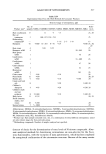
SUNSCREEN EFFICACY 279 RESULTS AND DISCUSSION A total of nine formulations, including 8% homosalate, were tested for efficacy against UVB radiation, and one sample was evaluated against UVA. Their SPFs, as either stated by the manufacturer or as determined by Hill Top Research, varied from 3 to 36. Wash-off experiments were conducted on seven of these. In several cases additional trials were conducted to clarify results. The data in Table I summarize the results of the clinical and guinea pig trials under the various testing conditions. To evaluate the validity of these data by statistical analysis is not appropriate since it is the subjective relationship of one response to another, and not assigned numerical values, that is critical to the evaluation. In addition, this methodology was designed to be cost-effective as well as predictive. To increase group sizes or to spend effort in applying statistics to these data would prohibit the use of the method as a fast, inex- pensive screening procedure. Therefore, group sizes intended for actual screening usage were employed for method validation the trends derived from these were highly effec- tive in approximating protection factors from 3 to 36. When combining data from single animals within a set, subjective trends, which gener- ally show erythema responses at treated skin sites to be less than those of the respective paired untreated sites, were indicative of protection estimates greater than those of the target values. Those responses at treated sites that were greater than those of the paired untreated sites were indicative of protection estimates lower than those of the target values. Responses at treated sites that were equal to those of the paired untreated sites resulted in protection estimates essentially equal to those of the target values. Although all evaluations are subjective, through the relative quantitative and qualitative nature of Table I A Comparison of Sun Protection Factors (Human) and Sun Protection Estimates (Guinea Pigs) Under Static and Wash-Off Conditions Human clinical Guinea pig tests Target c Test material Trial I a Trial IIb Irradiation value Trial I Trial II Trial III Sample A UVA 3 •3 (•3) d Sample B 3.4 3.3 UVB 3 3 3 HMS 4.3,4.1 UVB 4 4 (A) Sample D 5.5 5.0 UVB 5 5 5 Sample E 8.7 (6.7) d 10.6 (4.9) UVB 8 8 •8 (A) Sample F 9.9 (9.1) 8.7 UVB 8 8 8 (•8) Sample G 15.4 14.5 UVB 15 15 • 15 Sample H 17.1 (16.1) 20.2 UVB 15 15 415 (•15) Sample I 25.7 (18.9) UVB 15 15 (15) (15) Sample J 36 f (36) f UVB 36 36 (•36) (A) e (15) Human Human Target values for use in guinea pig trials. Values in parenthesis are from wash-off evaluation. Target value for guinea pig Trial III was reduced to 6. Value based on label claim. A = No protection apparent at the target level tested. HMS = homosalate 8%. clinical values presented for Trial I were provided by the supplier. clinical values presented for Trial II were determined by Hill Top Research, Incorporated.
Purchased for the exclusive use of nofirst nolast (unknown)
From: SCC Media Library & Resource Center (library.scconline.org)