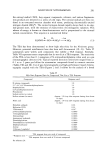
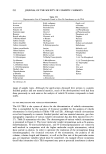
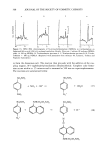
j. Soc. Cosmet. Chem., 41, 283-333 (September/October 1990) Analysis of nitrosamines in cosmetics KANE IKEDA and KENNETH G. MIGLIORESE, Helene Curtis, Incorporated, Chicago, IL 60639. Received September 17, 1990. Synopsis A review of the technology available for the analysis of trace levels of secondary N-nitroso compounds in cosmetics and cosmetic raw materials is presented. Included are discussions on detection limits for indi- vidual nitrosamine species for the various analytical procedures being employed, sample preparation and concentration techniques required for overcoming matrix interferences, achieving the lowest detectable limits of current instrumentation, and nitrosamine selective versus non-selective analytical procedures for quantifying nitrosamine species. INTRODUCTION The detection limit for trace contaminants in the environment is continually being pushed to lower and lower levels by increasingly sophisticated analytical instrumenta- tion. Analyses are now being performed routinely on previously undetectable levels of materials ranging from heavy metal contaminants, pesticide residues, and polychlori- nated biphenyls (PCBs), to a class of secondary N-nitroso compounds more commonly known as nitrosamines. Nitrosamines have been detected at the part per billion level in a wide variety of matrices (Table I). The cosmetic industry became aware of the possible presence of trace levels of nitrosamines in cosmetic products at an American Chemical Society meeting in March 1977, when Fine (1) reported the detection of N-nitroso- diethanolamine in finished products. To better understand the nature of N-nitroso compounds, a brief examination of their chemistry is required. For a more extensive discussion, the reader is referred to other exhaustive reviews of this subject (2,3). In this paper, the term nitrosamine refers specifically to secondary nitrosamines. NITROSAMINE CHEMISTRY N-nitroso compounds contain the characteristic N-NO functional group and include nitrosamines and nitrosoamides. Their structures are shown below: The authors represent the Nitrosamine Task Force of the Cosmetic, Toiletry, and Fragrance Association. 283

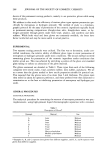
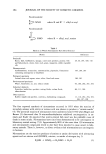
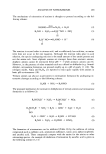
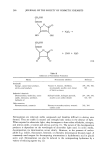
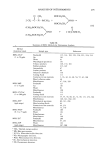
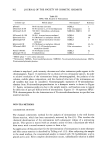
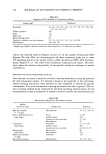
284 JOURNAL OF THE SOCIETY OF COSMETIC CHEMISTS N-nitrosamine R• R""'"' NNO N-nitrosamide O II RC • H• NNO where R and R' = alkyl or aryl where R = alkyl, aryl, amino Table I Matrices in Which Nitrosamines Have Been Detected Matrix References Foodstuffs Bacon, ham, frankfurters, sausage, cured meat products, poultry, fish and fish products, cheese, beer, malt, grain, margarine, edible vegetable oils Pharmaceuticals Antihistamines, tetracycline, oxytetracycline, piperazine, formulation containing aminopyrine or disulfiram Biological specimens Animal tissue and organs, urine, saliva, blood and serum Environmental specimens Water, wastewater, air, soil, tobacco smoke Industrial chemicals Pesticides, herbicides, synthetic cutting fluids, coolant fluids, alkanolamines Other matrices Rubber nipples and pacifiers, cosmetics, dishwashing compounds 28, 46, 294, 309, 310 104, 28O, 283 28O, 285 94, 280, 286, 287, 294 88, 111, 280 13, 110, 282, 294, 305, 3O6, 3O7, 3O8 The first reported synthesis of nitrosamines occurred in 1853 when the reaction of secondary amines with nitrite or nitrous acid was shown to produce a "nitroso amide" (4). The potential toxicity of nitrosamines went undetected until 1956 when Magee and Barnes (5) discovered that N-nitrosodimethylamine exhibited carcinogenicity in an- imals and Ender (6) reported that nitrite-treated fish meal was the probable cause of death in some minks. Nitrosamines have since been demonstrated to be carcinogenic in laboratory animal testing (7,8). Approximately 80% of the more than 120 nitrosamine and nitrosoamide compounds tested to date have been reported to cause cancer in labo- ratory animals. There is, however, no direct evidence that nitrosamines are carcinogenic in humans. Nitrosamines are the reaction products of amines or amine derivatives with nitrosating agents such as nitrous acid (HONO), nitrites, or oxides of nitrogen (eq 1). R2NH + HNO 2 -• R2NNO + H20 (1)
Purchased for the exclusive use of nofirst nolast (unknown)
From: SCC Media Library & Resource Center (library.scconline.org)