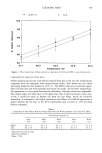
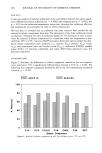
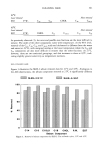
j. Soc. Cosmet. Chem., 41, 335-345 (November/December 1990) Selective removal of sebum components from hair: II. Effect of temperature JANE CLARKE, CLARENCE ROBBINS, and BRENDA SCHROFF, Colgate-Palmolive Research Center, 909 River Road, Piscataway, NJ 08855-1343. Received June 21, 1990. Synopsis The effect of temperature on the selective removal of sebum components from hair was compared for sodium laureth 2-sulfate (SLES-2) and ammonium lauryl sulfate (ALS). The data showed that SLES-2 was a more effective detergent for lipid soil than ALS at both 2 iøC (70øF) and 43øC (110øF). A decrease in surfactant efficiency with decreasing temperature and a slightly greater selec- tivity in component removal was observed at the higher temperature than at the lower temperature for both surfactants. Complementary experiments made using a much simpler wool swatch method showed it was valid for observing the effects of both temperature and surfactant on sebum removal from hair. INTRODUCTION When a company is committed to marketing hair care products in the global market- place, the research and development contribution to these products must take into consideration not only the soils to be cleaned from the hair, but also the manner in which the products will be used by the consumer. The latter conditions vary widely from country to country. Shampooing under running hot water (--4 løC/105øF) may be the norm in the US and Western markets, but in many developing countries the water supply is more limited and is often from streams or wells at ambient temperatures of 21-29øC (70-85øF). Formulators have to consider these limitations in designing shampoos that effectively lather and clean at the lower temperatures, and that render both properties in the relatively short cleaning times associated with shampooing. The shampoos must also rinse out efficiently, with a minimum quantity of water removing all traces of lather and soil. When these constraints are imposed on top of the ever- present safety restrictions, the formulators' job becomes a challenging one. One can divide soils on human hair roughly into four groups: a. Hair lipid, a fatty material composed mainly of sebum (from sebaceous glands) and lipids (from skin surface cells) b. Hair product soils, e.g., conditioners, hair sprays, mousses, gels, etc. 335

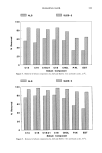
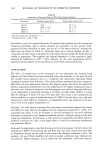
336 JOURNAL OF THE SOCIETY OF COSMETIC CHEMISTS c. Extraneous materials from a polluted environment (soot, hydrocarbons) d. Proteinaceous matter from cell debris and sweat In Western cultures where social practices have led to almost daily shampooing the accumulation of hair lipid is generally low, and hair soils are more likely to be self-ap- plied (b above) and are to a lesser extent soil types c and d. Shampoos need to be formulated to address these soils. In general, temperature and water supply restrictions are not present in Western cultures. However, in other countries where shampooing is less frequent, perhaps only once a week, the primary soil is type a. Shampoos for these markets may also be limited by the temperature and water supply constraints previously mentioned, and perhaps too by economic restrictions that limit raw material avail- ability and regulate the cost of the product. In a previous paper (1), a comprehensive procedure to determine selective removal of sebum components from hair was described, and the results compared with a rapid, in-house, screening test for total sebum removal using wool swatches impregnated with sebum/dye. The work detailed here builds on the aforementioned paper. Previously, the detergency of three surfactants -- sodium laureth-2 sulfate (SLES-2), ammonium lauryl sulfate (ALS), and sodium octeth/deceth-1 sulfate (SODS-1) -- was evaluated by examination of sebum residues on hair after one and ten soil/wash cycles. These experiments, carried out using tap water, -41øC-43øC (105-110øF) and 75-80 ppm Ca (as CaCO3), showed SLES-2 to be the most effective detergent (90% removal of all components after both one and ten cycles). ALS was not as good (72.4 +- 9 total sebum removed vs 93.7 + 3 for SLES-2) and, in addition, the extended use data (ten soil/wash cycles) suggested a buildup of fatty acid components on the hair with ALS. This was corroborated in a separate experiment by ESCA and interpreted in terms of a hard water ion/fatty acid interaction (1). Since many consumers use shampoos at temperatures less than the optimum of 41-43øC, there is a need to examine if, and how, temperature affects sebum component removal. The question arises as to whether any unexpected reversals or selectivity differences occur between lower and higher wash temperatures. With this objective in mind, two surfactants were selected for our experiments: SLES-2 and ALS. Both surfactants are widely used in shampoos. Two temperatures, 2 IøC and 43øC, representing extremes likely to be encountered under normal usage, were also chosen, and ten soil/wash cycles were carried out so that extended-use conditions are mimicked. The determination and evaluation of surfactant sebum removal efficacy is a modification of a technique reported in the literature (2), and is the same as that used in the prior work (1). MATERIALS AND METHODS ARTIFICAL SEBUM The artificial sebum used in all experiments was prepared according to the Spangler formula (3) and has been described previously (1).
Purchased for the exclusive use of nofirst nolast (unknown)
From: SCC Media Library & Resource Center (library.scconline.org)