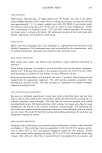
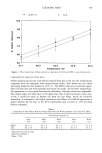
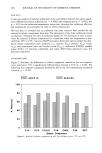
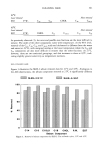
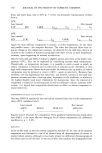
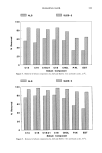
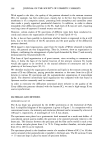
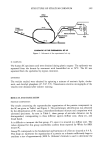
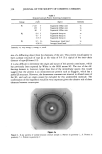
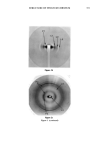
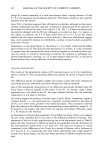
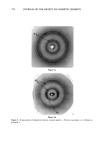
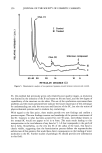
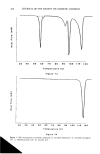
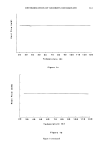
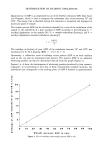
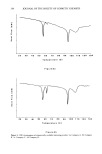
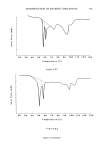
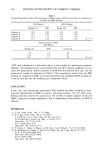
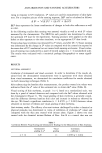
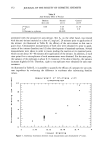
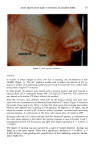
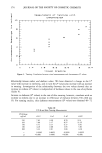
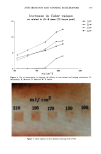
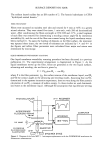
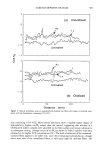
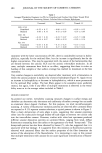
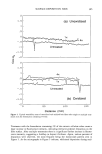
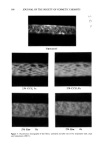
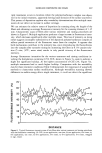
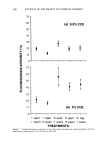
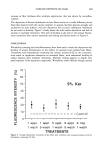
ANTI-IRRITANTS AND TANNING ACCELERATORS 373 control test Figure 2. Anti-irritancy assessment. TANNING In studies to assess changes in skin color due to tanning, the chromameter is also valuable (Figure 3). "Pre-tan" products usually seek to reduce the amount of UV re- quired to achieve skin darkening. Other products seek to extend the time of skin dark- ening from a single UV stimulus. In these studies the subjects were treated with a tanning product and then exposed to varying doses of UV irradiation (range 100-210 mJ/cm 2) (Table III). The control site was treated with similar UV doses without the product. After 48-72 hours, skin darkness values (L*) on the product-treated sites were mea- sured with the chromameter and subtracted from baseline L* values. Figure 4 illustrates the results of one such study. Here it is clear that there was a dose response relationship between skin darkness and increasing UV-B exposure. In addition to L* values, the a* values for redness, as well as b* values for yellow coloration, increased with increasing tanning response. A combination of the three color values were calculated as AE*. Although reflectance (L*) values indicate skin skin darkness/lightness, a combination of the color values appears to best depict the tanning response as seen in Figures 4 and 5. Correlations between UV-B exposure and AE* were highly significant (r = 0.9922, p 0.001). The degree of tanning was also assessed by a panel of trained observers. Scoring was based on a four-point system. There was a significant correlation (r = 0.895%, p 0.001) between visual grading and quantification of skin darkening with the chroma- meter (Table IV).

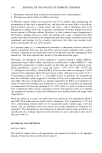
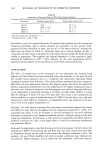
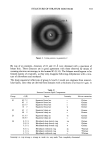
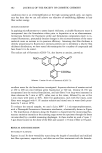
374 JOURNAL OF THE SOCIETY OF COSMETIC CHEMISTS lo I•eaeurement of Tanning w•tla I I I I I I I I I I I I I I [ I I I I I Figure 3. Tanning: Correlation between visual measurements and chromameter L* values. I I Relationship between redness and •rkness values. We have observed a change in the L* value with increase in erythema, and in turn the a* values also increase with an increase in tanning. Investigation of the relationship between the two values showed that an increase in redness (a* values) is independent of darkness values in the case of erythema (Table V). Increase in darkness (L* values) in the case of skin tanning, however, correlates with an increase in redness due to an increase in reflectance of melanin between 550-600 nm (5). For tanning studies, skin darkness measurements (L* values) are obtained 48-72 Table III UV-B and Skin Tanning Measurements UV-B dose mJ/cm 2 /x L* /X a* A b* A E* 210 7.82 4.00 8.76 12.4 195 7.06 3.17 8.57 11.55 170 5.71 0.17 6.17 8.41 130 4.29 0.08 3.95 5.83 106 3.33 0.01 2.66 4.26 r 0.9965 0.8623 0.9924 0.9922 p 0.001 0.0081 0.001 0.001
Purchased for the exclusive use of nofirst nolast (unknown)
From: SCC Media Library & Resource Center (library.scconline.org)