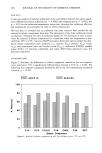
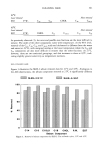
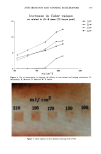
CLEANING HAIR 337 HAIR SUBSTRATE Dark brown, Oriental hair, of virgin quality and 10" length, was used in all experi- ments (DeMeo Brothers, New York). Prior to soiling with sebum, the hair was divided into approximately -3.7-g tresses, washed twice with 20% SLES-2 (one-minute wash, two-minute rinse) using tap water (4 iøF), and air dried at room temperature. Tresses were conditioned in a humidity room, 2 IøC and 60% relative humidity, for seventy- two hours prior to soiling with sebum. All subsequent weights of hair were made after similar temperature and humidity conditioning. SURFACTANTS SLES-2 and ALS (Standapol ES-2 and Standapol A, respectively) were obtained from Henkel Corporation. The surfactants were used as provided by the manufacturer, with no further purification. Solutions were prepared with deionized water. HAIR SOILING PROCEDURE Hair tresses were soiled, and sebum loads estimated, using conditions described in reference 1. These soiling solutions (1) resulted in an initial soiling level on the tresses of approxi- mately 0.03-0.04 g/g. Hair soiled in this manner was perceived to be very oily, repre- senting perhaps an extreme in hair oiliness for most Western cultures. After the soiled tresses dried, each was split into two 1.7-g tresses. One of each pair was washed with the appropriate surfactant. The other portion remained unwashed, thus providing an internal control. This was necessary to compensate for sample-to-sample variation in soiling levels. TEN-CYCLE SOIL/WASH EXPERIMENT For ten-cycle soil/wash experiments, tresses were split as described above and one tress kept as control. The other portion was washed, dried (described below), and placed in a constant humidity room overnight. The next day the tress was resoiled with sebum (accomplished using a 3% sebum solution). After soiling, the tresses were dried at room temperature and placed in the constant humidity room overnight. The following day the tresses were washed with the appropriate surfactant. This soil/wash cycle was carried out ten times. The order for both the soiling and washing procedures for each day was randomized among the tresses. HAIR CLEANING PROCEDURE Cleaning of the soiled tresses was achieved using a bulk process similar to that described in reference 2. The soiled hair tress was suspended in 100 ml of 0.01% aqueous surfac- tant at either 43øC or 21øC and agitated (magnetic stirrer) for five minutes. Tresses were then rinsed under running tap water (43øC or 2 IøC) for 20 seconds (total rinse volume, 500-600 ml). Heat from a hand-held drier was applied for one minute, and

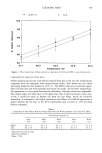
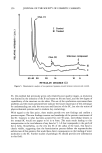
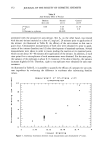
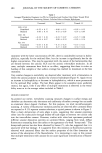
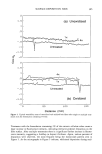
338 JOURNAL OF THE SOCIETY OF COSMETIC CHEMISTS the drying was completed at room temperature. Conditioning in the humidity room followed. EXTRACTION OF SEBUM FROM HAIR The extraction process (using hexane) and the subsequent analysis of the sebum residues removed from the hair has been described previously (1). WOOL SWATCH EXPERIMENTS A wool swatch screening test was used to evaluate total sebum removal by SLES-2 and ALS over the temperature range of 21 to 43øC. Essentially this test assesses sebum removal by monitoring (using a reflectance technique) the amount of lipid-soluble dye (Sudan IV, Aldrich) remaining on sebum/dye-soiled swatches after washing. The soil is applied to the wool using a 1% sebum/chloroform solution (0.005 g dye/g sebum), and the soiled swatches are washed in 1 liter of 0.1% surfactant solution (five swatches per wash load). After rinsing, the swatches are dried and the amount of dye remaining is assessed by reflectance. RESULTS AND DISCUSSION Results are presented for two sets of soil/wash conditions: 1. Sebum/dye-impregnated wool swatches washed at various temperatures in 0.1% surfactant -- essentially one soil/wash cycle 2. Hair soiled at 0.03-0.04 g soil/g hair and washed with 0.01% surfactant solution --ten soil/wash cycles The low detergent concentration for the hair experiments was used to facilitate analysis of the sebum residues on the hair. If higher concentrations are employed, the recovery and subsequent analysis of the lipid residue is not feasible because excessive amounts of surfactant relative to the amount of hair and soil would be involved. It has been pre- viously shown that similar results could be produced on hair after ten soil/wash cycles using either 0.01% or 10% solutions (1) of these same two surfactants. WOOLSWATCH DATA The percent total sebum removed by SLES-2 and ALS for wash temperatures between 21øC and 43øC are shown in Figure 1. (Values represent averages for between n = 5 and n = 15). Sebum removal increases linearly with temperature, and at all tempera- tures SLES-2 is a more effective detergent than ALS. However, the slopes of the curves are essentially the same, suggesting similar mechanisms for lipid soil removal. Thus the behavior of these two surfactants with respect to oily soil is that predicted by surfactant theory (4).
Purchased for the exclusive use of nofirst nolast (unknown)
From: SCC Media Library & Resource Center (library.scconline.org)