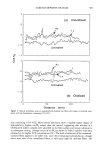
j. Soc. Cosmet. Chem., 41, 369-378 (November/December 1990) Use of a chromameter in assessino the efficacy of anti-irritants and tannino accelerators N. MUIZZUDDIN, K. MARENUS, D. MAES, and W. P. SMITH, Estee Lauder Laboratories, 125 Pinelawn Road, Melville, NY 11747. Accepted October 24, 1990. Synopsis The chromameter is a tool for precise and objective assessment of surface color. Data output, in the form of the L* a* b* color coordinate system is used for different studies pertaining to skin color. L* values (darkness/lightness) are useful in evaluating and quantifying the tanning response. The a* values (red/ green) are valuable for quantifying the degree of erythema. We have found a highly significant (p = 0.0002) correlation between instrumental readings and visual evaluation of skin color response. In studies involving skin tanning, combination of the L*, a*, and b* values were studied. We conclude that L* values provide an objective and repeatable measure of skin darkening however, for a complete picture of the tanning response, AE* could be calculated. For studies involving skin irritancy, the a* value is used to quantify erythema. The resolution of the data is high enough to allow for discrimination and statistical confirmation of responses that cannot be reliably determined by simple visual assessment. INTRODUCTION Erythema and pigmentation are typical responses to ultraviolet radiation (1). The de- tection of visible change in skin color is affected by several unrelated factors, such as viewing geometry, ambient illumination, color of unexposed surrounding skin, and the experience and visual acuity of the observer (2). Instrumental objective methods allow for accurate, repeatable, and unbiased quantifica- tion of skin color and any change therein. The Minolta Chroma (Reflectance) Meter described by Babulak et al. (1986) (3) is a portable, noninvasive instrument that quickly and easily quantifies surface color. Data output is in various forms, of which a* values and L* values allow for simple quantification of surface redness and darkness/lightness. This monograph describes the objective measurement of the cutaneous response to various stimuli and compares this with information obtained from conventional subjec- tive visual estimations. 369

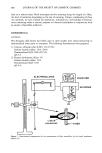
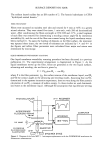
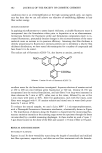
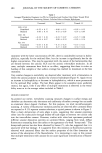
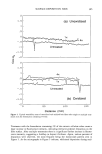
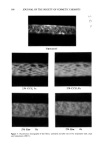
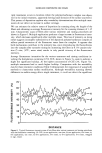
370 JOURNAL OF THE SOCIETY OF COSMETIC CHEMISTS MATERIALS AND METHODS INSTRUMENTATION Chromameters measure surface color and surface darkness/lightness to a precise degree by illuminating the site with a pulse or flood of light of defined color/brightness from a xenon arc lamp. The reflected light divides three ways, passes through filters, and strikes silicon photocells. Upon striking the silicon photocells, light energy is con- verted into an electrical signal and sent to a microprocessor where it is converted into coordinates for the chosen color space. Data output is in the form of L*, a*, and b* values. L* corresponds to levels of darkness/lightness between black and white. Coordi- nate a* signifies the balance between red/green, and b* between yellow/blue. For skin measurements, the q- a* range is of particular interest in measurements of erythema. L* or reflectance values are useful in tanning studies. ERYTHEMA ASSESSMENT: ANTI-IRRITANCY STUDIES A number of experiments have been designed to study the anti-irritancy effect of skin treatment products. The volar forearm of healthy volunteers (age 23-35 yr) is a conve- nient site for such studies, although facial skin can be more sensitive. Studies were done with different types of irritants. The most commonly used irritant in our studies is Balsam of Peru in petrolatum. Balsam of Peru is a syrupy balsam from a tropical Amer- ican tree (Myroxylon perurae) growing chiefly in E1 Salvador. It contains fragrance oils and has been used in perfumery. However, a majority of the cosmetic-using population has been reported to react to it. The immediate reaction to this compound is in the form of urticaria, which is an irritancy reaction, not involving the systemic antigen-anti- body reactions observed in sensitization reactions (4). Format of the study. Two 3-cm-square areas were delineated on the forearms of 14 volun- teers. Baseline skin color measurements were noted on both sites as a* values of the chromameter. One site was treated with an anti-irritant. The material was allowed to absorb for 20 minutes, and then Balsam of Peru was applied on the treated as well as the adjacent untreated control site. Degree of redness (a* values) was recorded at its maximal point after 25-45 minutes. Anti-irritant effects were determined by comparing a* values of the treated site with control sites. Baseline redness values of the skin were subtracted from each measure- ment. In other studies, anti-irritant materials such as indomethacin or hydrocortisone were applied 15-20 minutes prior to the irritant. Baseline measurements of both treated and untreated sites were obtained prior to application of the stimulus or anti-irritant mate- rial. Visual scoring of erythema was determined by a panel of trained judges. Results were evaluated with a statistical package (Statgraphics) to assess significance. TANNING STUDIES Assessing tanning accelerators requires precise and objective quantification of skin dark-
Purchased for the exclusive use of nofirst nolast (unknown)
From: SCC Media Library & Resource Center (library.scconline.org)