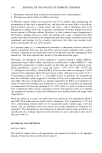
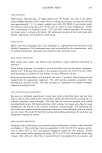
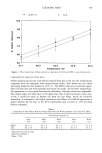
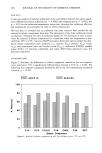
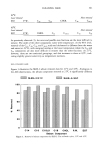
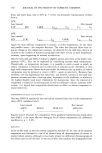
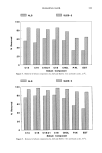
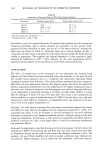
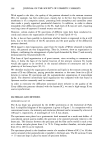
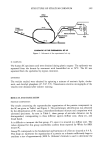
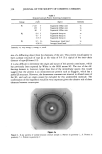
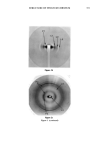
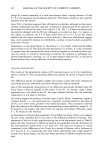
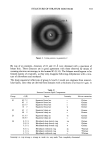
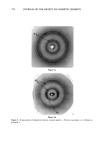
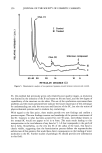
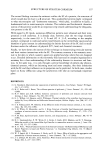
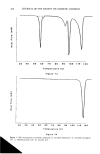
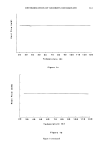
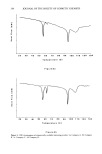
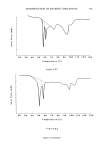
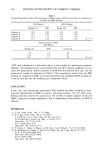
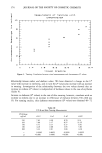
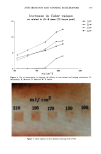
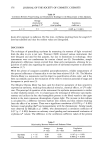
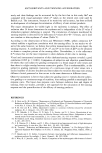
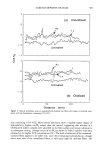
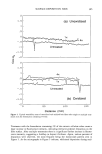
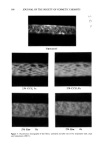
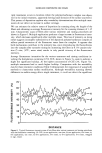
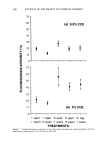
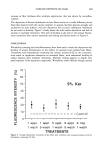
SURFACE DEPOSITS ON HAIR 387 tiple treatments occurs in locations where the polymer/surfactant complex was depos- ited in the initial treatment, apparently leaving small domains of the surface uncovered. This pattern of deposition explains why wettability determinations after multiple treat- ments do not detect an increase in surface coverage. We can estimate the relative extent of deposition by scanning along the length of the fibers and obtaining an average fluorescence intensity for the scanning distance of 1.35 mm. Characteristic scans of fibers after various treatment and rinsing procedures are shown in Figure 6. Multiple application produces a large increase in fluorescence inten- sity, which decreases significantly after multiple rinses. This loss of intensity on rising either suggests incomplete substantivity of the deposited polymer/surfactant complex or reflects partial extraction of the fluorescent tracer from the complex. It appears that both mechanisms contribute to the intensity loss, since reintroducing the fluorochrome into the complex after extensive rinsing by immersing the fibers in 0.1% uranine solu- tion (5 min, 30øC, water rinse) results in only partial recovery of the fluorescence intensity. Average fluorescence intensities for the various treatment and rinsing conditions in- volving the formulation containing 0.5% CCE, shown in Figure 7a, seem to indicate a slight but significant buildup. At the higher concentration of CCE (2%, Figure 7b), multiple treatments lead to much higher buildup. Comparison with the wettability data for these treatment conditions (Table I) demonstrates the importance of using both methods to characterize surface modification. Although wettability scanning showed differences in surface energy after a single treatment, it could not detect the significant 7O ol 50 z 40 LIJ o 30 2o o 10 e DISTANCE Figure 6. Typical fluorescence intensity scans of hair fibers after various treatment and rinsing procedures with the formulation containing 2% CCE: (a) one application, one rinse (b) one application, five rinses (c) five applications, one rinse (d) five applications, five rinses (e) five applications, five rinses, retagged (2. tag), rinsed.

388 JOURNAL OF THE SOCIETY OF COSMETIC CHEMISTS z z z o 70 60 50 4O 30 20 10 0 '70 60 50 40 (a) 0.5% CCE I [ [ • I ' I ' I 3O 2O 10 (b) 2% CCE I ' I ' I ' I ' I ' I appl. I appl. 5 appl. 5 appl. 2. tag I wash 5wash I wash 5wash I wash TREATMENTS Figure 7. Average fluorescence intensities of hair fibers after treatment and rinsing procedures with the formulations containing (a) 0.5% CCE and (b) 2% CCE.
Purchased for the exclusive use of nofirst nolast (unknown)
From: SCC Media Library & Resource Center (library.scconline.org)