358 JOURNAL OF THE SOCIETY OF COSMETIC CHEMISTS (12) R. D. B. Fraser et al., Keratins (C. Thomas, 1972). (13) G. Plewig, E. Scheuber, B. Reuter, and W. Waidelid, "Thickness of Corneocytes," in Stratum Cor- neum (Springer Verlag, 1983), pp 171-174. (14) K. C. Madison, D.C. Swartzendruber, P. W. Wertz, and D. T. Downing, Presence of intact inter- cellular lipid lamellae in the upper layers of the stratum corneum, J. Invest. Dermatol., 88, 714-718 (1987). (15) G. Vanlerberghe, R. M. Handjani-Vila, and A. Ribier, Les "Niosomes" une nouvelles families de vdsicules it base d'amphiphiles non ioniques, Colloques nationaux du CNRS, No. 938, Physicochimie des composgs amphiphiles.

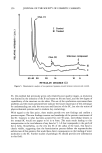
J. Soc. Cosmet. Chem., 41, 359-367 (November/December 1990) Determination of ascorbyl dipalmitate in cosmetic whitenino powders by differential scannino calorimetry WALTER LUCKEWICZ, Avon Products, Inc., Division Street, Sufj•rn, NY 10901, and ROBERT SACCARO, Penick Corporation, 158 Mt. Olive Avenue, Newark, NJ 07714. Received January 22, 1990. Synopsis A fast and simple method has been developed to quantitate ascorbyl dipalmitate ADP in cosmetic whit- ening powders. The method involves obtaining a differential scanning calorimetry DSC thermograms of the product, integrating an endotherm due to a phase transition of ADP, and comparing the area of the endotherm to that obtained from a pure standard of ADP. The method has been applied to whitening powders produced by four different cosmetics companies. The resulting values are found to agree with those obtained by a previously published, more involved HPLC method. INTRODUCTION Maintaining a pale, relatively unpigmented skin is important to a large segment of the Japanese market. Various cosmetic products have been developed (1) to aid in attaining this desired state, and they account for approximately six percent of Japanese cosmetic sales in recent years. These formulations are based on one of several active ingredients such as peroxides, ascorbic acid, and ascorbic acid derivatives (2). Their skin-whitening action is thought to be accomplished by the inactivation of tyrosinase, an enzyme that mediates the early steps of the melanin biosynthetic pathway (3). Ascorbyl diplamitate is a more stable form of ascorbic acid and has been used success- fully in several formulations (4). However, even the dipalmitate is not completely stable, and it is therefore imperative to be able to determine accurately the amount of the ingredient that is present in a formulation at a given time. Literature references concerning the quantitative analysis of ADP are few. Several years ago, the analyses of ADP (5) and ascorbyl palmitate (6) in ointments, vegetable oil, and lard by high-performance liquid chromatography (HPLC) were reported. Initial at- tempts to apply an HPLC method to the whitening powders revealed two drawbacks: rather extensive sample preparation is necessary, and inconsistent results are obtained. We find that the results vary due to a stability problem with ADP in methanol solution when held for a period of a few hours, presumably due to transesterification. However, when the sample is injected immediately, the HPLC method gives results comparable to those obtained by DSC. A gas chromatographic method for the determination of fatty acid esters of asco• (as the trimethylsilyl derivatives) has been described (7). However, the highe' 359
Purchased for the exclusive use of nofirst nolast (unknown)
From: SCC Media Library & Resource Center (library.scconline.org)