j. Soc. Cosmet. Chem., 43, 131-147 (May/June 1992) Psychophysical assessment of the chemical irritability of human skin BARRY G. GREEN and GREGORY S. SHAFFER, Monell Chemical Senses Center, 3500 Market Street, Philadelphia, PA 19104-3308. Received November 13, 1991. Synopsis Our goal in this study was to evaluate the usefulness of a psychophysical scaling method for the quantitative assessment of cutaneous sensory irritation. We sought both to assess the sensory irritancy of topical chemicals and to quantify individual differences in irritability. Measurements were made of the perceived intensity, time course, and quality of sensations produced by application of methyl salicylate or menthol to a localized area (1.1 cm 2) of the volar surface of the forearm using a novel occlusion technique. Experiment 1 revealed large individual differences in the perceived intensity and time of onset of the chemogenic sensations induced by 60% methyl salicylate. Experiment 2 demonstrated that in a given individual the responsiveness to menthol was not always predictable from the responsiveness to methyl salicylate. In addition, the quality of the sensations reported for the two chemicals differed: both evoked burning, stinging, warmth, and heat, but menthol also evoked sensations of cool and cold. We conclude that psychophysical scaling procedures can provide reliable and useful quantitative data on cutaneous chemical irritation. The strengths and weaknesses of the method are discussed with respect to possible clinical applications. INTRODUCTION Topical formulations, including drugs, cosmetics, and skin care products, sometimes produce unpleasant cutaneous sensations that are unaccompanied by clinical signs of irritation such as redness and whealing. This form of irritation, previously termed "subjective irritation" (1,2), and referred to here as "sensory irritation," has largely escaped systematic study. Probably the chief reason for the inattention to sensory irritation is that researchers in the cutaneous senses have not considered it to be a separate sensory modality equivalent to touch, temperature, and pain. Though the concept of a "common chemical sense" was introduced as early as 1912 (3), it was embraced primarily by workers in the chemical senses (i.e., taste and olfaction), who viewed the modality as a property of mucocuta- neous skin (4-6). Among somatosensory scientists the prevalent view seems to have been that the cornified skin functions more as a barrier to chemicals than as a sensor of chemicals (7). As a consequence, the majority of information about the sensory response 131

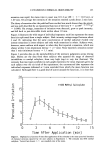
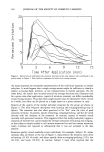
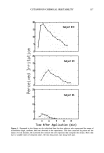
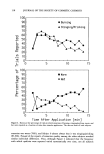
132 JOURNAL OF THE SOCIETY OF COSMETIC CHEMISTS of the skin to chemicals has come from studies that bypassed the horny layer. Most notable among these are the classic studies of "chemalgia" performed by Keele and his colleagues in which cantharidin blisters were raised and chemicals were applied to the blister base (8,9). It is arguable, however, whether measuring the sensory response to an irritant applied beneath the horny layer provides useful information about cutaneous sensory irritability. Whereas the intrinsic sensory excitability of a compound may be better assessed via the blister base (10) or other invasive techniques [for example, intradermal injection (11)], the ef:3ctive sensory irritancy of a topical substance, and the sensory irritability of the skin, can only be assessed by applying the substance to the surface of the skin. The few studies that have investigated the sensory effects of topical chemicals fall into two categories: basic studies intended to reveal properties of the sensory systems that mediate chemical irritation, and applied studies intended either to identify sensorially active compounds or to assess individual cutaneous irritability. Neither type of study has produced significant information about the perception of chemical irritation on the skin. The handful of basic studies in humans have not included psychophysical assessments of the chemogenic sensations produced by the chemical irritants (e.g., 12,13), and inves- tigations of the cutaneous effects of capsaicin (the most thoroughly studied chemical irritant) have usually focused on its capacity to sensitize or desensitize the skin, with little attention to its transient stimulatory effects (e.g., 14-19). More attention has been given to the excitatory phase of chemical irritation in clinical investigations however, the methods of perceptual measurement used have been ele- mentary. Perhaps the most useful of these, the lactic acid "sting test," is an effective method for detecting sensitive facial skin (2,20,21), but it provides only limited data on the intensive and qualitative dimensions of sensory irritation. In an effort to acquire some of the missing information on the sensory aspects of chemogenic cutaneous sensation [or "chemesthesis," (22-25)], we have undertaken a series of psychophysical studies (24,26-29) in which common chemical irritants, such as capsaicin, methyl salicylate, and camphor, were used as stimuli. To accommodate the unique characteristics of chemical stimulation (for example, the relatively long time course of stimulation and the possibility of lengthy after effects), it was necessary to modify standard psychophysical methods and to develop novel techniques for stimulus application. Although each of the earlier studies was directed principally toward iden- tifying group trends, it became clear that significant differences existed among indi- viduals group means did not adequately represent the diversity of individual irritabil- ities. The present paper describes our efforts to assess individual differences in chemosensory irritability using a numeric rating scale in conjunction with an adjective checklist. We had three principal objectives: (1) to quantify both group and individual responses to suprathreshold concentrations of a chemical irritant (methyl salicylate), (2) to determine whether individual differences in irritability could be measured reliably, and (3) to determine if the sensory response to one irritant (methyl salicylate) would predict the response to another irritant (menthol). We found that the method used was indeed able to detect large, reliable differences in the sensory responses to methyl salicylate and menthol. However, the response to one chemical did not always predict the response to the other chemical.
Purchased for the exclusive use of nofirst nolast (unknown)
From: SCC Media Library & Resource Center (library.scconline.org)