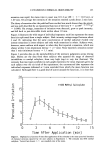
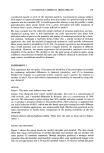
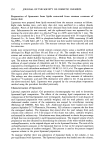
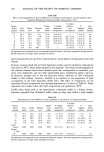
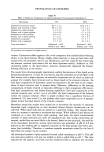
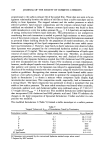
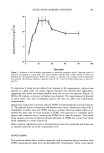
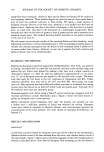
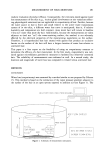
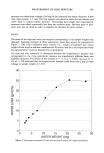
MEASUREMENT OF HAIR MOISTURE 181 realistic evaluation of product efficacy. Consequently, the criticisms raised against water loss measurement of the skin (e.g., eccrine gland involvement or site variations reflect- ing physiological variations) are not applicable to evaporimetry of hair. Further, because the water source in hair is finite and small relative to the active water transmission system of in vivo skin, a different water loss curve is anticipated that is, if relative humidity and temperature are held constant, more moist hair will return to baseline ("dry out") later than more dry hair. Additionally, because the measurements are taken adjacent to (and not "on") the water-emitting surface, the method is not adversely affected by the electrical properties of the moisturizing ingredients on the surface. Therefore, it is hypothesized that hair treated with agents that produce an occlusive barrier on the surface of the hair will have a longer duration of water loss relative to untreated hair. This paper is a first report on the feasibility of using an evaporimetry measure to determine the efficacy of a hair moisturizer. In the first study, evaporimetry was vali- dated against microbalance gravimetric measures in hydrated but otherwise untreated hair. The reliability of measurements was evaluated as well. In a second study, the duration and magnitude of water loss was compared in treated versus untreated hair. METHODS INSTRUMENTS Water loss (evaporimetry) was measured by a method similar to one proposed by Nilsson (7). This method is based on the estimation of the vapor pressure gradient adjacent to the surface of the hair in an open system exposed to ambient air (see Figure 1). The DIGITIZRTION RNB PROCESSIN PROBE HOUSfNG EMP PROBES HUMID AIR FLOX SHIELD NOTE, NOT ORRWN TO SCRLE IN ORDER TO SHOW DETRIL Figure 1. Schematic of measurement instrument.

182 JOURNAL OF THE SOCIETY OF COSMETIC CHEMISTS vapor-pressure gradient was measured by two rapid response relative humidity probes (capacitive thin film transducers) and two temperature probes (thermistors) attached to the interior of a cylinder with a diameter of 27 mm and a height of 20 mm. One humidity and one temperature probe were placed 3 mm from the surface of the hair, and the other humidity and temperature probes were placed 9 mm from the hair surface. Thus, the probes were positioned relative to the hair surface in the zone of diffusion (7). Another larger, hollow, open cylinder was placed around the probe-housing cylinder to reduce the possibility of artifacts due to movement of air. Relative humidity and temperature were digitally converted at 1 Hz and stored on magnetic disk for subse- quent analysis according to the formula presented previously. A Cahn micro- electrobalance was used to make gravimetric measurements. MATERIALS A commercially available product was selected as the treatment. This product's listed ingredients are: deionized water, mixed vegetable fatty acids, cetearyl alcohol, ceteareth- 20, stearalkonium chloride, polyquaternium-16, C12-15 alcohols benzoate, cetrimo- nium chloride, PEG-15 coco polyamine, squalene, squalane, glycolipids, phytosterols, acetamide MEA, panthenol, sugar acids, linolenic acid, arachidonic acid, sorbitol, wheat germ oil, jojoba, tocopherol, sulfur, PEG-30 sterol esters, cetyl alcohol, amodimethicone, nonoxynol-10, silicon glyconucleopeptides, magnesium glyconu- cleopeptides, cetylpyridinium chloride, polyquaternium-10, phenoxyethanol, methyl- paraben, ethylparaben, propylparaben, butylparaben, and fragrance. Since this was a preliminary investigation on the use of evaporimetry for the measure- ment of hair moisture, generalization of results was a major concern. Hair studies in the published literature often use samples of virgin hair that are generally uniform in color, texture, etc. however, these samples may not be characteristic of the hair found in the population. Therefore, hair samples used in these studies reflected a mixture (e.g., reflecting various different types and colors) of hair that was acquired from a local beauty salon. The test and control samples were matched for hair content so that any differences inherent in hair type would not be reflected in the studies. Samples were washed in a detergent and dried prior to being used in Study I and Study II. AMBIENT CONDITIONS Relative humidity was maintained at 40% --- 1, and temperature was maintained at 21.1 ø --- 0.55 ø C throughout all testing. STUDY I: VALIDITY AND RELIABILITY PROCEDURE In order to cross-validate that the proposed evaporimetry measure did indeed reflect the moisture content of hair, a study was conducted that compared water loss by the evaporimetric method (described above) to simple gravimetric measures. A series of
Purchased for the exclusive use of nofirst nolast (unknown)
From: SCC Media Library & Resource Center (library.scconline.org)