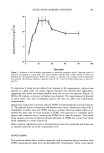
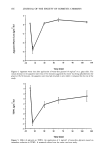
CUTANEOUS CHEMICAL IRRITABILITY 145 "burning" from "stinging" and "pricking," there is likely to be little difficulty in recognizing sensations of itch (a compelling discomfort that can rarely be misinter- preted). Instructions and examples may help guide individuals toward common con- ceptualizations of the less obvious qualities still, the effectiveness of detailed instruc- tions is difficult to evaluate. The ultimate utility of any method can be established only after data have been collected from a large number of subjects with a variety of chemical stimuli. Nevertheless, the reliability of the intensity measurements within and between subjects, as well as the ability to detect qualitative and quantitative differences between chemi- cals, clearly recommends the use of methods like the one tested here for assessing sensory irritation. To this end, psychophysical procedures can be brought to bear on a variety of basic questions. Among these are (1) the relative sensory irritancies of common counterirritants, (2) the relationship between clinical signs of irritation (such as erythe- ma) and sensory irritability, (3) the relationship between the barrier function of the skin and sensory irritability, and (4) not least the practical issue of the sensory irritancy of cosmetics, skin care products, and topical medicaments. ACKNOWLEDGMENTS The authors thank Dr. Albert Kligman for his suggestions and encouragement during the execution of these experiments, and for his helpful comments on an earlier draft of the manuscript. This research was supported in part by a grant from the Institute of Environmental Health Science, National Institutes of Health (ES04236). REFERENCES (1) (2) (3) (4) (5) (6) (7) (8) (9) (10) (11) (12) M. B. Finkey, Evaluation of subjective irritation induced by soap materials, J. Soc. Cosmet. Chem., 82, 153-161 (1987). K. Lammintausta, H. I. Maibach, and D. Wilson, Mechanisms of subjective (sensory) irritation, Dermatosen., 36, 45-49 (1988). G. H. Parker, The relations of smell, taste, and the common chemical sense in vertebrates, J. Acad. Nat. Sci. Phila., 15, 221-234 (1912). R. W. Moncrieff, The Chemical Senses (Leonard Hill, London, 1946). W. S. Cain, "Olfaction and the Common Chemical Sense," in Odor Quality and Chemical Structure: ACS Symposium Series, No. 148, H. R. Moskowitz and C. B. Warren, Eds. (American Chemical Society, Washington, D.C., 1981), pp. 109-121. W. L. Silver, "The Common Chemical Sense," in Neurobiology of Taste and Smell, T. E. Finger and W. L. Silver, Eds. (John Wiley & Sons, New York, 1987), pp. 45-54. G. H. Bishop, The skin as an organ of senses with special reference to the itching sensation, J. Invest. Dermatol., 11, 143-154 (1948). C. A. Keele, The common chemical sense and its receptors, Arch. Internat. Pharmacodyn. Ther., 139, 547-557 (1962). C. A. Keele and D. Armstrong, Substances Producing Pain and Itch (Edward Arnold, Ltd., London, 1964). R. W. Foster and K. M. Weston, Chemical irritant algesia assessed using the human blister base, Pain, 25, 269-278 (1986). K. Jensen, C. Tuxen, U. Pedersen-Bjergaard, I. Jansen, L. Edvinsson, and J. Olesen, Pain, wheal and flare in human forearm skin induced by bradykinin and 5-hydroxytryptamine, Peptides, 11, 1133- 1138 (1990). J. G. Macarthur and S. Alstead, Counter-irritants: A method of assessing their effect, Lancet, 1060- 1062 (1953).

146 JOURNAL OF THE SOCIETY OF COSMETIC CHEMISTS (13) (14) (15) (16) (17) (18) (19) (20) (21) (22) (23) (24) (25) (26) (27) (28) (29) (3O) (31) (32) (33) (34) (35) (36) (37) (38) (39) (40) C. M. Parsons and F. R. Goetzl, Effect of induced pain on pain threshold, Proc. Soc. Exp. Biol., 60, 327-329 (1945). N. Jancs6, Role of the nerve terminals in the mechanism of inflammatory reactions, Bull. Millard Fillmore Itosp., 7, 53-77 (1960). S. E. Carpenter and B. Lynn, Vascular and sensory responses of human skin to mild injury after topical treatment with capsaicin, Brit. J. Pharmacol., 73, 755-758 (1981). J. Szolcsfinyi, "Capsaicin, Irritation, and Desensitization: Neurophysiological Basis and Future Per- spectives," in Chemical Senses, Vol 2: Irritation, B. G. Green, J. R. Mason, and M. R. Kare, Eds. (Marcel-Dekker, Inc., New York, 1990), pp. 148-169. F. Konietzny and H. Hensel, The effect of capsaicin on the response characteristic of human c-poly- modal nociceptors, J. Therm. Biol., 8, 213-215 (1983). D. A. Simone, T. K. Baumann, and R. H. LaMotte, Dose-dependent pain and mechanical hyper- algesia in humans after intradermal injection of capsaicin, Pain, 38, 99-107 (1989). R. H. LaMotte, C. N. Shain, D. A. Simone, and E.-F. P. Tsai, Neurogenic hyperalgesia: Psycho- physical studies of underlying mechanisms, J. Neurophysiol., 66, 190-211 (1991). P. Frosch and A.M. Kligman, A method for appraising the stinging capacity of topically applied substances, J. Soc. Cosmet. Chem., 28, 197-209 (1977). G. L. Grove, D. M. Soschin, and A.M. Kligman, "Adverse Subjective Reactions to Topical Agents," in Cutaneous Toxicity, V. A. Drill and P. Lazar, Eds. (Raven Press, New York, 1984), pp. 203-211. B. G. Green and H. T. Lawless, "The Psychophysics of Somatosensory Chemoreception in the Nose and Mouth," in Smell and Taste in Health and Disease, T. V. Getcheil, R. L. Doty, L. M. Bartoshuk, and J. B. Snow, Eds. (Raven Press, New York, in press). B. G. Green, J. R. Mason, and M. R. Kare, Chemical Senses, Vol. 2: Irritation (Marcel Dekker, New York, 1990), pp. v-vi. B. G. Green, Sensory characteristics of camphor, J. Invest. Dermatol., 94, 662•566 (1990). B. G. Green, "Oral Chemesthesis: The Importance of Time and Temperature for the Perception of Chemical Irritants," in Sensory Science Theory and Applications in Foods, H. T. Lawless and B. P. Klein, Eds. (Marcel Dekker, New York, 1991), pp. 107-123. B. G. Green and L.J. Flammer, Localization of chemical stimulation: Capsaicin on hairy skin, Somatosens. Mot. Res., 6, 553-566 (1989). B. G. Green and L. J. Flammer, Capsaicin as a cutaneous stimulus: Sensitivity and sensory qualities on hairy skin, Chem. Seines, 13, 367-384 (1988). B. G. Green, Spatial summation of chemical irritation and itch produced by topical application of capsaicin, Percept. ?sychophys., 48, 12-18 (1990). B. G. Green and L. J. Flammer, Methyl salicylate as a cutaneous stimulus: A psychophysical analysis, Somatosens. Mot. Res., 6, 253-274 (1989). B. C. Lippold and D. Hackemuller, The influence of skin moisturizers on drug penetration in vivo, Internat. J. Pharmaceut., 61, 205-211 (1990). S. Bevan and J. Szolcsfinyi, Sensory neuron-specific actions of capsaicin: Mechanisms and applications, Trends Pharmacol. Sci., 11, 330-333 (1990). B. Calvino, Differential effect of a chemical algogen on two nociceptive thresholds, ?hysiol. Behav., 47, 907-910 (1990). K. Duncker, Some preliminary experiments on the mutual influence of pains, ?sychol. Forsch., 21, 311-326 (1937). G. D. Gammon and I. Starr, Studies on the relief of pain by counterirritation, J. Clin. Invest., 20, 13-20 (1941). J. C. Wilier, A. Roby, and D. Le Bars, Psychophysical and electrophysiological approaches to the pain-relieving effects of heterotopic nociceptive stimuli, Brain, 107, 1095-1112 (1984). T. Lewis and W. Hess, Pain derived from the skin and the mechanism of its production, Clin. Sd., 1, 39-61 (1933). C. A. Maggi and A. Meli, The sensory-efferent function of capsaicin-sensitive sensory neurons, Gen. Pharmacol., 19, 1-43 (1988). R. D. Helme and S. McKernan, Neurogenic flare responses following topical application of capsaicin in humans, Ann. Neurol., 18, 505-509 (1985). K. Laden, Studies on irritancy and stinging potential, J. Soc. Cosmet. Chem., 24, 385-393 (1973). J. Wallengren and H. Moller, The effect of capsaicin on some experimental inflammations in human skin, Acta Derm. Venereol. (Stockh), 66, 375-380 (1986).
Purchased for the exclusive use of nofirst nolast (unknown)
From: SCC Media Library & Resource Center (library.scconline.org)