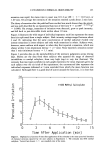
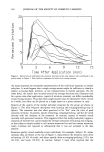
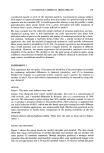
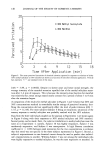
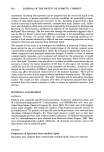
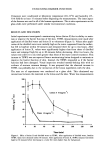
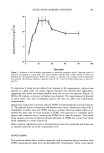
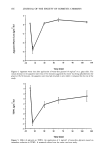
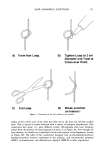
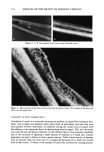
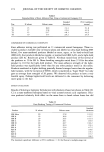
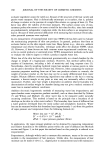
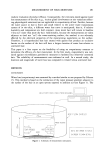
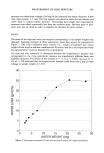
164 JOURNAL OF THE SOCIETY OF COSMETIC CHEMISTS were made after application of distilled water and lotion X to a glass slide (Figure 2). Again water loss values were elevated for lotion X when compared to those of distilled water, in particular at the later times. This indicated that the high readings were due to lotion X alone and not to a product-skin interaction as was previously postulated. The composition of lotion X listed propylene glycol as the second most abundant material after water. A second moisturizing lotion, Y, that did not contain propylene glycol was tested and found to behave similarly to distilled water as opposed to lotion X (Figure 2). This suggested that propylene glycol caused the high reading of lotion X. To determine if the ServoMed evaporimeter would respond to the presence of water-free propylene glycol, it was applied to a glass slide and measurements were made. As shown in Figure 3, the evaporimeter responds to the presence of propylene glycol with ex- tremely high values and for an extended period. Other volatile materials such as meth- anol, ethanol, and acetone have been tested and have been found to cause the evapo- rimeter to respond in a similar manner (15). Because of concerns about the potential chemical effect of solvents on the evaporimeter, the manufacturer of the relative hu- midity sensors was contacted, and he revealed that concentrations of organic solvents greater than 100 ppm may attack the polymeric material and cause the instrument to lose its calibration (16). For this reason, organic solvents were kept away from the evaporimeter, and periodic checks of the instrument's calibration were made to ensure stability. The interaction between volatile materials and the evaporimeter could be avoided if experiments were designed to allow 2-3 hours to elapse before evaluating their effect on TEWL. 5O 4O 3O 2O 10 0 ! 0 100 • 2 on Y (6 mg/cm ) .... ' %%%%% Water (4 rag/era 2) •_ • ......... ........................... .................................... 20 40 60 80 Time (min) Figure 2. Response of the ServoMed evaporimeter to distilled water, lotion X, and lotion Y applied to a glass slide. Evaporation of the water was completed within approximately 45 minutes of application. After application of lotion X, the response of the evaporimeter remained high for 90 minutes. Lotion Y has a water loss profile similar to the one for distilled water. The initial value was very high, but after 45 minutes, the response was zero and remained there until the conclusion of the test.

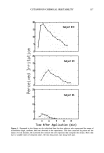
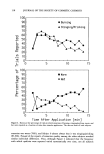
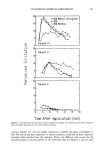
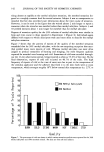
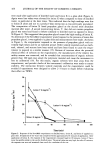
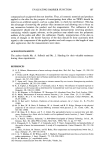
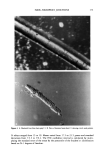
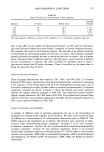
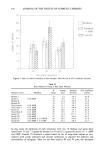
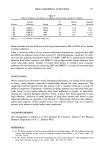
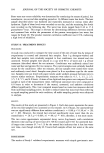
EVALUATING BARRIER FUNCTION 165 20 10 -10 ! i i i i 0 20 40 60 80 100 Time (min) Figure 3. Response of the ServoMed evaporimeter to water-free propylene glycol. Propylene glycol (4 mg/cm 2) was applied to a glass slide. The initial decrease indicated that a small amount of water was adsorbed into the propylene glycol. Within five minutes, an increase in the response of the evaporimeter was observed. The response reached a maximum value of 16-17 g/m2/hr before stabilizing at a value of 9 g/m2/hr. To determine if other glycols affected the response of the evaporimeter, glycerol was applied to a glass slide. An initial negative response was observed after application, suggesting that water was being adsorbed from the air into the glycerol (Figure 4). Within 30 minutes, a recovery to baseline was obtained. The vapor pressure of glycerol is much lower than that of propylene glycol and does not affect the evaporimeter measurements. Application of glycerol to humans reduced TEWL for approximately two hours (Figure 5). The glycerol acts as a humectant and absorbs water until a steady-state water flux is established, at which time the TEWL returns to normal. Previous work by Batt et al. showed the same type of initial decrease in TEWL with glycerol as it adsorbed atmo- spheric and cutaneous water, reducing the TEWL for at least 40 minutes. Their work using aqueous solutions of glycerol showed decreases in TEWL for at least four hours when compared to a water control (9). Other cosmetic ingredients such as triethanolamine have been examined and found not to interfere with the use of the evaporimeter (15). CONCLUSIONS This work has shown that a volatile compound such as propylene glycol interferes with TEWL measurements made with the ServoMed EP1 evaporimeter, while a less volatile
Purchased for the exclusive use of nofirst nolast (unknown)
From: SCC Media Library & Resource Center (library.scconline.org)