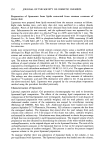
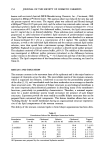
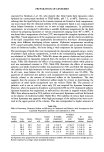
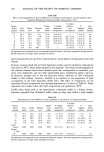
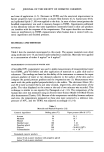
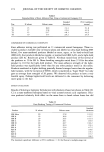
162 JOURNAL OF THE SOCIETY OF COSMETIC CHEMISTS and time of application (3-5). Decreases in TEWL and the associated improvement in barrier properties have occurred when occlusive film-formers (6,7), humectants (8,9), and epidermal lipids (7,10) were applied to the skin. In most of these investigations the SeroMed evaporimeter was used to measure changes in TEWL. Experiments performed in this laboratory indicate that some ingredients commonly found in skin care products can interfere with the response of the evaporimeter. This report describes our observa- tions on interferences in TEWL measurements when human skin is treated with cos- metic ingredients and finished products. MATERIALS AND METHODS MATERIALS Table I lists the materials investigated in this study. The organic materials were dried using molecular sieve 5A and stored under anhydrous conditions. Materials were applied at a concentration of either 4 mg/cm 2 or 6 mg/cm 2. MEASUREMENT OF THE RATE OF WATER LOSS A ServoMed EP 1 evaporimeter was used to make measurements of transepidermal water loss (TEWL, g/m2/hr) before and after application of materials to a glass slide and to volunteers. The readings are based on the ability of the instrument to measure the vapor pressure gradient of water at two distances adjacent to the surface of the skin and to compute the partial pressure gradient and the evaporation rate (1). Measurements were made with the probe applied perpendicularly to the surface. The electronic filters (10 s and 20 s) were activated thirty and sixty seconds, respectively, after placement of the probe. The value displayed on the screen at the end of two minutes was recorded. This technique is similar to one reported by Pinnagoda et al. (12). The temperature of the human skin sites was measured using an Everest Inter-Science Model 310 Medi-Therm skin thermometer (Tustin, CA). Because of the temperature variability between subjects and sites, the temperatures measured on these sites were corrected to a reference tem- perature of 30øC, and the TEWL was adjusted accordingly (13, 14). Table I Materials and Physical Properties [11] Cosmetic ingredients Boiling point (øC) Vapor pressure (kPa @ 25øC) Acetone 56 24.3 Methanol 64 16.7 Ethanol 75 8 Distilled water 100 3.16 Propylene glycol 187 0.017 Glycerol 290 0.0033 (50øC) Triethanolamine 335 1 X 10 -4 Formulated cosmetic products Lotion X (oil-in-water emulsion with propylene glycol) Lotion Y (oil-in-water emulsion)

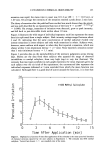
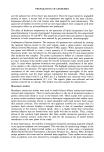
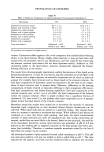
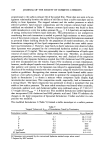
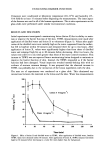
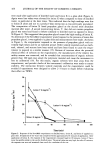
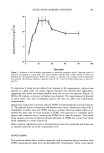
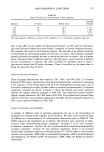
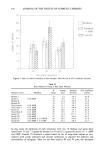
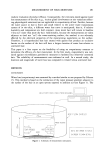
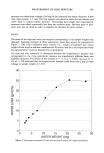
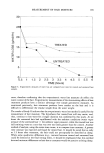
EVALUATING BARRIER FUNCTION 163 Volunteers were conditioned at laboratory temperature (20-22øC) and humidity (35- 55% RH) for at least 15 minutes before beginning the measurements. The inner aspect of the forearm was used in all of the human experiments. The in vitro experiments on the glass slides were performed under similar environmental conditions. RESULTS AND DISCUSSION Initial experiments investigated a moisturizing lotion (lotion X) for its ability to main- tain or improve the barrier function of the skin. TEWL measurements were made after application of distilled water and lotion X to volunteers (Figure 1). Values after appli- cation of the distilled water were initially high as the water evaporated from the surface, but fell to baseline within 30 minutes and remained there for up to two hours. After application of lotion X, values were significantly higher than from those of distilled water and remained high for up to 40 minutes before decreasing. After two hours, the values were still five to six times greater than those of the water control treatment. This increase in TEWL was not expected from a moisturizing lotion designed _to maintain or improve the barrier function of skin. Instead, the TEWL responded as if the barrier function had been damaged. Visual inspection revealed normal-looking skin with no evidence of stratum corneum damage. It was proposed that the observed increase in TEWL was probably due to the interaction of the lotion ingredients with the skin. The next set of experiments was conducted on a glass slide. This eliminated any interactions between the materials in the lotion and the skin. Water loss measurements 120 100 80 60 40 20 • Lotion X (4 mg/cm ) %%%% 1%% (4 mg•cm ) T ...... ' ' ' '1 ' '- '' '1' "- ' ' i ' i ! i 0 20 40 60 80 100 120 140 Time (min) Figure 1. Effect of lotion X and distilled water on TEkVL. After application of distilled water, baseline TEVdL values were obtained within 30 minutes. After application of lotion X, TEkVL remained extremely high for 30 minutes before decreasing to a value five times higher than the background.
Purchased for the exclusive use of nofirst nolast (unknown)
From: SCC Media Library & Resource Center (library.scconline.org)