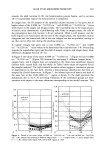
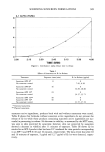
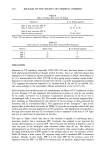
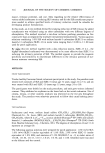
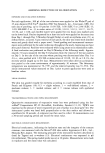
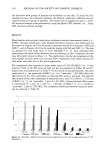
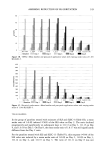
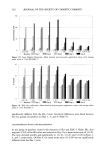
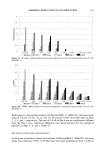
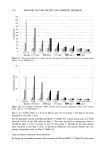
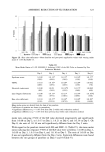
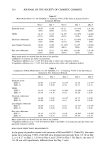
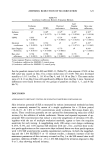
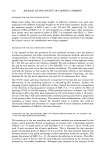
SCREENING SUNSCREEN FORMULATIONS 309 IL-1 ALPHA (PG/ML) 8 _ _ • I I I I 2:15 2:30 2:45 3:15 3:30 TIME IMIN! Figure l. Interleukin-1 alpha release: time vs release. _ 0 2:00 4:00 Table I Effects of Sunscreens on IL-lo• Release Treatment Exposure times (min) IL-ltx Release (pg/ml) Sunscreen (SPF 4)* 8 0 No sunscreen control 7.81, 6.50 Sunscreen (SPF 8)* 16 0 No sunscreen control 34.83, 28.60 Sunscreen (SPF 12)* 24 0 No sunscreen control 34.37, 33.71 Sunscreen (SPF 15)** 30 0 Sunscreen (SPF 15)* 30 0 No sunscreen control 31.57, 37.54 * Chemical sunscreens. ** Physical sunscreens. sunscreen active ingredients, products both with and without sunscreens were tested. Table II shows that formulas without sunscreen active ingredients do not prevent the release of IL-ltx while those products containing sunscreen active ingredients are suc- cessful in preventing its release. No decrease in viability, as measured by the MTT assay, was seen in skin protected by sunscreen however, skin not protected by sunscreen showed a decrease in viability after 11 minutes of exposure. Table III shows IL-ltx results for an SPF 4 product that has been UV irradiated for time periods corresponding to an SPF 5 and SPF 8 (10 and 16 minutes, respectively). The data reveal that after 10 and 16 minutes of exposure, 5 pg/ml and 12.7 pg/ml of IL-ltx were detected, respec- tively.

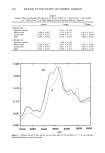
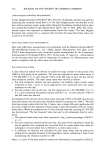
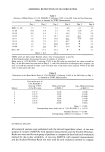
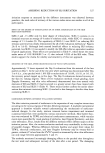
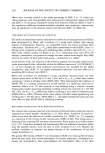
310 JOURNAL OF THE SOCIETY OF COSMETIC CHEMISTS Table II Effect of Product Base on IL-lo• Release Treatment IL-lot Release (pg/ml) Base A with sunscreen (SPF 8) Base A without sunscreen* Base B with sunscreen (SPF 8) Base B without sunscreen* o 29.79, 25.36 o 22.00, 26.87 * Note: The two bases are chemically different, and the sunscreens are of a chemical nature. Table III Time Course IL-lo• Release From Skin 2 Protected With Sunscreen Product Times (min) IL-ltx Release (pg/ml) SPF 4 8 0 SPF 4 10 5 SPF 4 16 12.7 DISCUSSION Exposure to UV radiation, especially UVB (290-320 nm), has been shown to induce both physical and biochemical changes within the skin. Ley et al. (10) have shown that exposure to UV radiation induces pyrimidine dimer formation in DNA, while Bissett et al. (11) demonstrated the effect of UVB on skin aging using a hairless mouse model. Exposure to ultraviolet radiation has also been shown to increase prostaglandin synthesis (12), suppress the immune response (13), increase both IL-lot and IL-lot mRNA (14), and cause damage to the antioxidant defense mechanisms of the cell (15,16). Full-thickness skin models permit the measurement of effects of UV irradiation on skin in vitro. Kupper (17) has suggested that keratinocytes grown in vitro do not produce IL-lot unless "activated" by a stimulus. Constitutive production of IL-lot in vivo in unchallenged cells is very low (18). The model evaluated in our studies supports Kup- per's findings as demonstrated by the absence of IL-lot release in skin protected by sunscreen and in unirradiated Skin •. The application of the Transpore TM tape to the quartz glass as described previously by Diffey (5) provides an irregular surface like that of skin and allows for easy application of the sunscreens. The application of sunscreen to the tape also ensures that any IL-lot released is due to exposure of the skin to UV light and not to interaction of sunscreen on the skin. The data in Table I show that this in vitro method is capable of confirming that a sunscreen product has a minimum SPF. Currently this method is not practical for routine determination of a precise SPF. This is because the method is limited to use of only one port of the multiport solar simulator rather than all six. The ability to simultaneously use all six ports would permit concurrent time-course studies, allowing for rapid determination of SPF similar to the method used in vivo. As evidence of this, Table III shows a time course UV exposure study with a marketed SPF 4 sunscreen product. Clearly, in this study, SPF 4 is the exact SPF for the product, since UV exposure times for SPF 5 or SPF 8 (10 minutes and 16 minutes, respectively) resulted
Purchased for the exclusive use of nofirst nolast (unknown)
From: SCC Media Library & Resource Center (library.scconline.org)