j. Soc. Cosmet. Chem., 43, 313-330 (November/December 1992) A human in vivo method for assessino reduction of the irritation potential of sodium lauryl sulfate by mild surfactants: Validation with an ether carboxylate with two different deorees of ethoxylation SOPHIE ZEHNDER, RAYMOND MARK, SCOTT MANNING, ADEL SAKR, J. LEON LICHTIN, and KARL L. GABRIEL, Biosearch Incorporated, P.O. Box 8598, Philadelphia, PA 19101 (S.Z., R.M., S.M., K.L.G.) and Cosmetic Science Program, College of Pharmacy, University of Cincinnati, Cincinnati, OH 45267 (S.Z., A.S., J.L.L.). Received July 20, 1992. Synopsis An in vivo method devised for studying reduction of the irritation potential of sodium lauryl sulfate (SLS) by added surfactants was validated using an ether carboxylate with two different degrees of ethoxylation. The method involved a two-hour occlusive patching procedure on five consecutive days accompanied by multiple instrumental measurements. Various aqueous solutions combining 1.0% SLS with sodium lau- reth-5 carboxylate (SLEC-5) or sodium laureth- 13 carboxylate (SLEC- 13) in molar ratios from 1:0.08 to 1:1.00 were applied using Hill Top © chambers on the panelists' lower backs. Measurements of transepi- dermal water loss, electrical conductance, laser Doppler flowmetry and skin color reflectance were per- formed. In addition, the skin was visually graded for erythema. A data reduction system was devised to handle the large number of data points. To accomplish this, the degree of skin response caused by 1.0% SLS was used as the reference standard. For each evaluation method, on each day and for each panelist, the molar ratio which induced •50% of the SLS value was used to derive a mean molar ratio for each group of six panelists. The mean molar ratio (i.e., the proportion of SLEC-5 or -13 to "neutralize" 1.0% SLS) reflects the effectiveness of the ether carboxylate in reducing the SLS irritancy potential. The molar proportions that induced signs of irritation changed with successive patch applications, and increasing amounts of the ether carboxylate were needed to overcome the effects of SLS. Although both SLEC-5 and -13 exerted beneficial effects in reducing SLS irritancy potential, it was clearly demonstrated that SLEC-13 (i.e., the higher ethoxylated surfactant) was more effective in modifying the irritancy potential of SLS than SLEC-5. The various evaluation methods generally showed good correlation but differed somewhat in sensitivity. The method appears to provide the requisite specificity and sensitivity to discriminate differ- ences in the irritancy potential of surfactant mixtures containing SLS. INTRODUCTION The irritancy potential of sodium lauryl sulfate (SLS) can be modified by the addition of a variety of mild surfactants such as ether sulfates, sulfosuccinates, or amphoterics (1-8). Such surfactant mixtures are common in formulations of soap and cosmetic products. Considerations in selecting cosurfactants to be added to SLS include product perfor- 313

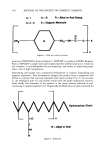
314 JOURNAL OF THE SOCIETY OF COSMETIC CHEMISTS mance, irritancy potential, and cost. Data regarding (a) the relative effectiveness of various added surfactants in reducing SLS irritancy and (b) the SLS:cosurfactant propor- tions needed to achieve specified levels of irritancy reduction would be valuable for developing product formulations. In this study, an in vivo method devised for studying reduction of SLS irritancy by added cosurfactants was validated using an ether carboxylate with two different degrees of ethoxylation. The method involved a two-hour occlusive patching procedure on five consecutive days accompanied by multiple instrumental measurements. Various aqueous solutions combining 1.0% SLS with sodium laureth-5 carboxylate (SLEC-5) or sodium laureth-13 carboxylate (SLEC-13) in molar ratios ranging from 1:0.08 to 1:1.00 were used for patch application. ,. By using this test method together with a data reduction system, SLEC-13 (i.e., the hig'h.e•"'•thoxylated surfactant) was demonstrated to be more effective than SLEC-5 in reducing the irritancy potential of SLS. The method appears to provide the requisite specificity and sensitivity to discriminate differences in the irritancy potential of sur- factant mixtures containing SLS. METHODS STUDY PARTICIPANTS Twelve healthy Caucasian female volunteers participated in the study. Six panelists were treated with mixtures of SLS and SLEC-5 (mean age 32 years range 22 to 51), and six were treated with SLS and SLEC-13 (mean age 32 years range 24 to 39). The participants were briefed on the study procedures, and each gave written informed consent. They exhibited no erythema on the lower back at the initial evaluation. Use of creams, lotions, or other cosmetic products was restricted on the test area throughout the study. The panelists were otherwise permitted to follow their usual bathing proce- dures. TEST MATERIALS Surfactants used were: sodium lauryl sulfate (CH3(CH2) •oCH2OSO3Na) (Sigma Chemicals Co., St. Louis, MO) and sodium laureth-5 carboxylate (RO(CH2CH20) 4- CH2CO2Na, where R is a C•2--C•4 coconut alcohol) (Hostapur © TP-2505) and sodium laureth- 13 carboxylate (RO(CH2CH20)• •.4CH2CO2Na) (Hostapur © TP-2506) (both from Hoechst Celanese Corp., Charlotte, NC). The degrees of ethoxylation (4 and 11.4) represent an average (9). The following aqueous solutions were prepared for patch application: 1.0% (w/w) SLS 1.6% (w/w) SLEC-5 (molar equivalent of 1.0% SLS) 2.8% (w/w) SLEC-13 (molar equivalent of 1.0% SLS) and mixtures of 1.0% SLS:SLEC-5 or -13 in molar ratios of 1:0.08, 1:0.10, 1:0.13, 1:0.17, 1:0.25, 1:0.50, and 1:1.00. Distilled water was used as the diluent and the control.
Purchased for the exclusive use of nofirst nolast (unknown)
From: SCC Media Library & Resource Center (library.scconline.org)