ASSESSING REDUCTION OF SLS IRRITATION 315 EXPOSURE AND EVALUATION SCHEDULE For each application, 300 }xl of the test solutions were applied to the Webril © pad of 25-mm diameter Hill Top © chambers (Hill Top Research, Inc., Cincinnati, OH). For each day of patching, up to 10 patches (1.0% SLS 1.6% SLEC-5 or 2.8% SLEC-13 1.0% SLS:SLEC-5 or -13 in molar ratios of 1:0.08, 1:0.10, 1:0.13, 1:0.17, 1:0.25, 1:0.50, and 1:1.00 and distilled water) were applied for two hours onto marked sites on the lower back. Patches (separated by at least one inch) were applied on the same sites from Day 1 through Day 5 (Monday through Friday) or until an erythema score •2, as defined below, occurred. Upon removal of each patch, the skin was rinsed with distilled water and gently dried with a paper towel. Visual grading and instrumental measure- ments were performed by the same technician throughout the study, beginning one hour after patch removal. Panelists were evaluated while lying prone on an examination table. A final evaluation was performed on Day 8 (Monday of the following week). Approx- imately 72 hours separated the Day 8 evaluations from the removal of the last patches on Day 5. In the case of the test sites where patching was discontinued after Day 3 or 4 (i.e., sites patched with 1.0% SLS or molar ratios of 1:0.08, 1:0.10, or 1:0.13), the recovery period ranged up to five days. Measurements were taken after an acclimatiza- tion period to the room environment of approximately 30 minutes. The laboratory temperature was maintained at 70-73øF, and the relative humidity was 35-55%. The initial instrumental values measured on Day 1 prior to patch application were used as baseline values. VISUAL GRADING The skin was graded visually for erythema according to a scale modified from that of Frosch and Kligman (10): 0.5 = slight redness 1 = well-defined redness 2 = moderate redness 3 = marked redness and 4 = intense redness with epithelial damage. TRANSEPIDERMAL WATER LOSS (TEWL) MEASUREMENTS Quantitative measurements of evaporative water loss were performed using the Ser- voMed © Evaporimeter EP-1C (ServoMed, Stockholm, Sweden) (11,12). TEWL was expressed as the amount of water evaporated per unit of surface in an hour (g/m2/hr). The instrument's probe was hand held perpendicular to the skin surface and allowed to equilibrate for 20 seconds. A computer was then used to collect 10 measurements over a 20-second sampling period and record the mean value. ELECTRICAL CONDUCTANCE MEASUREMENTS Electrical conductance, indicating the hydration state and the integrity of the stratum corneum, was measured with the Skicon©-200 skin surface hygrometer (I.B.S., Ltd., Shizuoka-Ken, Japan). The measuring principle of the instrument has been described in detail by Tagami and co-workers (13). Electrical conductance was expressed in I•S (microSiemans). The spring-loaded probe was set at 30 grams. Measurements were made in triplicate and the mean value was calculated.

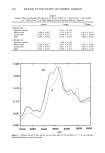
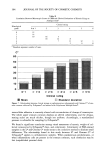
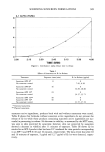
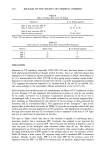
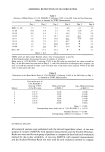
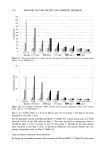
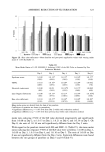
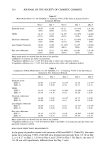
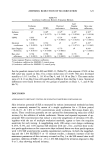
316 JOURNAL OF THE SOCIETY OF COSMETIC CHEMISTS LASER DOPPLER FLOWMETRY MEASUREMENTS A laser Doppler flowmeter (PeriFlux © PF3, Perimed, Stockholm, Sweden) was used for measuring the cutaneous blood flow (14). The laser Doppler probe was attached to the skin without pressure using a probe holder (Perimed, Stockholm, Sweden) held in place by a double-faced adhesive tape (Double-Stick Disc ©, 3M, St. Paul, MN). The instru- mental output was expressed in dimensionless blood flow values. The laser Doppler flowmeter was connected to a computer that recorded the mean blood flow value over a period of 20 seconds. SKIN COLOR REFLECTANCE MEASUREMENTS Skin color reflectance measurements were performed with the Minolta Chroma Meter © CR-200 (Minolta Camera Co., Ltd., Osaka, Japan). Measurements were taken in the L*a*b* three-dimensional color coordinate system recommended by the Commission Internationale de l'Eclairage (CIE) in 1976. In this study, a* values (i.e., measurements on the red-green axis) were used for assessment of erythema (15). Measurements were made in duplicate and the mean value was calculated. DATA REDUCTION SYSTEM A data reduction system was devised to handle the large number of data points (over 3000 for each group of six panelists). The data was expressed as mean molar ratios of 1.0% SLS:SLEC-5 or -13 that induced •50% of the SLS value on each test day and for each evaluation method. The mean molar ratios were derived as follows: a. For each evaluation method and each panelist, the baseline values (initial values measured on Day 1 prior to patch application) were subtracted from the values measured on each day. b. For each panelist and on each day, the first molar ratio of 1.0% SLS:SLEC-5 or -13 (i.e., ratio containing the greatest amount of SLEC-5 or -13) that induced •50% of the SLS value was selected. An example of the selection of the molar ratios inducing •50% of the SLS value for one particular subject and one particular evaluation method is presented in Table I. The data reduction system started with the Day 2 values, since a single SLS patch application did not induce sufficient skin response to discriminate it from sites patched with the various molar ratios. When an erythema score •2 was clinically observed, patching of 1.0% SLS was discontinued. The last measured value was used on all subsequent days for calcu- lation. c. The selected molar ratios were then converted to 1og•o molar percentages of SLEC-5 or -13. d. For each evaluation method and for each day, the mean of the logarithmic values for the six panelists was computed and converted back to a mean molar ratio value (in subsequent text and tables this is referred to as mean molar ratio). e. A coefficient of variation was calculated for each mean molar ratio by taking the antilog of the standard deviation of the logarithmic values, subtracting 1 from it and multiplying the obtained number by 100. Steps c, d, and e of the data reduction system are illustrated by an example in Table II.
Purchased for the exclusive use of nofirst nolast (unknown)
From: SCC Media Library & Resource Center (library.scconline.org)