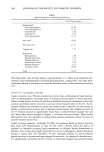
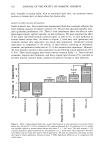
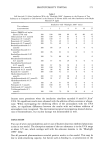
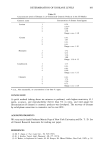
BARRIER FUNCTION AND HYDRATION 159 golipids were developed to 20 mm in chloroform:methanol:acetone:acetic acid (76:20: 4:1, vol), to 50 mm in chloroform:methanol:acetone (80:10:10, vol), and then to the top of the plates in chloroform:ethyl acetate:diethyl ether:methanol (76:20:6:2, vol). The plates then were scanned by scanning densitometry, and the lipid fractions were quantitated using CATS II software, as described previously (11). PROTOCOL FOR ANIMAL STUDIES Barrier function was assessed by measurement of transepidermal water loss (TEWL) with an electrolytic water analyzer (Meeco, Warrington, PA) (12). Barrier function was disrupted by repeated treatment with absolute acetone until TEWL rates exceeded 2.0 mg/cm2/hr. Immediately after treatment, TEWL was measured, and either 1.6% Y2 in propylene glycol:ethanol (7:3, v/v) or vehicle alone was applied to the treated areas (5-7 cm2). TEWL was measured at the time points indicated. Data are expressed as percent- age of recovery from time 0. For stratum corneum hydration studies, either 1.6% Y2 or 1-2% of synthetic lipids were applied to acetone-treated skin. Cholesterol, ceram- ides, and palmirate were applied individually or as a mixture at the final concentration of 1.1%, and the vehicle (propylene glycol:ethanol, 7:3, v/v) alone served as the control. Stratum corneum hydration, measured as capacitance, was assessed with a corneometer (CM-820, Courageq-Khazaka, Germany) both before and two hours after treatment. Data are expressed as percentage of change from levels immediately prior to the appli- cations of lipids or vehicle. PROTOCOL FOR HUMAN STUDIES In one group of twenty human volunteers (eight females, 12 males, ages 22 to 64 years), both forearms were treated with either acetone or tape stripping (Scotch type) until TEWL exceeded 1.0 g/m2/hr. Eighty microliters of vehicle was applied to the treated area of one arm, while the same volume of Y2 was applied at a concentration of 1.6% to the treated area (6-8 cm 2) of the other arm. TEWL was measured with an evapo- rimeter prior to and at indicated time points after vehicle or lipid applications. Stratum corneum hydration was assessed with a corneometer at the time indicated. In another group of 40 normal human volunteers (20 females, 20 males, ages 17 to 49 years) with no prior history of skin diseases, one shin was treated with the vehicle, while the opposite shin was treated with 1.6% Y2. Hydration studies in all subjects were per- formed two hours after application under comparable environmental condition and at the same time of the year (autumn). Statistical significances were determined using the Student's two-tailed T test. RESULTS LIPID COMPOSITION OF Y2 LIPID MIXTURE Previous studies have demonstrated that the ability of lipid mixtures to influence the barrier recovery rates is dependent on their composition. Therefore, we first analyzed the lipid composition of Y2. As shown in Table I, the total lipid content is 90.5% by total weight. The major lipids are glycosphingolipids (32%) and phospholipids (20.04%).

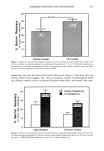
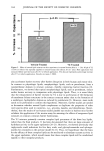
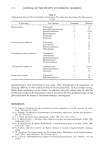
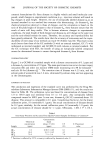
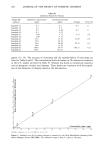
160 JOURNAL OF THE SOCIETY OF COSMETIC CHEMISTS Table I Lipid Composition in Natural Lipid Mixture (% of Total weight) Sphingolipids Glycosphingolipid I 15.88 Glycosphingolipid II 14.32 Ceramides III 1.82 Ceramides IV 0.70 Total sphingolipids 32.72 Free sterol 18.49 Free fatty acids 11.51 Triglycerides 7.74 Polar lipids Sphingomyelin 2.68 Phosphatidylcholine 3.71 Phosphatidylserine 7.21 Phosphatidyl inositol 0.29 Phosphatidylamine 6.15 Total polar lipids 20.04 Total 90.50 The final molar ratio of these lipids is approximately 3:1:1 (fatty acids:ceramides:cho- lesterol) if glycosphingolipids (including sphingomyelin), triglycerides, and other phos- pholipids perform as precursors of ceramides and fatty acids, as demonstrated previously (13). EFFECT OF Y2 ON BARRIER FUNCTION Studies in hairless mice. Previous studies have shown that a physiological lipid mixture, with an approximately equimolar ratio of stratum corneum lipids or their precursors, allows normal barrier recovery (8) and that a threefold increase in cholesterol in the lipid mixture accelerates barrier recovery in acetone-treated murine skin (9, 10, 13). To de- termine whether the naturally occurring lipid mixture also is effective, we first tested its ability to alter barrier recovery rate in acetone-treated murine skin. Barrier recovery in the Y2-treated animals is significantly faster than in vehicle-treated animals two and four hours after barrier disruption (Figure 1 two-hour data not shown). These results demonstrate that this naturally occurring lipid mixture accelerates barrier recovery in acetone-treated murine skin. Studies in human volunteers. Although the effect of exogenous lipids on barrier function have been well demonstrated in mice (8-10), little is known about the ability of synthetic or naturally occurring lipid preparations to influence barrier homeostasis in humans. Prior studies have shown that barrier recovery is prolonged in barrier-disrupted human vs mouse skin (14). Therefore, we next examined whether Y2 also accelerates barrier recovery in acetone and tape-stripped human skin. As observed in hairless mice, Y2 significantly accelerates barrier recovery in both tape-stripped and acetone-treated
Purchased for the exclusive use of nofirst nolast (unknown)
From: SCC Media Library & Resource Center (library.scconline.org)