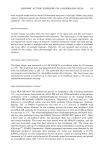
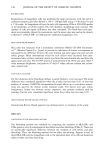
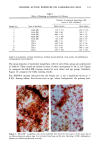
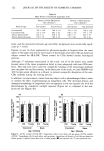
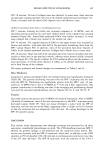
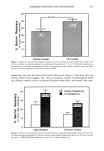
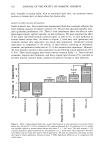
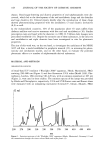
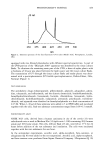
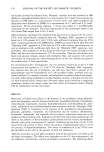
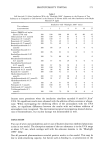
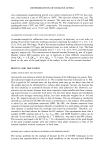
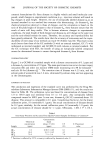
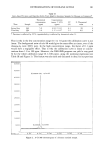
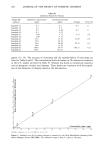
BARRIER FUNCTION AND HYDRATION 163 Study in human volunteers. In order to explore the potential utility of physiologic lipids for improving skin hydration, we next tested whether Y2 influences stratum corneum hydration in acetone-treated vs normal human skin. As shown in Figure 4, Y2 markedly increases stratum corneum water content two hours after acetone treatment in comparison to vehicle treatment alone. Moreover, Y2 also significantly raises stratum corneum water content two hours after treatment of normal skin in comparison to vehicle treatment (Figure 5). These results demonstrate that exogenous, naturally occurring stratum corneum lipids display a moisturizating effect on both damaged and normal human skin. DISCUSSION The importance of stratum corneum lipids for barrier homeostasis is firmly established (reviewed in 1-3). Moreover, each of the three key stratum corneum lipids, i.e., cholesterol, fatty acid, and ceramides, is required for barrier homeostasis (4-6). How- ever, recent studies have shown that these lipids are required as a mixture, rather than as individual species (8). Only mixtures of these lipids, in approximately equimolar ratios, allow normal barrier recovery accompanied by formation of normal membrane bilayer structures in stratum corneum (8), and mixtures with optimized ratios of the three stratum corneum lipids further accelerate rates of barrier recovery (9, 10, 13). In contrast, incomplete mixtures result in formation of abnormal membrane bilayer struc- tures in stratum corneum and actually impede barrier recovery (8). In agreement with these prior results, the natural lipid mixture studied here, Y2, which contains a molar ratio that approximates that in optimized mixtures of physiological lipids (9,10,13), 8O a• 60 o• 4o 2o - , PO.05 ß ß Veh icle-Tre ated Y2-Treated Figure 4. Effect of natural lipid mixture on skin capacitance in acetone-treated human skin: 40 Ftl of Y2 (1.6%) or vehicle was topically applied to acetone-treated human skin (about 20 cm 2 area). Skin capacitance was measured before and two hours after Y2 or vehicle application. The data are expressed as percentage increase after Y2 or vehicle application. Results are mean + SEM. Significant difference is in comparison with vehicle alone.

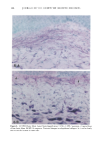
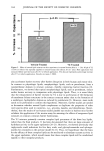
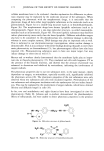
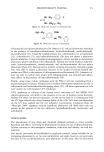
164 JOURNAL OF THE SOCIETY OF COSMETIC CHEMISTS o pO.05 ' ß 3O 2O 10 0 Vehicle-Treated Y2-Treated Figure 5. Effect of natural lipid mixture on skin capacitance in normal human skin (n -- 20): 40 Ixl of Y2 (1.6%) or vehicle was topically applied to normal human skin (about 20 cm 2 area). Skin capacitance was measured before and two hours after Y2 or vehicle application. The data are expressed as percentage increase after Y2 or vehicle application. Results are mean - SEM. also accelerates barrier recovery after barrier disruption in both human and mouse skin. In contrast to physiologic lipids, nonphysiologic lipids, such as petrolatum, form a nonmembrane domain in stratum corneum, thereby improving barrier function (9). Furthermore, we showed that topical nonphysiologic lipids, such as petrolatum, induce earlier barrier recovery in comparison with physiologic lipids. Thus, it is more likely that the enhancement of barrier recovery by Y2 is due to acceleration of the formation of membrane bilayer structures in the stratum corneum rather than to the formation of a nonbilayer, hydrophobic domain as induced by petrolatum (9). However, more work needs to be performed to confirm this hypothesis. Moreover, further studies are needed to determine whether natural lipids complement or duplicate the properties of other inert species often used in cosmetics, e.g., glycerin, lanolin, and dimethicone. Never- theless, that the results of our human studies parallel our results in hairless mice further validates the application of the murine assay for assessing the effects of exogenous lipid mixtures on stratum corneum barrier homeostasis. The Y2 mixture primarily contains complex lipid precursors of the three key lipids, rather than the final products. It has been documented that there are large amounts of hydrolase activity in the upper epidermis (20-23). Moreover, we showed previously that triglyceride could substitute for free fatty acids, and glycosylceramides and sphingo- myelin for ceramides in the acetone model (8,13). Thus, we hypothesize that the basis for the efficacy of these complex lipids can be attributed to abundant enzyme activity in the upper epidermis, which would insure that these complex lipids will be catabolized rapidly to their nonpolar products.
Purchased for the exclusive use of nofirst nolast (unknown)
From: SCC Media Library & Resource Center (library.scconline.org)