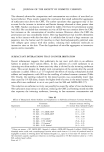
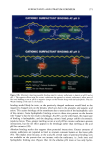
240 JOURNAL OF THE SOCIETY OF COSMETIC CHEMISTS 90 80 =• 7o e- 60 '•_ • 5o -• 40 30 20 Effect of Cigarette Smoke and age on skin wrinkles i Active Smokers Passive Smokers Non Smokers Effect of Cigarette Smoke and Sun exposure on skin wrinkles i Active smokers Passive Smokers [] age 35-45 [] age 46-55 [] age 56 ElSlight [] Moderate [] Severe Non Smokers Figure 6. a: Effect of chronological age and cigarette smoke on skin wrinkling. b: Effect of sun exposure and smoke on skin wrinkling. barrier (14). Measurement of TEWL is used in many laboratories for characterization of the skin barrier function (11). Air temperature and humidity are the main factors that could interfere with the mea- surement of skin barrier functions as measured with TEWL (11). Skin dryness is also directly related to the rate of TEWL. Nevertheless, unless the skin is excessively dam- aged or broken as in a diseased condition, the differences in TEWL can be related to demographic factors like smoke exposure, sun exposure, and age. Observation of non-smokers by age and sun exposure indicated that age, unlike smoke, played no significant role in skin damage. Contrary to expectations, TEWL was lower in non-smokers over 56 years of age, while below 45 years of age the skin barrier appeared to be slightly worse (Figures 4a,4b). These results are consistent with other findings (11) where no correlation between age and TEWL was observed. In some studies a slight decrease in TEWL was observed after 60 years of age (15). Degree of sun exposure appeared to exhibit a good dose response with the increase in TEWL. This could be due to actinic damage and drying of skin overexposed to the sun. Active smokers who received severe sun exposure exhibited a significantly worse skin barrier (p = 0.025) than non-exposed non-smokers who received the same UV exposure. Observation of the individuals who avoided the sun over the years showed that exposure to environmental smoke significantly (p -- 0.02) changed skin barrier functions in terms of transepidermal water loss. From these results it can be inferred that sun exposure and cigarette smoke could play a stronger role in the barrier function of skin than age. A combination of excessive sun exposure and cigarette smoking occurring together exhibited a 62% higher rate of TEWL. According to Elias (7), factors like residual intercellular proteinaceous attachment (des- mosomes), the overlapping geometry of corneocytes, and the generation of excessive numbers of cells may underlie all or part of the observed stratum corneum desquamation. Observation of non-smokers by age and sun exposure showed that age played no sig- nificant role in skin dryness (Figures 5a,5b). Sun exposure appeared to exhibit some correlation with skin dryness. The skin of the

EFFECT OF CIGARETTE SMOKE ON SKIN 241 panelists with slight sun exposure was not as dry as that having medium or severe UV exposure. Excessively sun-exposed smokers had 76% drier skin than non-smokers with low sun exposure. Skin dryness of non-exposed non-smokers who received minimal sun exposure was much lower than that of smokers having the same sun exposure (p = 0.078). Passive smokers exhibited a significantly drier (p = 0.026) skin than non-smokers. Many factors are involved in the wrinkling response of skin, such as genetic dominance, Fitzpatrick skin type etc. However, it is generally accepted that age and sun exposure play the most important role in skin damage manifested as wrinkles and fine lines (14). Observation of non-smokers by age and sun exposure shed further light on the subject. Contrary to expectations, age, unlike smoke, did not appear to play a significant role in skin damage. Skin wrinkling was higher in non-smokers over 56 years of age, but below 55 years of age there was no significant dose response. Sun exposure appeared to exhibit a good dose response with the intensity of wrinkling. It was observed that non-exposed non-smoking individuals exposed to mild-to-slight sun exhibited a significantly lower (p 0.001) skin wrinkling than active smokers having the same sun exposure (Figures 6a,6b). These results are consistent with the findings of Donald et aL (16) who state that cigarette smoking is an independent risk factor for development of premature wrinkling. They observed that heavy cigarette smokers (50 pack years) were 4.7 times more likely to be wrinkled than non-smokers. Sun exposure of more than 50,000 lifetime hours also increased the risk of being excessively wrinkled 3.1 fold. When excessive sun exposure and cigarette smoking occurred together, the risk for developing excessive wrinkling was multiplicative. In our experiments, excessively sun-exposed smokers had twice as much wrinkling as non-smokers with low sun exposure. CONCLUSIONS In this study, the group of non-smokers appeared to exhibit a much better barrier as compared to active and passive smokers. Passive smokers appeared to exhibit a barrier damage similar to that of active smokers. Smokers exhibited a slightly drier skin than non-smokers the difference, however, was not significant. Active smokers appeared to exhibit twice as much wrinkling as non-smokers. There was an excellent dose response of average skin wrinkling and smoking pattern. A combination of sun exposure and cigarette smoke play a stronger role in the manifestation of wrinkles and damage of skin barrier functions than age. A combination of excessive sun exposure and cigarette smoking occurring together exhibited a 62% higher rate of TEWL and a 76% drier skin. Excessively sun-exposed smokers had twice as much wrinkling as non-smokers with low sun exposure. REFERENCES (1) IARC, Monographs on the Evaluation of the Carcinogenic Risk of Chemicals to Humans: Tobacco Smoking, International Agency for Research on Cancer, Lyon (1986). (2) J. E. Fielding, Smoking: Health effects and control (first of two parts), N. Engl. J. Med., 313,491-498 (1985).
Purchased for the exclusive use of nofirst nolast (unknown)
From: SCC Media Library & Resource Center (library.scconline.org)