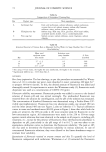
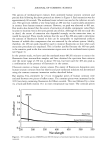
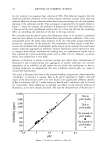
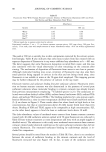
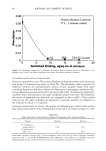
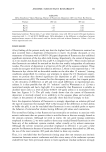
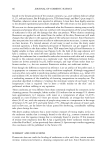
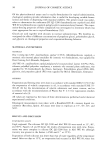
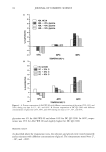
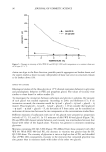
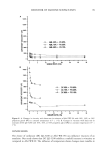
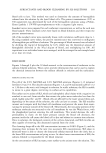
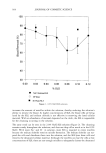
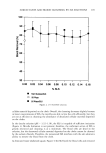
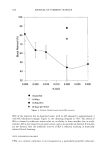
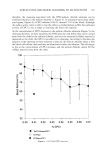
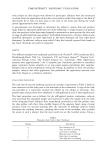
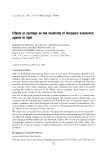
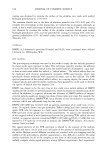
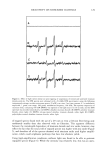
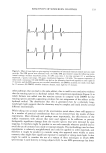
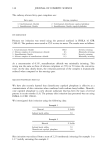
82 JOURNAL OF COSMETIC SCIENCE 0.06 0.05 0.04 0.03 0.02 0.01 Human Stratum Corneum 37 C, 1 minute contact SDmS TEA-_Na lau,rate 0 0 5 10 15 20 25 Surfactant Binding, ug/sq.cm of corneum Figure 10. Fluorescein deposition vs surfactant binding on human stratum corneum. Deposition in ab- sorbance units at 485 nm. More deposition from water than from surfactant solutions. FLUORESCEIN RETENTION ON PORCINE SKIN F/uorescein retention from water. The results of fiuorescein deposition from water on porcine skin using 1% fluorescein are given in Table IVa. The absorbance values represent the difference between the methanol:water extracts of skin samples treated with water containing fluorescein and those without the fluorescein. Interestingly, significant fluo- rescein deposition was observed at pH 5 (the native pH of the 1% fluorescein dispersion). At pH 8, where the fluorescein was made completely soluble with base (TEA) addition, the extent of deposition was relatively low compared to that at pH 5. These results indicate that the extent of fluorescein deposition is inversely related to its solubility in the medium in which it is dispersed. F/uorescein retention from bar s/urries. The spectra of methanol:water extracts from porcine skin treated with slurries of the cleansing bars A, B, and C are shown in Figure 11. The Table IVa Delta Absorbance Values Showing Fluorescein Deposition (485 nm) From Water Product 280 nm 485 nm 1% Fluorescein (native pH -5) 0.28 0.47 1% Fluorescein (pH = 8) 0 0.25 Experimental conditions: Porcine skin, 15-rain treatment, rinse with 100 ml water (260-ppm hardness), extraction with 2 x 10 ml 80:20 MeOH:water. Delta absorbance is the difference in absorbance between methanol:water extracts of skin treated with water in the presence and absence of fluorescein.

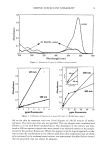
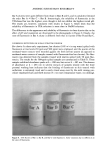
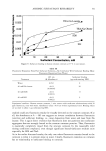
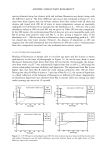
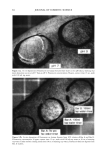
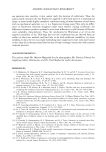
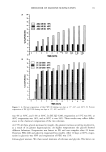
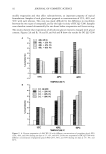
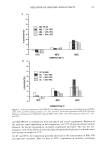
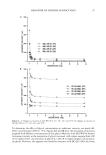
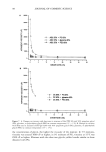
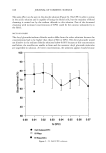
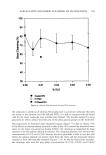
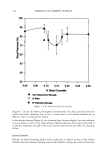
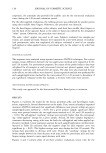
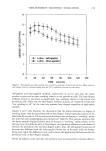
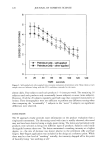
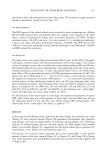
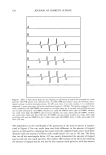
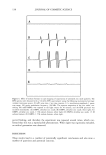
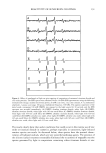
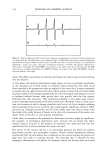
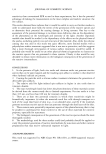
ANIONIC SURFACTANT RINSABILITY 83 spectra obtained using bar slurries with and without fluorescein are shown along with the difference spectra. The three difference spectra are also compared in Figure 11. It is clear from these figures that the solvent extracts from skin treated with all three bar slurries and rinsed with 200 ml of water at room temperature contain an essentially negligible level of fluorescein as measured by the absorbance at k = 485 nm. The actual absorbance values at 280 nm and 485 nm are given in Table IVb for easy comparison. In the 280 region, the isethionate-based Bar A does not give any measurable peak, with Bar B giving some positive value and Bar C, in fact, giving a negative value. If the absorbance at k = 280 nm were due to fluorescein, then a corresponding peak at k = 485 nm should also have been present. However, the absence of absorption at 485 nm suggests that the small absorption that was observed at 280 nm is due to contamination from skin components extracted into the methanol-water solvent system. IN VIVO STUDIES ON HUMAN SKIN Binding of fluorescein to human skin i, vivo from tap water and bar slurries is shown qualitatively in the form of photographs in Figure 12. As can be seen, there is more fluorescein deposition from water than from the bar slurries. Interestingly, the deposi- tion from water at pH 7 was substantially higher than that at pH 9.2, indicating the inverse relationship between solubility and deposition. The deposition from Bar A was higher than that from Bar B under the mild rinsing conditions with 100 ml water. Noting that the pH of Bar A slurry is 7 and that of Bar B is 9.2, the extent of deposition is a likely reflection of the behavior of fluorescein at different pH values. Importantly, no fluorescein deposition was observed from Bar A slurries when the rinsing was done under running tap water for 30 seconds. 280 nm Solvent System: 4:1 MeOH: water Bar ^ __ Bar A/dye __ •. Bar A diff / 0.2 0.• 0 43.1 -O2 250 300 350 400 450 500 550 Wavelength 0.4 0.3 0.2 Bar B 280 m Solvent System: 4:1 MeOH: water __ Bar.B./dye '...-' Bar B d•ff 0 -O.1 -O'•5 300 350 400 450 500 550 Wavelength • 0 -O,1 280 nm Solvent System: 4:1 MeOH: water Bar G __ Bar C/dye __ Bar C d•ff __ . _. 0.3 0.2 -O'•50 300 350 400 450 500 550 Wavelength 280 nm Bar A diff __ Bar B dlff ... Bar C d•ff -0.4 250 300 350 400 450 500 550 Wavelength Figure 11. U¾/¾IS spectra of methanol:water (80:20) extracts of porcine skin treated with bar slurries with and without fluorescein and the delta absorbance spectrum. Bottom figure on the right shows all three difference spectra for comparison.
Purchased for the exclusive use of nofirst nolast (unknown)
From: SCC Media Library & Resource Center (library.scconline.org)