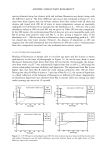
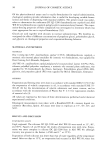
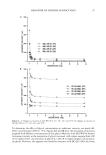
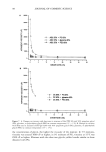
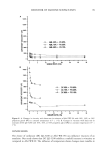
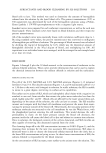
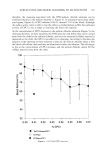
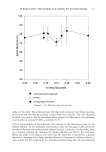
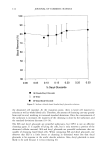
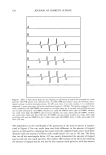
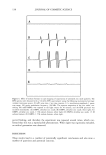
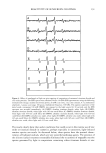
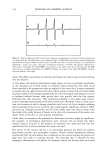
REACTIVITY OF SUNSCREEN COATINGS 127 described in this study was repeated at least three times. The variation in signal intensity between experiments usually was less than 15%. EPR MEASUREMENTS The EPR spectra of the radical adducts were recorded at room temperature on a Bruker ER-220 EPR spectrometer immediately after the samples were exposed to the light source. Typical instrumental settings were: microwave frequency, 9.6 GHz incident microwave power, 20 roW scan time, 2 m time constant, 0.1 s modulation amplitude, 1 gauss scan range, 100 gauss modulation frequency, 100 kHz. The EPR spectra were collected, stored, and manipulated using software developed in our laboratory, installed on IBM-compatible computers. ILLUMINATION The light source was a xenon high-pressure lamp (Oriel Corp., model 66023) equipped with quartz condenser lenses. The spectral distribution of the xenon lamp is very similar to that of sunlight except with two additional strong infrared peaks at 850 and 900 nm. The infrared radiation was partly eliminated by a heat-absorbing water filter with quartz windows (thickness of water layer 75 mm). The photon fiuence rate in the visible range from 400 to 700 nm was measured with a LI-COR quantometer radiometer LI 189. This fiuence rate was 12,000 pmol m -2 s -1. The total UV content in the radiation reaching the sample was evaluated to be about 3000 pmol m -2 s -1. In consecutive experiments, various ranges of short-wavelength radiation were cut off using long-pass glass color filters (Edmund Scientific). The following filters were used (Schott reference numbers given in brackets): 345 nm (WG345), 385 nm (GG385), 435 nm (GG435), 455 nm (GG455), 550 nm (OG550), and 695 nm (RG695). In the following text, "white light" means the light from the xenon lamp without any filter. For the exposure of the metal oxides to room light, the samples were prepared in quartz EPR tubes in the same way as for exposure to white light, and the tubes were laid on the laboratory bench for the specified time before taking EPR measurements. The fiuence rate of the "room light" was about 12 pmol m - s RESULTS In the presence of unfiltered white light from the xenon lamp, the untreated zinc oxide (Figure 1C) and titanium dioxide (Figure 2B) generated intermediates that produced spin adducts with spectral characteristics of hydroxyl radicals (Figure 1G). Following addition of sodium formate into the reaction system, the EPR signal of the formate adduct was recorded (Figure 3C), suggesting that the intermediate species generated by metal oxides is very likely to be the hydroxyl radical (7). The presence of a silicone surface treatment had a very strong effect on the relative amount of species that were trapped (Figure 1C vs Figure 1D, and Figure 2B vs Figure 2C), while treatment with polyethylene essentially had no protective effect (Figure 2B vs Figure 2D).

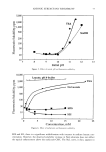
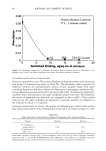
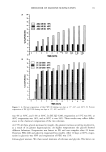
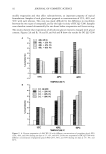
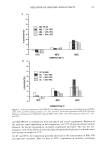
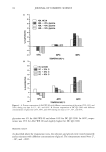
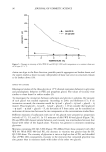
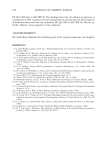
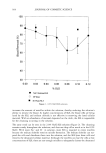
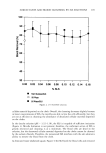
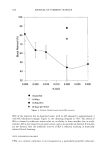
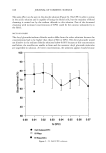
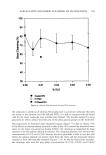
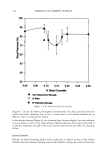
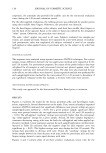
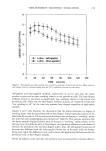
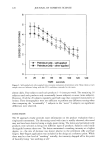
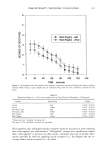
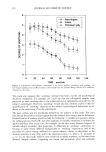
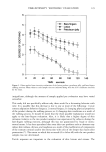
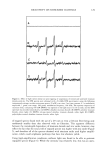
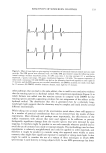
128 JOURNAL OF COSMETIC SCIENCE B I-I Figure 1. Effect of light (xenon lamp) on spin trapping of suspensions of treated and untreated zinc oxide particles. The EPR spectra were obtained with a 9.5-GHz EPR spectrometer using the following instru- mental settings: incident microwave power, 20 mW scan time, 2 m time constant, 0.1 s modulation amplitude, 1 gauss scan range, 100 gauss modulation frequency, 100 kHz. The aqueous suspension of zinc oxide, containing 100 mM DMPO, was exposed to the light source for 30 seconds, and the EPR spectrum was recorded immediately. (A) DMPO, ultrafine zinc oxide (B) DMPO, white light (C) DMPO, ultrafine zinc oxide, white light (D) DMPO, silicone-treated ultrafine zinc oxide, white light (E) DMPO, ultrafine zinc oxide, white light with filter (385 nm) (F) DMPO, silicone-treated ultrafine zinc oxide, white light with filter (385 nm) (G) DMPO, 8202 (2 mM), white light (H) DMPO, 8202 (2 mM), white light with filter (385 nm). The dependency on the wavelength of the generation of the reactive species is summa- rized in Figure 4. For zinc oxide there was little difference in the amount of trapped species, as indicated by comparing the results with the unfiltered light source with those obtained with the presence of filters with cutoffs below 345 nm or 385 nm. The filter that cut off the wavelengths below 435 nm greatly diminished the amount of trapped species with the zinc oxide particles. The relative effectiveness of the filters for reducing the amount of trapped species was less for the titanium oxide particles, with the amount
Purchased for the exclusive use of nofirst nolast (unknown)
From: SCC Media Library & Resource Center (library.scconline.org)