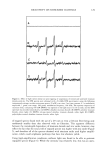
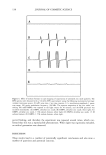
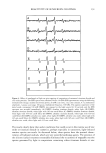
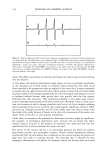
j. Cosmet. Sci., 49, 125-135 (March/April 1998) Effects of coatings on the reactivity of inorganic sunscreen agents to light HAROLD M. SWARTZ, KE JIAN LIU, TADEUSZ WALCZAK, TOMASZ PANZ, MASARU KOBAYASHI, and WILLIAM ZAVADOSKI, Department of Radio/ogy, Dartmouth Medical School, 7785 Vail, Hanover, NH 03755 (H.M.S., K.J.L., T.W., T.P.), and U.S. Cosmetics Corporation, 110 Louisa Viens Drive, Dayville, CT 06241 (M.K., W.Z.). Accepted for publication March 16, 1998. INTRODUCTION The use of physical sunscreening agents such as zinc oxide and titanium dioxide has an inherent appeal in terms of safety as well as effectiveness. Intuitively it seems very probable that these agents, even when subjected to the full spectrum of sunlight, will passively absorb potentially harmful wavelengths but will not undergo any chemical reactions. A closer look at the literature, however, suggests that this is not necessarily the case, because under other conditions these same materials have been used as powerful catalysts for oxidative reactions (1-4). When used as catalysts, their reactivity occurs especially at the surface of the particles of the oxides. One way to deal with potential reactivity of these substances is to coat (i.e., surface treat) them with an inert material that would quench the reactive species before they can interact with the surroundings, including the skin in the case of sunscreen agents. Such surface treatments have been developed and used in various cosmetic formulations, even in the absence of definitive data on the occurrence of potentially deleterious reactions or the effects of the coatings on these reactions. We report here on studies that directly examined the generation of reactive intermedi- ates in zinc oxide and titanium dioxide upon illumination with visible and UV light and the effects of adding coatings on the reactivity. Reactivity was studied by the use of the spin-trapping method (Materials and Methods, below). We found that light generated considerable amounts of reactive intermediates in the presence of either oxide. The presence of a silicone coating strongly inhibited the occurrence of detectable reactive products. MATERIALS AND METHODS METAL OXIDES AND TREATMENTS The zinc oxide was in the form of ultrafine particles (size 0.015-0.035 lam). The silicone 125

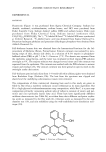
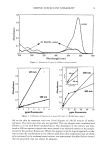
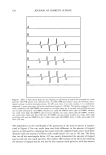
126 JOURNAL OF COSMETIC SCIENCE coating was obtained by treating the surface of the ultrafine zinc oxide with methyl hydrogen polysiloxane at a 6% level. The titanium dioxide was in the form of ultrafine particles (size 0.03-0.05 l•m). (To simplify the terminology in this manuscript, we termed this as uncoated, although, as usual, it had a small percentage of aluminum oxide as a coating.) The silicone coating was obtained by treating the surface of the ultrafine titanium dioxide with methyl hydrogen polysiloxane (2%), and the polyethylene coating by treating TiO 2 with oxy- genated polyethylene (3%). All metal oxides were provided by U.S. Cosmetics Corp. (Dayville, CT). CHEMICALS DMPO (5,5-dimethyl-l-pyrroline-N-oxide) and H202 were purchased from Aldrich Chemical Co. (Milwaukee, WI). SPIN TRAPPING The spin-trapping technique was used in this work to study the free radicals generated by metal oxides upon exposure to light. This technique typically involves the addition of a reactive short-lived free radical across the double bond of a diamagnetic "spin trap" to form a much more stable free radical, a "radical adduct." The radical adduct then can be examined with electron paramagnetic resonance (EPR) spectroscopy, which very specifically detects molecules with unpaired electrons, such as free radicals. The EPR spectral parameters of the radical adduct reflect, to a varying degree, the nature of the trapped radical, and under favorable conditions, these parameters can be used to identify the species of radical that was trapped (5,6). DMPO was chosen to be the spin trap in this study since radical adducts of DMPO usually provide distinctive spectral parameters, which facilitates the identification of the radical. In addition, in aqueous solutions the lifetimes of DMPO adducts of oxygen- centered radicals usually are longer than those of most other spin traps. For example, the hydroxyl radical adduct, DMPO/eOH, has a lifetime of over 40 minutes in an aqueous solution, which was sufficiently long for this study. DMPO (100 mM) was vortexed with an aqueous suspension of an oxide (zinc or tita- nium, 20 mg/ml), drawn into gas-permeable Teflon tubing, and then inserted into a quartz EPR tube for exposure to a light source (described below) for 30 seconds. The EPR spectrum of the sample was recorded immediately. To assist in the identification of the trapped radical, a well-characterized system for generating eOH radical also was studied: an aqueous solution containing DMPO (100 mM) and H202 (2 mM) that was exposed to UV light for 30 seconds to produce the DMPO/*OH adducts. All concen- trations listed are final. The signal intensity of the EPR spectrum is related to the amount of the radicals trapped, and hence, can be used as an indication of the amount of radicals generated by the oxides. Because several different reactions are involved with spin trapping and the stability of the spin adducts, absolute quantitation is very difficult to achieve. By using similar conditions for all of the samples, as was done in this study, however, one can usefully compare relative signal intensity among different experiments. Each experiment
Purchased for the exclusive use of nofirst nolast (unknown)
From: SCC Media Library & Resource Center (library.scconline.org)