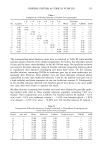
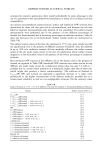
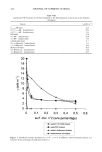
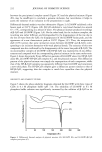
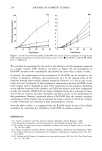
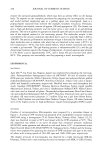
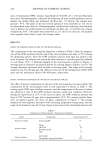
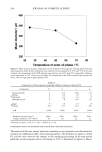
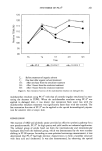
224 JOURNAL OF COSMETIC SCIENCE Table VIII Interfacial O/W Tensions ("f) of Oils Employed in the Microemulsion as Such and in the Presence of Linalool System "f (mN m -•) C12_15AB/water 24.5 9:1 C•2_•5AB: linalool/water 20.1 1:1 C12_15AB: linalool/water 13.3 lPP/water 25.8 9:1 IPP: linalool/water 20.0 1:1 IPP: linalool/water 13.3 n-Dodecanol/water 5.2 9:1 n-dodecanol: linalool/water 7.6 1:1 n-dodecanol: linalool/water 10.4 Mineral oil/water 20.5 9:1 Mineral oil: linalool/water 14.0 1:1 Mineral oil: linalool/water 10.5 20 • 18- 16- 14-: • 12 E _ 8 6 4 2 0 - X---• • A , 4• • ,• 0 0,1 0,2 0,3 0,4 0,5 0,6 surf. mix. nø2 (w/w percentage) --•--watedC12-15AB-linalool -•-- ware r/I PP-I inalool + watedn-dodecanol-linalool "watedmineral oil-linalool Figure 5. Interfacial tensions determined at 37.0 ø + 0.1øC of different water/oil-linalool systems as a function of the percentage of surfactant mixture 2.

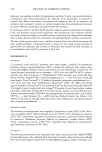
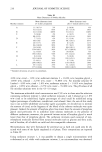
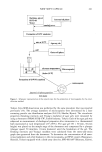
DISPERSE SYSTEMS AS TOPICAL VEHICLES 225 linalool was added to n-dodecanol, a higher 'y value resulted, which increased as a function of the percentage of the odorous molecule this was probably due to a higher affinity of linalool for n-dodecanol than for water. The percentages of surfactant mixture 2 added to the oil-linalool solutions were con- siderably lower than those used in surface tension measurements and to obtain micro- emulsions, as higher concentrations might have produced 'y values too low to be mea- sured by the ring tensiometer employed, since microemulsions are generally character- ized by very low (10 -2, 10 -3 mN m -•) interfacial tensions (15). Increasing percentages of surfactant mixture 2 produced a progressive lowering of the 'y values of all the oil-linalool/water systems (Figure 5). A sharp decrease in 'y values was detected at low percentages of surfactant mixture for the systems C•2_•sAB-linalool/water, IPP-linalool/ water, and n-dodecanol-linalool/water, while at higher concentrations, 'y values stabi- lized at a fixed point. In the case of n-dodecanol-linalool, even in the presence of the 0.01% w/w surfactant mixture, 'y took on values too low to be measured. On the other hand, when increasing percentages of surfactant mixture were added to mineral oil- linalool, a lower and rather linear decrease of 'y values occurred up to 0.3% w/w percentage. The trend observed for C•2_•sAB-linalool, IPP-linalool, and n-dodecanol- linalool might indicate a possible saturation of surfactant molecules at the interface, already at low surfactant concentrations, a condition that could be particularly favorable for microemulsion formation. Lastly, the behavior of microemulsions upon dilution with warm running water was observed to simulate the in-use conditions of a bath oil. The microemulsion with n-dodecanol and C•2_•5AB gave rise to slightly opalescent dispersions and might there- fore be proposed as a dispersible emollient bath oil (15), while the microemulsion with IPP originated a clear solution, as do "soluble bath oils," characterized by a lower emolliency but surely by a higher cosmetic acceptability to the consumer. ACKNOWLEDGMENTS This work was supported by a grant from Ministero dell'Universitl e della Ricerca Scientifica e Tecnologica. REFERENCES (1) J. M. Blakeway, M. L. Frey, S. Lacroix, and M. S. Salerno, Chemical reactions in perfume ageing, Int. J. Cosmet. Sci. 9, 203-214 (1987). (2) G. Malanin and K. Ohela, Allergic reactions to fragrance mix and its components, Contact Dermatitis, 21, 62-63 (1989). (3) J. M. Blakeway, Water-based perfumes, Perfum. Flavor., 18, 33-35 (1993). (4) J. M. Behan and K. D. Perring, Perfume interactions with sodium dodecyl sulphate solutions, Int. J. Cosmet. Sci. 9, 261-268 (1987). (5) M.E. Carlotti, M. Gallarate, S. Morel, and E. Ugazio, Miceliar solutions and microemulsions of odorous molecules, J. Cosmet. Sci., 50, 281-295 (1999). (6) P. Schieberle and W. Grosch, Identification of potent flavor compound formed in an aqueous lemon oil/citric acid emulsion, J. Agric. Food Chem., 36, 797-800 (1988). (7) M. R. Gasco, M. Gallarate, M. Trotta, L. Bauchiero, E. Gremmo, and O. Chiappero, Microemulsions as topical delivery vehicles: Ocular administration of timolol, .J. Pharm. Biomed. Anal., 7, 433-439 (1989).
Purchased for the exclusive use of nofirst nolast (unknown)
From: SCC Media Library & Resource Center (library.scconline.org)