226 JOURNAL OF COSMETIC SCIENCE (9) (10) (11) (12) (8) M. Trotta, B. Fubini, M. Gallarate, and M. R. Gasco, Calorimetric study on the solubilization of butanol by alkylphosphate and alkylphosphate-lecithin systems, J. Pharm. Pharmacol., 45, 993-995 (1993). M. E. Carlotti, M. R. Gasco, M. Trotta, and S. Morel, Auto-oxidation of linoleic acid in cosmetic formulations,J. Soc Cosmet. Chem., 42, 285-298 (1991). M. E. Carlotti, M. Gallarate, M. R. Gasco, S. Morel, A. Serafino, and E. Ugazio, Synergistic action of vitamin C and amino acids on vitamin E in inhibition of the lipoperoxidation of linoleic acid in disperse systems, Int. J. Pharm., 155, 251-261 (1997). M. Gallarate, R. Cavalli, E. Gagliardi, and M. E Carlotti, On the use of saccharose esters as emulsifiers for W/O/W multiple emulsions containing ascorbic acid, Acta Technologiae et Legis Medicamenti, X, 1-16 (1999). M. E. Carlotti, M. Gallarate, F. Pattarino, R. Cavalli, M. R. Gasco, and I. Cagliani, Preparation of miniemulsions with soya phosphatidylcholine and hydrogenated lecithin, Proceedings of the 19th IFSCC Congress, Sydney, Australia, October •996, pp. 1-25. (13) K. Kimura, H. Nishimura, I. Iwata, and J. Mizutani, Deterioration mechanism of lemon flavor.2. Formation mechanism of off-odor substances arising from citral, J. Agric. Food Chem. 31, 801-804 (1983). (14) S.J. Pearlly. P.J. White, Linalyl acetate and other compounds with related structures as antioxidants in heated soybean oil, J. Agric. Food Chem., 38, 1904-1908 (1990). (15) B. Idson, "Moisturizers, Emollients and Bath Oils," in Principles of Cosmetics for the Dermatologist, P. Frost and S. N. Horwitz, Eds. (C. V. Mosby, St. Louis, 1982), pp. 37-40.

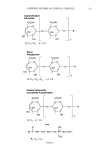
J. Cosmet. Sci., 51,227-237 (July/August 2000) Improvement in some physicochemical and biological properties of LG'IO6W by inclusion complexation with I-cyclodextrin and its derivatives SEONG HOON JEONG, CHEON KOO LEE, WAN GOO CHO, SEH HOON KANG, and KANETO UEKAMA, Cosmetics Research Institute, LG Chemical Ltd., 84, Jang-dong, Yusong-gu, Taejon 305-343, Korea (S. H. J., C. K. L., W. G. C., S. H. K.), and Faculty of Pharmaceutical Sciences, Kumamoto University, 5-1, Oe-honmachi, Kumamoto 862-0973, Japan (K. U.). Accepted for publication June 9, 2000. Synopsis 4-[3-Hydroxy-3-(2-hydroxy-5-methoxy-3,4,6-trimethyl-phenyl) propyl]-benzene-l,3-diol (LG106W) was synthesized as a novel skin-whitening agent. However, it has some formulation problems because of its low solubility in water and its instability. Inclusion complexation with cyclodextrins (CyDs) can be a tool for improving these problems. Inclusion complexes of LG106W with [3-cyclodextrin ([3-CyD) and its hydroxy- propyl (HP-[3-CyD) and dimethyl (DM-[3-CyD) derivatives were evaluated by using a solubility method, a scanning electron microscope, a differential thermal analysis, and a powder X-ray diffractometer. We further investigated the cytotoxicity and in vitro skin permeation of the complexes. The relationship of inclusion complexation between LG106W and [3-cyclodextrins was clearly reflected in the magnitude of the stability constant (DM-[3-CyD HP-[3-CyD [3-CyD). The stability of LG106W was improved by inclusion complexation with HP-[3-CyD. The inclusion complexes had an activity similar to LG106W alone in the inhibition of melanin synthesis in B-16 melanoma cells, but showed lower cytotoxicity. The skin permeation of LG106W across excised hairless mouse skin was increased with the inclusion complexation, in the order ofDM-[•-CyD HP-[•-CyD [•-CyD. From the above results, it is suggested that the [3-CyDs are reliable candidates for improving the availability of LG106W in cosmetic products. INTRODUCTION Cyclodextrins (CyDs) are water-soluble, cyclic oligosaccharides consisting of six, seven, or eight D(+)glucopyranose units linked by or-l,4 glycosidic bonds they are known as or-, [3-, and 'y-CyD, respectively (1). The CyD molecule is torus-shaped, with the primary hydroxyls (C6 hydroxyl) at the narrow edge of the torus and the secondary hydroxyls (C2 and C3 hydroxyls) positioned at the wider edge of the torus (2). The interior cavity of this molecule is hydrophobic, while the outer surface of the molecule is hydrophilic. Because of that, CyDs (hosts) are able to form inclusion complexes in solution as well as a crystalline state with a large variety of molecules (guests) (3-4). The 227
Purchased for the exclusive use of nofirst nolast (unknown)
From: SCC Media Library & Resource Center (library.scconline.org)