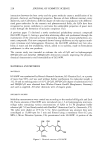
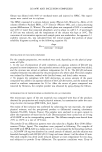
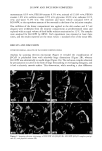
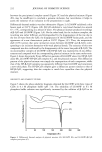
j. Cosmet. Sci,, 51,253-262 (July/August) Synthesis of N-ethanol-2-(myristyl/palmityl)- a-oxo(stearamide/arachidamide) and its physical properties for a cosmetic raw material BYEONG-DEOG PARK,* MYUNGJIN LEE, YOON KIM,* and JONG KYUNG YOUM, *NeoPharm Co., Ltd., PO Box 306-020, 63-1 Dae-Hwa Dong, Dae Duk-Gu, Daejeon, Korea, AKI Central Research Laboratories, Aekyung Industrial Co. LTD., PO Box 300-200, 72-6 YoungJeon Don& Dong-Gu, Daejeon, Korea. Accepted for publication June 9, 2000. Synopsis As a cosmetic raw material, N-ethanol-2-(myristyl/palmityl)-3-oxo(stearamide/arachidamide) (PC-9 s) has been synthesized and its physical properties have been investigated. PC-9 s was synthesized by the reaction between alkylketene dimer (AKD) and 2-aminoethanol under the ethanol reflux system. The existence of intermolecular hydrogen bonding among the amide groups of PC-9Ss was confirmed by an FT-IR study. PC-9 s showed a very wide range of lamellar liquid crystal formation, with a mixture of fatty acid and cholesterol, and the lamellar structure was formed with a high content of fatty acid composition. The cross-polarized microscopic result of PC-9 s confirmed its intrinsic characteristic of lamellar structure for- mation. PC-9 s was verified to be non-toxic, non-irritable, and non-sensitizing in skin irritation tests on animals and humans. This intrinsic power to form the lamellar structure made it possible to form a multilamellar emulsion, which could have applications in the cosmetic and drug industries. An effective and economical synthetic pathway with high purity and yield facilitates the industrial production of PC-9 s. INTRODUCTION Many physicochemical and biological actions of skin care products in the last decade were concerned with the horny layer of the stratum corneum (SC) (1). The structure of SC was proposed in an illustration as a "brick & mortar" model by Elias in 1981 (2,3). According to the Elias model, the brick represented corneocytes and the mortar repre- sented intercellular lipids. The corneocytes are filled with keratin and embedded in the intercellular lipids that form lamellar structures, which are the origin of the skin barrier function. For this reason, many people have been investigating the components of the intercellular lipids. The main components of intercellular lipids are ceramide, fatty acids, and cholesterol. Ceramide is not only the most prominent lipid found in SC but also an important component for the formation and retention of lameliar structure in SC (4). Topical applications of ceramide or pseudoceramide-containing compositions have been 253

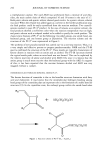
254 JOURNAL OF COSMETIC SCIENCE found to be effective in relieving atopic eczema (5,6), and also in exhibiting therapeutic properties such as wound and ulcer healing through the promotion of cell restoration and growth (7). For these reasons, many extensive efforts had been made by cosmetic and pharmaceutical companies to obtain access to natural ceramides (8-10) or pseudoce- ramides (11-14). In order to synthesize appropriate pseudoceramides, it is preferable that the structure of natural ceramides should be examined first, and that then pseu- doceramides having similar structures should be designed and synthesized. Several pre- vious reports had referred to the importance of multilamellar lipid vesicle structure in cosmetic and pharmaceutical formulation (15). A biphasic multilamellar lipid vesicle comprises a plurality of spaced lipid bilayers that include a liposome-forming compo- nent and optionally a biologically active agent (which means any agent that has a pharmacological, pharmaceutical, or cosmetic effect) entrapped within the lipid bilayers. The lipid vesicle also comprises peripheral aqueous solution compartments formed be- tween the lipid bilayers and a central lipophilic core compartment located at the center of the multilamellar lipid vesicle. The liposome-forming component is usually selected from the group consisting of glycolipids, phospholipids, ceramides, and mixtures thereof, and optionally a fatty substance such as cholesterol is added to enhance the strength of the lipid bilayer (16). Recently, we synthesized a pseudoceramide, N-ethanol-2-(myristyl/palmityl)-3- oxo(stearamide/arachidamide) (PC-9 s) by the reaction of 2-aminoethanol and AKD. It was designed to have properties similar to those of human skin (identical ceramides) and to mimic their behaviors. It showed easy lameliar liquid crystal formation in a mixture with fatty acid and cholesterol, and was demonstrated to be non-toxic, non-irritable and non-sensitizing in skin irritation tests on animals and humans. It was also demonstrated that the multilamellar emulsion using PC-9 s enhanced water barrier function into the skin. EXPERIMENTAL MATERIALS Alkylketene dimer (Taekwang Co., Korea), 2-aminoethanol (Duksan Co., Korea), and ethanol (Dong Yang Co., Korea) were used for the synthesis of a pseudoceramide, PC-9 s. Stearic acid (Junsei Co., Japan), cholesterol (Junsei Co., Japan), POE (15) glyceryl monostearate (Nihon Emulsion Co., Japan), glyceryl monostearate (Nihon Emulsion Co., Japan), cetanol (Kao Co., Japan), liquid paraffin (Seojin Chemical, Korea), olive oil (Junsei Co., Japan), and carboxyl vinyl polymer (B.F. Goodrich, USA) were used as components to form a multilamellar lipid vesicle that was similar to the intercellular lipids of stratum corneum. All water was distilled from an all-glass apparatus. SYNTHESIS OF PC-9 s AKD (15 g, 31.5 mmol) and 2-aminoethanol (2.12 g, 34.7 mmol) were added to 50 ml of ethanol and refiuxed for six hours. After adding about 200 ml of ethanol and cooling this mixture, white solids were precipitated. The solids were purified twice in ethanol to give pure PC-9 s as white crystalline solids (yield 90%). The physical properties of the obtained compound are as follows. TLC (CHCI 3: methanol: acetic acid = 95:5:1), Rf
Purchased for the exclusive use of nofirst nolast (unknown)
From: SCC Media Library & Resource Center (library.scconline.org)