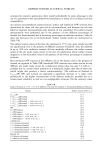
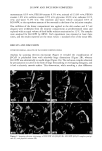
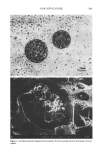
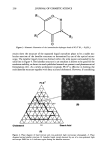
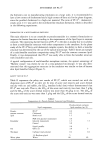
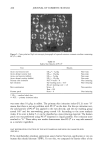
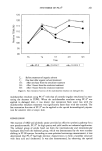
SYNTHESIS OF PC-9 s 255 = 0.36 melting point: 104øC - 107øC IR (cm -•, KBr): 3272, 1717, 1649, 1530 •H-NMR (CDC13): 8 0.8 - 1.9 (m, alkyl), 2.4 (2H, t, R-CH2-CO-), 3.4 (1H, t, CO-CH(R)-CON-), 3.4 (2H, q, -CON-CH2-), 3.55 (2H, d, -CH•-CH•OH), 6.8 (1H, t, -CONH-). CHARACTERIZATION OF PC-9 s The phase transition behavior and characterization of PC-9 s was determined by NMR (Varian, Jemini 200), FT-IR (Mattson, Mattson 7000), and melting point apparatus (Fisher). OBSERVATION OF THE CROSS-MICROSCOPIC OPTICAL TEXTURE A cross-polarized light microscopy (Nikkon) was used for the observation of the cross- microscopic optical texture after catching the meta-stable state of PC-9 s by controlling the temperature. The lameliar structure was shown from the "neat" pattern, and/or the "spherical" patterns with "Maltese crosses." PREPARATION OF THE MULTILAMELLAR EMULSION The process comprises forming a lipid phase melt by mixing multilamellar lipid vesicle- forming components (PC-9 s, stearic acid, and cholesterol) with oil droplets (liquid paraffin and olive oil) and emulsifying components (POE (15) glyceryl monostearate, glyceryl monostearate, and cetanol). The multilamellar emulsion was prepared by adding water into the lipid phase slowly, with vigorous stirring at appropriate temperature and cooling to room temperature. MEASUREMENT OF THE TRANSEPIDERMAL WATER LOSS OF THE SKIN The transepidermal water loss (TEWL) was measured by use of a tewameter before and after pretreatment with organic solvent (acetone: ethyl ether = 1:1) on the inner side of forearms in order to damage the skin. Then we applied 0.5 g of the multilamellar emulsion and controls to the damaged skin on each forearm and compared coutaneous barrier function before treatment and then one hour, three hours, and five hours after treatment. RESULTS AND DISCUSSION SYNTHESIS OF THE PSEUDOCERAMIDE, PC-9 s Natural ceramides, which exist in nature, are widely divided into six types. Their features in terms of their structures are as follows: They have at least two alkyl groups and one hydroxyl group in their head position and also have more than one amide bond (17). The pseudoceramide, N-ethanol-2-myristyl/palmityl-3-oxostearamide/ arachidamide (PC-9 s) was synthesized by a one-step reaction between AKD and 2-ami- noethanol. Generally, the commercial AKDs were synthesized from acyl chlorides with

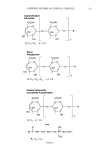
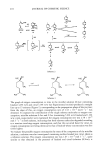
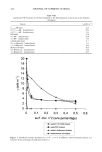
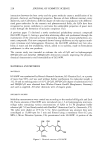
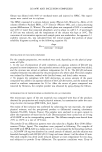
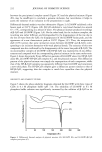
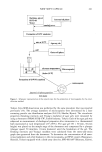
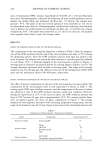
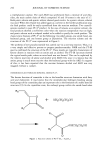
256 JOURNAL OF COSMETIC SCIENCE a triethylamine catalyst. The used AKD was synthesized from a mixture of acyl chlo- rides, the main carbon chain of which comprised 16 and 18 atoms in the ratio of 3:7. Both protic solvent and aprotic solvent showed good results. As a protic solvent, ethanol was used. When the ethanol was added again as a solvent in the further purification step, the final product could be easily crystallized from the reaction medium. Two crystalli- zations resulted in pure PC-9 s product. In the case of toluene as an aprotic solvent, the final products showed a red-brown color when the reaction temperature was too high, and protic solvent such as ethanol needed to be added to purify the crude product. The characteristic features of PC-9 s are the following: two alkyl groups, one amide bond, one hydroxyl group, and one ketone group at lB-position. The reaction scheme and the structure of the PC-9 s were represented in Figure 1. The synthesis of new pseudoceramide was carried out via a one-step reaction. Thus, it is a very simple and effective process to prepare pseudoceramides. NMR and the FT-IR spectra confirmed the structure of the PC-9 s. These results are typically characteristic of ketene dimers in reaction with an amine and an alcohol. The FT-IR spectrum showed the typical amide peak, where an ester bond was not formed. This can be explained by the relative reactivity of amine and alcohol with AKD (18), since it is known that the amine group is much more reactive than the hydroxyl group with the AKD. In support of this, it has been reported that the reaction between alcohol and AKD was very sluggish without a catalyst. INTERMOLECULAR HYDROGEN BONDING AMONG PC-9Ss The barrier function of ceramides is due to the lameliar structure formation with fatty acid and cholesterol. It was known that the intermolecular hydrogen bonding among head groups of the ceramides plays an important role in the formation of a stable lameliar structure (19). In the crystalline state, the carbonyl group within the amide bond takes q- Nt-I2CH2CH2OH .-N3ICH2CH2OH o Figure 1. Reaction scheme of PC-9 s (R• = RoCH2).
Purchased for the exclusive use of nofirst nolast (unknown)
From: SCC Media Library & Resource Center (library.scconline.org)