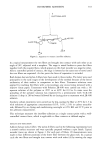
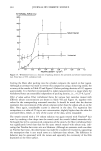
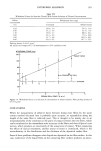
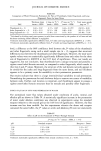
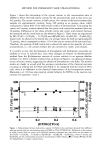
NAIL PERMEATION 375 significantly different from neutral conditions (t-test, ot -- 0.05). Hence, wide variations in pH did not appear to affect the overall intrinsic permeability properties of the human nail. High concentrations of alkalis are known to catalyze [3-elimination of disulfide linkages in hair keratin, thereby producing reactive intermediates, which can then cross-link with other residues in the polypeptide chain. The reaction is reversible in the presence of excess water. The alkaline degradation of cystine linkages in hair has been shown to occur with alkali treatment at pH values • i 1.0 and at elevated temperature (40øC) (9). Thus, the small effect observed in our experiments at alkaline pH using the standard receptor may be attributed to some degradation of the cystine linkages in nail keratin. The effect of pH on nail permeability had been investigated earlier by other researchers using ionizable drugs, and conflicting results had been reported. It was found that pH had little effect on the permeation of the antifungal drug miconazole (6). However, in the case of model compounds like benzoic acid and pyridine, it was found that pH indeed affected permeation and that the undissociated drug preferentially permeated the nail plate (5,7). Thus, it was unclear whether pH had an effect on the nature of the nail plate itself or on the ionization of the drugs used in these studies. In our experiments using water as a probe, we have demonstrated that pH does not affect intrinsic nail permeability properties. EFFECT OF TEMPERATURE ON IN VITRO NAIL PERMEATION OF WATER Water permeation through human nails was significantly enhanced with increasing temperature. The relationship between normalized permeability coefficient for water and temperature is defined by the Arrhenius equation as shown below: Ea log P* = log Po* 2.303RT (3) where Po* is a factor independent of temperature and is related to the number of molecules entering the diffusion process and the probability that these molecules have sufficient energy to engage in diffusion, E a = energy of activation in calories/mole or kJ/mole, R = gas constant, and T = absolute temperature (10). Figure 3 shows the Arrhenius plot of normalized permeability coefficient for water. As predicted by equation 3, a linear relationship between log P* and reciprocal temperature was observed. The energy of activation (Ea), computed from the slope of the plot, was found to be 28.4 kJ/mole (approximately 7.2 kcal/mole). Skin permeability has been documented to be temperature-sensitive, with higher temperatures resulting in in- creased permeation (11). This increased permeation is thought to result from a loss of crystallinity on heating. The E• value for the permeation of water through the nail is closer to the value for delipidized human stratum corneum (E• = 6.3 kcal/mole) than for intact stratum corneum (E• = 14.3 kcal/mole) (12). TEST FOR BARRIER INTEGRITY OF NAILS AFTER pH AND TEMPERATURE STUDIES The normalized flux values before and after pH and temperature studies, shown in Table V, are essentially the same. These results suggest that pH/temperature treatments do not

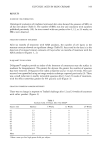
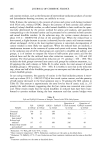
376 JOURNAL OF COSMETIC SCIENCE 0.0100 Energy of activation Ea = 28.4 kJ/mole 0.0010 I I I I 0.0029 0.0030 0.0031 0.0032 0.0033 1/Temperature (K -1) Figure 3. Semilogarithmic plot of normalized permeability coefficient (P*) as a function of reciprocal temperature (mean + SEM, n = 3-6). Table V Normalized Water Flux, J*, Before and After Various pH and Heat Treatments: Test for Barrier Integrity of Toenails J* (mg cm •h •) (mean + $EM, n = 3) Treatment Untreated nail After treatment and washout Change in J* (%) pH 1.96 1.35 -+ 0.10 1.44 + 0.07 6.67 pH 11.27 1.79 + 0.18 2.00 _+ 0.25 11.73 47øC 1.10 _+ 0.25 1.09 + 0.34 -0.91 57øC 1.42 + 0.64 1.50 + 0.74 5.63 cause significant changes in the nail structure. Thus, after such treatments and washout, the initial structure of the nails persisted and normalized flux values returned to their original levels. CONCLUSIONS Our studies on water permeation through nails have provided new insights into nail structure. A reproducible technique to measure nail permeation in vitro was developed using tritiated water as a marker molecule. While permeation parameters did not vary much Within toenails pairs, interindividual variability was extremely high. These dif- ferences were reduced by normalizing the data for nail thickness.
Purchased for the exclusive use of nofirst nolast (unknown)
From: SCC Media Library & Resource Center (library.scconline.org)