380 JOURNAL OF COSMETIC SCIENCE state on washing or even on exposure to high humidity. As far as these practical methods are concerned, the set of hair in straight configuration is only temporary. Straighteners based on sodium hydroxide have been used for the straightening of hair of blacks as they are more effective than TGA-based products (1). More recently, a combined process consisting of chemical treatments and hot iron press had been used for permanent hair straightening (2). There are some commercial processes in this category. These practical methods include a heating process after the reduction of hair where keratin disulfide bridges are cleaved. So far nothing has been reported in the scientific literature on the reaction mechanism occurring in these treatments. In the practical application, there are many problems such as the differences in the cystine content of native hairs and in hair diameter from person to person, and also the differ- ences in the history of hairs as to coloring and perming. Optimum results in straight- ening for such a variety of hairs are a challenge. Our approach has been to study the effects of a reducing system composed of TGA and DTDG on the chemical and physical behavior of hair (2,3). Wong et al. (4) discussed the practice and general theory of permanent hair straight- ening. From their observations on fiber swelling and supercontraction in a variety of solutions, they proposed a model to explain permanent set in terms of molecular events such as changes in the secondary structure. The aim of this work was to analyze the reactions occurring during hair straightening, to investigate the possible factors responsible for unwanted results from treatments on hair damage, and to demonstrate the relationship between the degree of supercontraction and the amount of the ot-crystallites estimated by x-ray diffraction and high-pressure differential scanning calorimetry (5-8). In this paper, the chemical and physical char- acteristics of the cystine residues have been briefly discussed in relation to their location in the microstructure of hair keratin. EXPERIMENTAL MATERIALS The aqueous ammonium solutions of thioglycolic acid (TGA) and dithiodiglycolic acid (DTDG) used were commercial products, and they contained 50% TGA and 40% DTDG by weight, respectively. The monoethanolamine (MEA) used was an aqueous solution of 80% MEA, a commercial product. All other chemicals used in this study were of reagent grade. Two types of hair samples were collected from Japanese women who had not been exposed to chemical treatments such as perming and dyeing. Straight hair samples were used to study supercontraction induced by chemical and thermal treatments of hair. Kinky hair samples were used to estimate the efficiency of hair straightening. The fiber samples (0.5 g) were purified by immersion in a 5% (w/v) solution at pH 4.6 (50 ml) of poly(ethylene glycol lauryl ether) containing 20 mM EDTA for 1 h at 33øC. The hair was washed thoroughly with distilled water and dried. PREPARATION OF CURED HAIRS Cured fibers for both straight and kinky hairs were prepared by the following three step processes: (a) reduction, (b) heat treatment, and (c) oxidation.

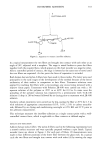
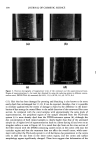
METHOD FOR PERMANENT HAIR STRAIGHTENING 381 Reduction process. Reduction was carried out by using an aqueous TGA solution contain- ing appropriate amounts of DTDG, 1.05% potassium hydroxide, 0.5% EDTA, and MEA used as a pH-adjusting agent at either 9.20 or 9.30. The concentration of TGA varied from 3% to 9%, and that of DTDG was 0% to 4%. The concentration ratio of DTDG to TGA was within the range of 0 to 0.60. A small tress of hairs with a length of about 17 cm (0.5 g) was treated in the reducing solution (30 ml) at 45øC for 15 min. The treated fibers were washed with distilled water at 35 øC for 1 min, then pressed with a towel to remove excess water, and finally dried by using a hair dryer at about 100øC for 2 min. The water content of the treated hairs at this stage was 14 + 1% by weight. The reduced fibers thus obtained were subjected to hot iron treatment. Heat treatment process. The reduced hairs were continuously pressed for 3 sec along the fibers by using a special iron with a pair of heating plates at 180øC unless otherwise specified. The heating plate was rectangular, 42 mm in width, 90 mm in length, and 1 mm in thickness. Pressing with an iron along a tress of the reduced fibers was repeated three times before subjecting the hair to oxidation. Oxidation process. The heat-treated hairs were immersed at 35øC for 15 min in a 7% (w/v) solution of sodium bromate (30 ml) adjusted to pH 8.0 with phosphate buffer, rinsed with water at 35øC for 1 min, blotted with a towel to remove excess water, and dried at about 100øC for 2 min as described above. PREPARATION OF OPTICAL MICROSCOPE SAMPLES Untreated and cured hairs were dyed in a bath at 45øC for 15 min with a 0.01% (w/w) aqueous solution of acid black 1 (C.I.20470) containing 8% benzyl alcohol, 16% etha- nol, and 6% glycolic acid (70% aqueous solution), washed with water at 45øC for 2 min, and then air-dried. The dyed hairs thus obtained were subjected to cross-sectioning by a glass knife to prepare optical microscope samples about 18 t•m in thickness. EVALUATION OF HAIR SUPERCONTRACTION The extent of supercontraction was determined by measuring the length of the straight hair in a microcapillary before reduction and after oxidation treatments. The extent of supercontraction, L c was calculated as the ratio of the percentage of the length change, (L o - L) to the initial dry length before reduction, Lo, as equation 1: L c = 100(L o - L)/L o (1) where L is the dry length after oxidation treatment. The value of Lc was a mean value of five specimens. EVALUATION OF HAIR STRAIGHTENING EFFICIENCY Kinky hair fibers were used for evaluation of hair straightening efficiency. According to the method of Wong et al. (4), the degree of hair straightening was determined visually by the appearance of the fiber retained in a straight conformation after immersion of the cured hair in water at 35øC for 5 min and then dried.
Purchased for the exclusive use of nofirst nolast (unknown)
From: SCC Media Library & Resource Center (library.scconline.org)